Is this police force professional and capable of handling violen...
/ 2026-10-16 18:54:07Focus


Assoc. Prof. Dr. Marenglen Kasmi
Recently, more and more reflections and discussions about the terms “Kosovo”, “Kosovar”, “Kosovar nation”, etc. have been encountered in the media and social networks. In particular, the well-known debate between academics Rexhep Qosja and Ismail Kadare many years ago about the Albanian identity of Kosovars, has served as a catalyst for its continuation. These discussions, often laden with historical and political sensitivities. Not infrequently they continue to generate controversy, division of opinions and sometimes even irritation in the Albanian national opinion. In particular, public figures, academics, political analysts and representatives of various scientific institutions, including the Kosovo Academy of Sciences and Arts itself, have played an important role in fueling or opposing these controversies.
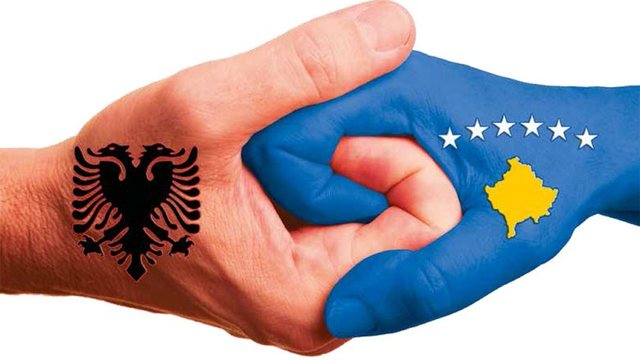
At the core of the debate still lies the question of whether these terms are simply expressions of a geographical affiliation or represent a new identity project that could separate Kosovo Albanians from the national core.
If until now this discussion was still in its embryonic stage and limited mainly to the level of debate, for several years it has been institutionalized, receiving open support in political and academic forms for the construction of a distinct "Kosovar" identity.
This development raises great concerns for the future, as supporting the idea of a Kosovar nation could bring unimaginable consequences for the entirety of Albanians and their future in the Balkans. First and foremost, these developments harm Kosovo itself.
***
According to Noel Malcolm, the term “Kosovo” derives from the Old Slavic “Kosovo polje”, which translates as “Field of the Thrushes” (field of the thrushes; kos in Serbian means thrush). The ending “ovo” is an adjectival suffix. In particular, the name is associated with the great battle of 1389 on what is now known as the Kosovo Field. According to Malcolm, this name is first mentioned in the writings about the Battle of Kosovo, and it is somewhat unclear how and why Kosovo became the name of this territorial unit; it was never used as a territorial name during the rule of the medieval Serbian Kingdom. (Malcolm 2001, 3).
Later, during the Ottoman and Kingdom of Yugoslavia periods, the term “Kosovar” was used as a gentilic term for the inhabitants of Kosovo, regardless of ethnicity. It had no specific identity character, but was a regional label, similar to terms such as “Shkodra”, “Gjakova”, or “Tirana”.
Only after the creation of the Autonomous Province of Kosovo and Metohija within the Yugoslav Federation did the terms “Kosovo” and “Kosovar” gain institutionalized use, initially in a provincial-administrative sense and later in a form that attempted to replace ethnicity. In official documents, in the media of the time, and in the party discourse of the League of Communists of Yugoslavia, the use of the term “Kosovars” for Albanians became a means of separating ethnic Albanianness from political and state Albanianness.
Sabrina P. Ramet notes that in the 1970s–1980s, Yugoslav authorities promoted the concept of “Kosovarism” as a way to construct a distinct Yugoslav identity for the Albanians of Kosovo, separate from the Albanian national identity. This effort was intended to cushion the ideological and symbolic influence of Enver Hoxha’s Albania and to curb aspirations for national unification (Ramet 2006, 295). In this sense, “Kosovar” was no longer just a term of geographical affiliation, but a political category that aimed to create a “third nationality” within Yugoslavia.
It is worth noting here that when the Pristina Albanological Institute was established, it was formally supposed to be a research structure within the academic system of the Socialist Republic of Serbia. The purpose of its establishment, according to the initial intentions of the Yugoslav leadership – was to control and orient studies on Albanians so that they would comply with the policies of federal integration and the softening of the national identity of Albanians in Kosovo. For example, in the first decades, there were attempts to present Albanian culture as a separate Kosovar reality, not necessarily connected to the Albanian nation of Albania, and to lead it towards a “Kosovarization” of identity, differentiated from that of the Albanians of Albania. This was part of a broader Yugoslav strategy to weaken Albanian national ties and curb Albanian nationalism in Kosovo.
However, many of the Albanian scholars who worked at the Institute were staunch patriots. They not only refused to implement this agenda, but on the contrary, turned the Institute into a center of Albanian knowledge and national identity in Kosovo. Professors such as Idriz Ajeti, Rexhep Qosja, Ali Hadri, Esad Mekuli, Fehmi Agani and many others played an important role in this process. They made the Institute’s scientific work national and professional, building bridges with the Albanological tradition of Tirana, thus strengthening Albanian national consciousness in Kosovo. In this way, the institution that was initially intended as a means of control was transformed into a bastion of Albanian culture and identity in Yugoslavia.
As mentioned above, for Kosovo Albanians, ethnic identity is closely linked to Albanian belonging, and the term “Kosovar” has been used more in a civic sense. This has been particularly evident after Kosovo’s independence in 2008, where the need for an inclusive national identification (including non-Albanian communities such as Serbs, Bosniaks, Roma, and others) necessitated the use of this term in official documents and diplomatic discourses. Ardian Kastrati sees this transition from “national” to “citizen” as a complex process of rebuilding belonging in the context of a multiethnic state under construction (Kastrati 2015, 42).
The danger of misunderstanding or misuse of the term “Kosovar” lies in the attempts to present it as an ethnic identity distinct from, or separate from, the Albanian nation. This tendency has been seen in some international analyses that promote the neutralization of the conflict through the symbolic division of belonging. Robert Elsie emphasized that “Kosovar” has never been a conscious ethnic identity, but a political and administrative term that cannot replace cultural and historical belonging (Elsie 2004, 145). He warns that a “Kosovar ethnicity” cannot be artificially created in a context where cultural, linguistic and historical ties with the Albanian nation are essential and deep-rooted.
Unfortunately, this phenomenon has also affected the field of science, especially Albanology, which has historically had the role of preserving and affirming Albanian identity. The most significant case is that of the “Albanian Encyclopedia”, a joint project of the Academy of Sciences of Albania and Kosovo, which is accompanied by obvious conceptual and institutional tensions, often accompanied by the use of formulations such as “we” and “you”, which imply the existence of two separate identities.
Even more worrying is the fact that this encyclopedia includes characters, events and phenomena that do not belong to the national level, but to the regional or thematic one, which damages the scientific coherence of the project. The tendency to divide the encyclopedic representation between Albania and Kosovo numerically equally – an approach that is not based on academic methods but on the criterion of formal equality – creates a model that does not work for a national encyclopedia. The Albanian nation is clearly dimensioned and includes both Albania and Kosovo within its identifying borders.
Any attempt to divide this unified body, whether in the name of institutional equality or scientific autonomy (since we are two different states), fundamentally violates national identity and shifts the encyclopedia from its national unifying character to a platform for legitimizing separate identities.
In this context, it is worth mentioning that Mehmet Kraja himself, president of the Kosovo Academy of Sciences and Arts since 2019, in his book “Kosovar Identity”, published in Pristina in 2011 when he was not yet president of ASHAK, has emphasized that the term “Kosovar” has traditionally been used as a provincial and administrative affiliation, but should in no way be understood as an identity separate from the Albanian one. Kraja clearly notes that “there is no other identity than the Albanian one”, emphasizing that any attempt to establish an independent Kosovar identity since ancient times is not only unsupported by scientific sources, but also dangerous for national unity.
According to him, the idea of a "Kosovar nation" is an imposed project that serves more disintegration than cultural affirmation.
This stance of the head of the highest scientific institution in Kosovo is evidence that many of the concerns about identity deformations are not supported by serious academic thought but are fed more by limited circles. But, on the other hand, in the major project “Albanian Encyclopedia” a significant tension has been created between developments in practice and reflections in theory: on the one hand, the defense of this identity is emphasized and on the other hand a tendency is observed to silently legitimize the Dassies, referring to the scientific and institutional discourse. The progress of this major national Albanological project is showing that clashes have begun within the academic elite of Kosovo itself, which is simultaneously a witness to the internal debate on identity and the challenge to maintain the balance between regional peculiarities and national belonging.
But this debate, as we emphasized in the introduction to this article, is developing even more broadly. For several years now, mainly politically motivated, a growing tendency towards the construction of a “Kosovar identity” has been observed with concern, which deviates from the traditional positions of Albanology. This phenomenon is indicative of the constitution of a new epistemology, which is not based on national unity, but on new postmodern constructs that serve external interests more than the affirmation of historical truth.
One of the arguments used by supporters of this approach is that the creation of the state of Kosovo naturally brings about the need for a state identity, and as an example, the models of German-speaking countries, such as Germany, Austria or Switzerland, which, although sharing a common language and culture, have developed different identities, are often mentioned. But this comparison is fundamentally wrong and inaccurate in the Albanian context. Unlike the Germanic peoples, who have not faced the risk of physical extinction or the constant pressure of assimilation, the Albanian people in Kosovo have gone through a long history of persecution, discrimination and open extermination campaigns. Therefore, any attempt to create a new identity in this context is not an expression of democratic maturity or cultural diversity, but a real risk for the dissolution of the Albanian identity itself in its own lands. There may be many models, but we Albanians are not known for adapting models to our own conditions; rather, we refer to them as templates, without reflecting on the consequences of blind imitation.
The essential question that needs to be asked is: who does this approach serve and what could be its long-term consequences for Albanians themselves?
Furthermore, it is important to carefully address another trend that is taking hold in some academic and public circles in Kosovo and Albania: the one that attempts to rewrite the historical relations between Albania and Kosovo through an accusatory lens, rehashing the theses of Yugoslav historiography, where it is claimed that Albania has not been interested in Kosovo since World War II, Enver Hoxha "sold Kosovo to Tito", etc.
Such a claim, unproven in a documented way and based more on ideological and political narratives than on genuine historical analysis, contributes to the weakening of the sense of Albanian community and fosters a climate of distrust towards the Albanian state. It remains unclear how it is possible that almost every thesis of Yugoslav historiography on the relations between Albania and Kosovo, or Albania and Yugoslavia as a whole, is adopted and disseminated today as truth without first being subjected to serious historical criticism?
I ask repeatedly: who benefits from the division of Albanians across the state border?
It should be emphasized that, despite the authoritarian nature of the Tirana regime in the years 1944-1990, official Albania maintained a correct stance in relation to Kosovo, supporting the preservation of the national identity of Albanians in Yugoslavia. Albania's contribution to the establishment and support of the University of Pristina, to the provision of textbooks in the Albanian language and to the formation of a generation of Kosovar intellectuals in the 1970s-1980s is an indisputable historical fact. Instead of serving as a point of division, these truths should be read as evidence of a national continuity that cannot be hidden either by state division or by partial interpretations of history.
Efforts to build a hostile narrative towards Albania are in function of the same logic that attempts to separate Kosovo from the national core through a separate identity construction.
Returning to the core of the debate, it is important to note that only a small part of Albanians in Pristina support these new identity theses. The vast majority of them see themselves simply as Albanians, preserving a sense of national and historical belonging. However, the South Slavs have consistently tried in the international discourse to establish an artificial division between the Albanians of Albania and those of Kosovo, describing their identities as different.
This is an old strategy, used to weaken Albanian national cohesion and divide positions at the international level.
The conceptual tensions become even more apparent when it is observed that the Serbian community in Kosovo does not accept the identification as “Kosovar”, but remains strongly attached to its national identity, openly declaring itself “Serb”. In fact, a Kosovo Serb will always say that he lives in “Kosovo and Metohija”, but will never accept that his belonging is identified with the name used for Albanians. This fact exposes the absurdity of the efforts to build a new “Kosovar” identity, which aims to replace the Albanian belonging, when in reality it does not even function for the alleged integration purposes.
In this context, proposals have also been articulated to change the name of the state to “Dardania”, with the aim of creating a historical link with Illyrian antiquity and avoiding a name of Slavic origin. Although this initiative aims to reaffirm the autochthonous identity of Albanians, such a change would have complicated consequences. First, it would reopen the issue of international recognition, which is still unfinished for the state of Kosovo, imposing a new cycle of legitimacy that could bring unwanted political consequences.
Secondly, such a name change would be misunderstood as an attempt to re-dimension state identity through historical symbolism, at a time when institutional stability and the affirmation of Albanian identity in Kosovo should be a priority.
Therefore, replacing the affiliation “Albanian” with “Kosovar” and proposals for name changes such as “Dardani” do not offer solutions to identity tensions, but on the contrary, they may turn into new instruments for blurring affiliation and weakening Albanian national unity as a whole. As mentioned above, the Constitution of the Republic of Kosovo names citizens as “Kosovars” in the state dimension, without using the term “Albanian”. This helps the multicultural and civic approach, but leaves room for free self-identification of the individual in his personal relationship with language, history, ethnicity and culture – in line with the spirit of Albanian non-division, but also institutional diversity.
Accusations of Tirana’s “paternalism” towards Pristina, articulated from time to time in political and academic circles in Kosovo, do not stand up to an objective analysis of inter-Albanian relations. They rather represent a narrative that aims to minimize the historical and contemporary role of Albania as a national center, and to legitimize an institutional and symbolic distancing that does not serve national unity. This tendency, despite often being articulated in the name of political autonomy or equality between the two Albanian states, dangerously coincides with the old divisive logic of Serbian politics in Kosovo.
While Belgrade continues with a double policy – officially refusing to recognize Kosovo while building destabilizing parallel structures in the north – its accusations against Tirana serve to divert attention from the real threat and create artificial divisions within the national body. This approach not only weakens the strategic cohesion of Albanians, but also leaves room for forces working in the background to fragment their political and identity representation.
Of course, it cannot be said that the articulators of the theses we are discussing represent a genuine strategy of cooperation with Serbia. However, it can be said that these positions go in favor of Belgrade's interests. They legitimize its claims to ethnic division and present Kosovo as a fragmented society and unclear in its national orientation. In this way, willy-nilly, it "feeds grist to the mill of Serbia" - a state that has never given up its ambition to reclaim Kosovo, using new forms for old purposes.
***
In conclusion, it should be noted that Albania has always stood in support of its compatriots, without any hesitation. Is there a more meaningful and significant example of this stance than opening the doors to hundreds of thousands of Kosovo Albanians expelled from their lands during the Kosovo war? This act of national solidarity remains a clear proof that administrative division cannot be transformed into spiritual or historical division.
However, history is not just a memory; it is also a guide for the future. In this regard, Albania, with the right and responsibility that derives from the position of the older brother, must not only pave the way and show patience, but also “hit with the stick of reason” when the younger brother deviates from the common path. This role should not be understood as paternalism, but as honest care for the future of a nation that shares the same language, history and aspiration. In this context, the long and often inexplicable silence of Prime Minister Edi Rama on the current successive political crises in Kosovo raises many questions.
Both Albanian states still have much to learn and do, in order to preserve and cultivate a sustainable Albanian national identity in the centuries to come. This requires foresight, courage and above all intellectual honesty, to prevent institutional fragmentation from turning into national division. Albanian identity is not a garment that can be changed according to circumstances, but a historical, cultural and spiritual foundation that must be nurtured and protected by all – in Tirana, in Pristina and wherever an Albanian heart beats.
Note:
The opinions and analyses presented in this study represent exclusively the personal position of the author and do not in any way represent the institution where he exercises his professional activity. Any reference to institutional developments is made analytically and in accordance with the right to free academic opinion.
References:
• Elsie, Robert. Historical Dictionary of Kosovo. Lanham, MD: Scarecrow Press, 2004.
• Kastrati, Ardian. The political identity of Kosovo Albanians: from national to civic. Prishtina: Kosovo Democratic Institute (KDI), 2015.
• Kraja, Mehmet. Kosovar Identity, Prishtina 2011.
• Malcolm, Noel. Kosovo, a short history, Prishtina 2001.
• Ramet, Sabrina P. The Three Yugoslavias: State-building and Legitimation, 1918–2005. Bloomington: Indiana University Press, 2006.
Published in DITA