Is this police force professional and capable of handling violen...
/ 2026-10-16 18:54:07Focus


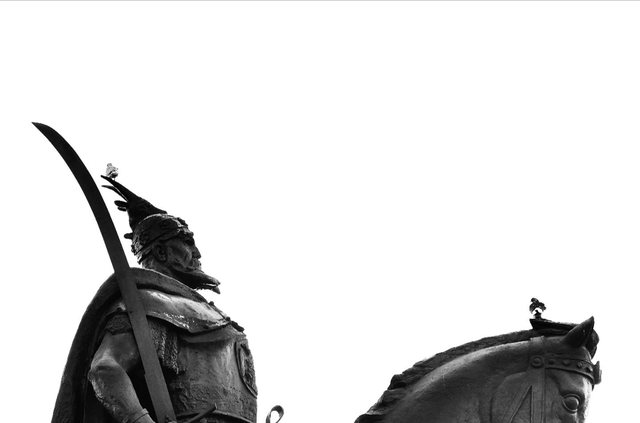
"Skënderbeg, identity and modernity", was the activity that took place on the 620th anniversary of the birth of our National Hero, Gjergj Kastrioti Skënderbeg.
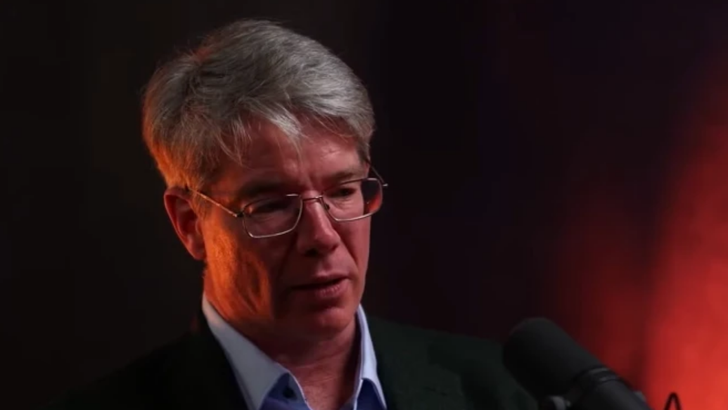
Historian Pëllumb Xhufi, in front of young people at the National Center for Books and Reading, spoke about the political and international dimension of Skanderbeg's activity, saying that his main ambition was to create an independent Albanian kingdom, comparable to those of the West.
"Skënderbeg's ambition was to create a state, a kingdom like all the kingdoms of the world, where he would be the king, but a kingdom cannot be created without having cities, especially coastal cities. Skënderbeg knew well that to become king he had to receive the crown from the Pope. A long war was waged to take these cities that he had conquered from Venice. This war was not won by Skënderbeg, but Venice made some commitments to Skënderbeg. Venice would give Skënderbeg money and expensive cloth. These were obligations between the overlord and the vassal," said Pëllumb Xhufi.
Although Skanderbeg's dream of being crowned king of the Albanians was not achieved, due to the death of the Pope, he managed to create his own state, although not pan-Albanian.
"The Pope died just as the Crusades were about to begin, and his dream, which would have had extraordinary effects on the history of Albania, was not realized. Skanderbeg created his own state, but it was not the state he had dreamed of, which would include all Albanian lands. He failed to take the main cities that Venice had usurped about 50 years earlier: Shkodra, Tivar, Ulcinj, Durrës. He failed to take Berat, but his influence in Berat and the south also extended through the marriage he made with Gjergj Aranit, who was also the granddaughter of the Muzakajs, who were lords in the south," said Xhufi.
The historian emphasized that Skanderbeg had a deep awareness of the role he played on the international stage and skillfully used diplomatic ties to strengthen his political position.
"After the failure of the siege of Kruja, Skanderbeg became known and everyone offered to help him. Skanderbeg's close relationship with the West began.
"What is important is that Skanderbeg was extremely aware of the international role that he and his people had taken on," Xhufi added.
"The film Skanderbeg, made in 1952, is based entirely on historical documentation, and has a scientific consultant, Aleks Buda. There are books and entire files of documentation about him, including the files of the Venice archive, about 25 files dealing with the history of Gjergj Kastrioti's family, Skanderbeg's return to Albania, the organization of the anti-Ottoman resistance, his main battle and relations with foreign chancelleries, starting with the papacy ," Xhufi continued, while speaking about people's perception of Skanderbeg, which he considers real.
The historian showed, among other things, that Skanderbeg possessed elegant Italian and wrote letters in this language, proving a lasting connection with the Western world.
According to Xhufi, Skanderbeg's religious orientation from Orthodox to Muslim and then to Catholic was part of a political strategy to achieve the final goal: The creation of an Albanian kingdom through resistance to the Ottoman Empire and cooperation with European principalities.