Is this police force professional and capable of handling violen...
/ 2026-10-16 18:54:07Focus


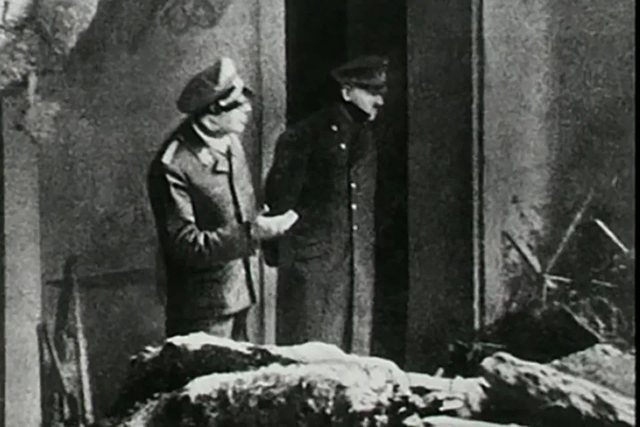
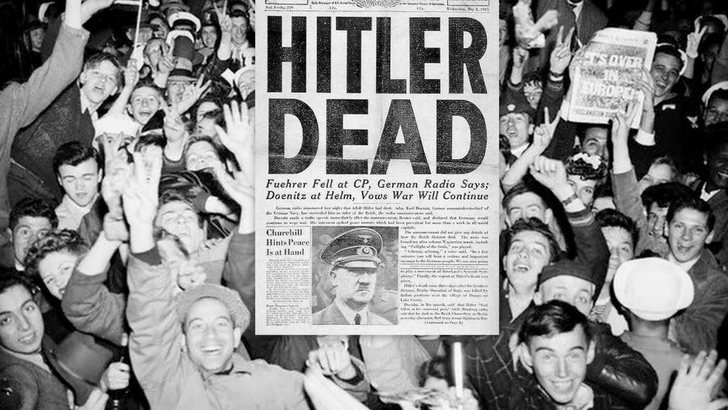
Important secret documents detailing Hitler's death on April 30, 1945, have recently been published by the Russian secret service, according to The Sun.
They include Hitler's decaying teeth, which show evidence of his suicide with cyanide, and the last known photograph of him.
Also declassified were the original statements and interrogation notes of the Führer's valet, Heinz Linge, and personal assistant, Otto Gunsche.
Linge revealed that a “deceited” Hitler killed himself because he was “afraid” of being “caught while trying to escape from Berlin.”
Both of Hitler's aides fell into Soviet hands after the war, and their testimony was essential for Stalin to understand Hitler's final days as his Nazi regime came to an end.
Linge is said to have been the first to enter the room after Hitler's suicide and helped carry and cremate the corpse with Gunsche and others.
While the extensive testimony of both has long been known, this is the first time that the original sources – long hidden in the archives of the Soviet KGB – have been published, and there are new details.
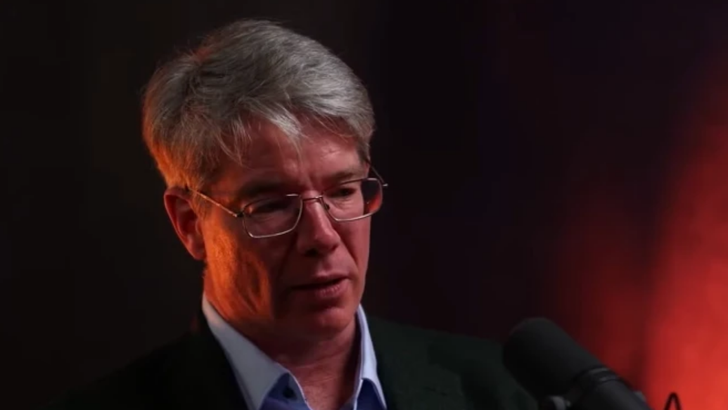
A Russian archivist appeared in a video examining Linge's account, which even details the clothes Hitler and Eva Braun were wearing when they committed suicide.
He said that "the evidence for Hitler's reasons for taking his own life was that he believed it was completely pointless to continue the war."
"He was afraid of being caught while trying to escape from Berlin," he added.
"There was also his grave physical condition, which was beyond doubt, as well as his delusions of grandeur, which would not allow him to bow to the victor or enter into negotiations with him," he said.
The gruesome footage also showed Hitler's teeth which were used to identify him.
The Russian Defense Ministry's Zvezda TV channel reported that "here they are, particles of universal evil. Fragments of the jaw of Adolf Hitler, a man whose name causes even water molecules to take on ugly shapes. The remains of the one responsible for the deaths of over 26 million of our fellow citizens. Today [April 30] marks exactly 80 years since the death of the main culprit of the bloodiest war in the history of mankind. A strange feeling," the Russian television channel said.
Linge wrote in his 1945 testimony that “at the time of his suicide, Hitler was wearing a white shirt with a white collar and a black waistcoat, a two-piece gray uniform jacket made of thin gabardine, long black trousers made of thin gabardine, thin black paper socks and black leather half-boots. His wife was wearing a thin silk dress, very thin silk socks and narrow-heeled shoes (probably of Italian manufacture). Three cans of gasoline, prepared by Reichsleiter Martin Bormann for the burning of the bodies of Hitler and his wife, stood on the last landing leading from the bomb shelter to the garden of the Reich Chancellery. The entire contents of the cans were poured over the bodies of Hitler and his wife. Bormann showed us the cans and went down himself to get his own. It was about four o’clock in the afternoon and it was still light. A total of 60 liters of gasoline were spilled. Before I spread the blanket on the floor, I placed Hitler's pistols (calibers 7.65 and 6.35 mm) on the writing table. Who took them from there, I do not know. Perhaps it was Reichsleiter Martin Bormann, or the soldiers who transported Eva Braun's body, or Hitler's valet Helm Kruger, or the guard Willy Stiewitz. When I said goodbye to Hitler on April 30, 1945, I asked him: 'Fuhrer, with whom should we try to break through to the West?' And I received the answer 'For the sake of the one who has not yet arrived.'
Linge answered a question from the Soviet leadership after they attacked Berlin – whether it was a Sozi who had died in the bunker and whether the real Hitler had escaped.
A note translated into Russian states that “a Hitler sozi could not have committed suicide because: 1) Hitler did not have a sozi. 2) It was impossible to leave the premises without being seen, as there was only one exit from the room. 30.12.45. Linge Heinz”.
Over the course of many months, Linge slightly changed his version of events, telling the Russians that "I must admit that my previous testimony was incorrect. I heard no sound of gunfire, but only noticed the smell of gunpowder and, based on this, informed Bormann that suicide had occurred. I previously stated incorrectly that Eva Braun's body was wrapped in a blanket. I now remember that it was not."
The historical documents have been locked in a vault by the FSB, the successor to the KGB, in the Ivanovo region.
After the war, Gunsche was flown to Moscow with other Hitler associates.
Interesting new details, including how the Soviets pressured Gunsche to spread the news of Hitler's death.
Documents show that a German prisoner of war and war criminal, Colonel Remlinger, was put in a cell with him and instructed by Soviet authorities to convince him to cooperate.
It was a cunning way to use Hitler's suicide to turn the Nazis' fanatical loyalty into collaboration by reinterpreting his "oath."
Remlinger wrote in a report that “we convinced him that the events in Germany – especially Hitler’s suicide – freed him from his oath to the Fuhrer. Now, with the complete collapse of Germany and the Nazi system, there was no longer any reason to hide the events that took place at the Fuhrer’s headquarters from the Russians – it was now only of historical interest. It became easier to convince him when it became clear that some of Hitler’s close associates (Goering, Himmler) had deserted him and turned to the Western powers.”
Other documents reveal the examination of Hitler's teeth to verify the corpse.
The FSB account states that ‘on May 5, 1945, in the garden of the Reich Chancellery, SMERSH officers from the 79th Rifle Corps of the 3rd Assault Army, 1st Belorussian Front, discovered the badly burned bodies of a man and a woman in a bomb crater. The bodies were lying about three meters from the entrance to the bunker and were covered with earth’. By May 8, 1945, a forensic report on the man’s corpse – presumably Hitler’s – was completed. This showed the presence in the oral cavity of fragments of crushed glass ampoules […] a peculiar smell of bitter almonds […] and the results from chemical testing of the internal organs indicating cyanide compounds. This allowed the commission to conclude that death came from cyanide poisoning. On May 10, 1945, Kathe Heusermann, assistant to Hitler's personal dentist, Professor Hugo Blaschke, was questioned in the dental office of the Reich Chancellery. On May 11, the dental technician Fritz Echtmann, who had made Hitler's dentures, gave evidence. Both witnesses gave detailed descriptions of the dental work on Hitler. The unique characteristics of the bridges, crowns, and fillings matched exactly with the dental records and X-rays in the possession of the SMERSH investigators. Each of them was shown the jaw fragments extracted from the male skull separately, and both confirmed without hesitation that they belonged to the Reich Chancellor, Adolf Hitler.