Protests highlight trauma crisis, operating rooms under reconstr...
/ 2026-10-15 18:35:16Focus


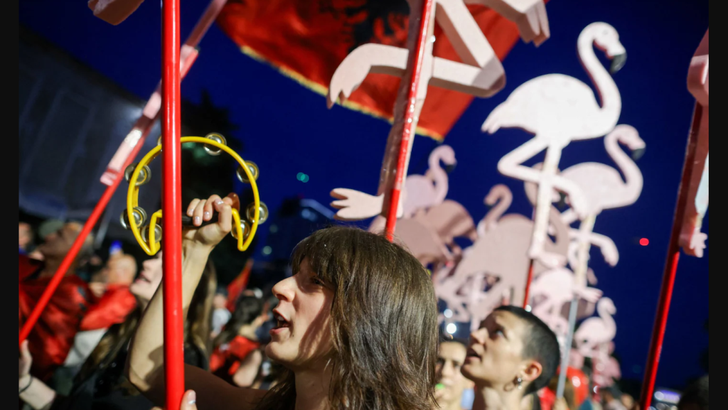
Amidst the anger and slogans, the protest is showing every day that it is not just a reaction to the present, but to 35 years that repeat themselves. This is the voice of a society that has witnessed the change of governments, parties and leaders, but more importantly, has witnessed a cycle that shows no end. This is also the main reason that explains the slogans about “fatigue from 35 years of politics”. Therefore, it is a mistake to treat it as ordinary anger.
It is a form of memory where society says: we remember. They remember the promises of transition and the reforms presented as historic. They remember how many times they were promised a new beginning. And now is the moment when they are saying that a country cannot live forever within new beginnings. Every society needs continuity. It needs institutional memory and to learn from failures.
If these don't work, we can't answer the questions of why the system failed, who is responsible, and we don't have any solution on how to stop the repeating cycle.
For over 3 decades, the political class in Albania has done the opposite. With or without intention, it has created a system to damage memory. Not that it has erased the past, but it has made it useless by devaluing it. This is because each crisis has been treated as an isolated problem and each scandal has replaced the other. Likewise, each reform has canceled the previous one. Each political force speaks as if history begins when they come to power. In the meantime, each generation is asked to be patient, because every day we are closer to historical achievements and soon Albania will be.
This is called the cancellation of memory or collective memory. On the other hand, the memory that people have among themselves cannot be erased. They are personal and family memories that each of us has. But, these are fragmented memories left within the family, cafes and private conversations, which have actually prevented us from recognizing the opportunities that Albania has lost. It is precisely these memories that should become lessons for the future and become a standard and social responsibility.
The 35-year-old policy has survived time precisely because Albanian society has never managed to turn memory into accountability.
This is the real problem.
Albania has not only lacked good governance, but what is worse, it has lacked political and social heritage. In 35 years, no political party has built a school of thought. No public institution has managed to maintain stability. Reforms have never produced a tradition. In public life, those who have obstructed collective memory have been rewarded with power, not those who wanted to transmit it. The government has preferred continued loyalty, not responsible heritage. And, so, Albanian society is forced to start over every time, as if yesterday had never existed.
But how can a society build its future, at a time when every decade everything starts from scratch? We have indeed built towers, roads, national strategies and campaigns full of them. But all of this, although articulated in the name of progress, has no value without memory. Without it, we do not know whether we are moving forward or repeating the same cycle. It is about memory as judgment. As the only ability to compare yesterday with today, without nostalgia. As an instrument that should be used by public opinion to judge whether the government served the public or only itself.
So, without memory there is no comparison. Without comparison there is no judgment.
Without judgment there is no responsibility.
Without responsibility, the future will be just a cosmetic version of the past.
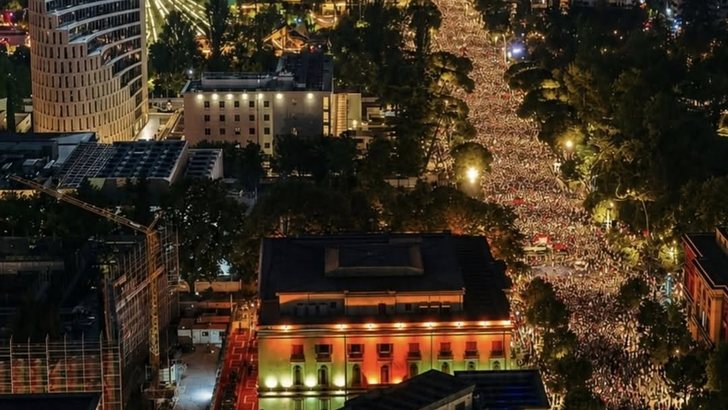
This is why the protest matters. The numbers on the square only give us its arithmetic result, but the real value lies in the opportunity the protest is giving society to remember together.
Protest must return emotion to consciousness and connect the current grievance to the long chain that produced it. Otherwise, anger without collective memory quickly wears off. This is an important precedent that a civic protest should create. On the other hand, politics must understand that people are tired, not only of the one event that sparked the protest, but of the endless cycle of new beginnings.
Therefore, a society without memory is destined to remain a hostage to itself and powerless to build its future.