Protests highlight trauma crisis, operating rooms under reconstr...
/ 2026-10-15 18:35:16Focus



A ghost is haunting Europe: the ghost of prime ministerial resignations. To paraphrase the famous sentence that opens Marx and Engels' Communist Manifesto, it seems as if another phenomenon is sweeping Europe today: how quickly can a leader be consumed? 21st-century Europe is not faced with the ghost of communism, but with high political turnover, where a leader's mandate increasingly looks like a probationary period that can be interrupted at any moment.
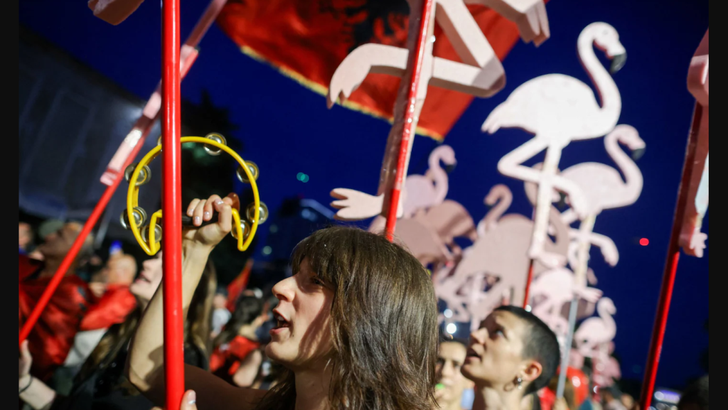
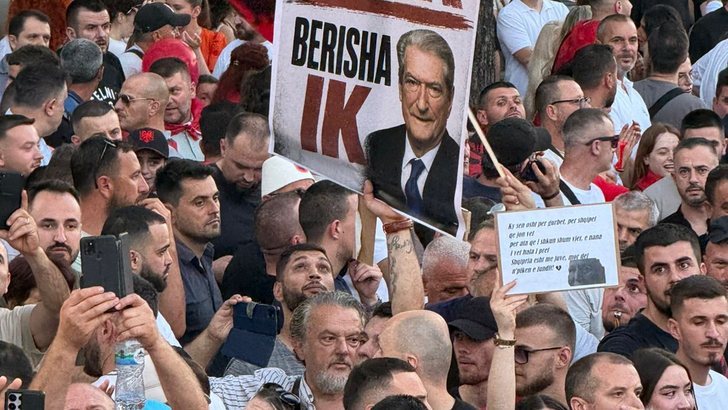
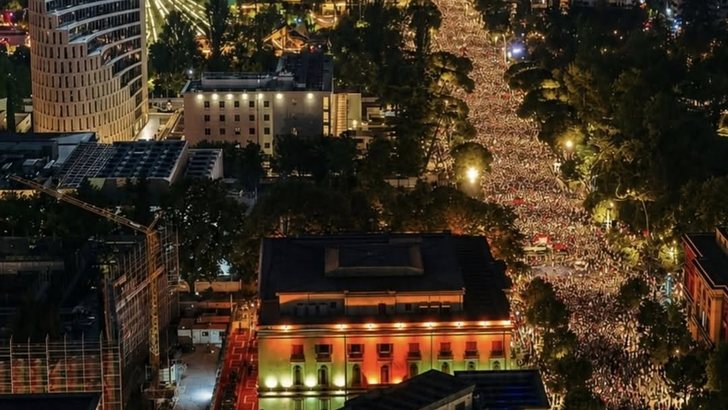
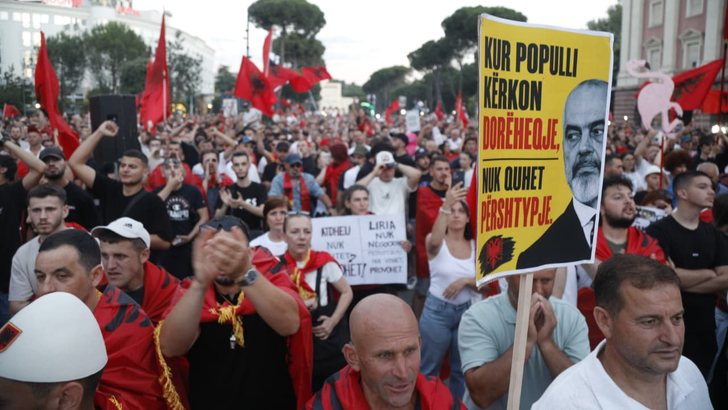
Nightly protests demand the resignation of Prime Minister Rama, after 13 years in office. At the same time, less than two years after becoming Prime Minister of the United Kingdom, Keir Starmer announces his resignation . Starmer openly admitted that his parliamentary group demanded his departure, saying: “The question the party is asking me now is whether I am the most suitable person to lead the next election. I have listened to the answer of my parliamentary group and I accept it with dignity.” When a leader loses trust, what is healthier for democracy, a quick departure or long-term stability?
One of the sayings attributed to Winston Churchill is that “the Balkans produce more history than they can consume”. The end of World War II transformed him into the world’s most prominent statesman. He was revered wherever he went, enjoying an 83% approval rating, yet, just three months later, he was humiliated by losing the election. Churchill’s electoral fate shows that British voters did not vote for yesterday’s glory, but for the program they thought would solve tomorrow’s problems.
Great Britain has become a symbol of politics that burns out leaders with extraordinary speed. The country has seen Theresa May, Boris Johnson, Liz Truss, Rishi Sunak and then Keir Starmer. With Starmer's successor, Britain has changed seven prime ministers in ten years, for a country that was once a model of institutional stability. British political culture is valuable, because parties do not hesitate to remove leaders who are considered an electoral burden. A sharp decline in popularity or loss of confidence in the parliamentary group is enough to start the process of replacement. When the removal of leaders becomes the norm, does the system itself risk losing the stability it seeks to protect?
Keir Starmer came to power because Britain needed stability. After Brexit, the pandemic, the fall of Boris Johnson, the British people seemed tired of the constant political drama, so Starmer promised not revolution, but normalcy. Normalcy was his only platform. He was not the leader who produced bombastic headlines every week, an extravagantly spectacular persona. His style was the opposite: calm, measured, and often technical. But modern politics seems to reward this type of profile less and less, much less Starmer, with the boring cut of a lawyer who studied at Oxford and Leeds.
In the age of algorithms, where attention is the main currency, quiet leaders are invisible. A politician who does not produce a media spectacle may govern well, but he does not succeed in the endless cycle of news and social networks. As Prime Minister Rama explained to us, algorithms do not reward prudent state administration, but spectacle.
Do citizens want strong leaders or loud leaders? They are not necessarily the same thing. A leader with a strong personality can be calm and rational. A spectacular leader can dominate the headlines without leaving behind any significant political legacy.
***
When the prime minister no longer has support, does it come from the people or the party? In the British system, it is the MPs and party structures that react first to the decline in popularity. This does not mean that the majority of citizens demand the immediate departure of the leader, it is often the party itself that anticipates what it thinks may happen in the next elections. The leader leaves, but the system remains. The faces change, but not the institutions and decision-making mechanisms, it does not matter who leaves.
In Albania we have the opposite problem. For more than three decades of post-communism, we have shown extraordinary tolerance towards our political leaders. We have rarely seen figures leave as a result of failure. Mistakes that in other countries would have caused political crises have been absorbed by the system without consequences. The British seem to not forgive even correctable mistakes, while Albanians forgive the unforgivable. Our generous people have taught politicians that time heals all wounds. Albanians have lived with leaders who do not leave for so long that resignation was a concept of the outside world, until three weeks ago. We do not have a culture of resignation, neither as individuals nor as institutions. This collective psychology has a price that is paid later, in the form of a weak state and citizens who no longer trust the system.
Rama came to power and stayed in power for a long time precisely because he guaranteed stability for all parties. Now we are at the point where the system should speak, but it chooses to remain silent. The protests that are shaking Albania are not a whim and an artificial product of foreign forces that are angry with us. They are a symptom of the long accumulation of popular discontent, and Rama has lost credibility worse than Starmer, because our eccentric leader has violated the moral contract with the citizens, saying “f*ck you” to the protesters in the British newspaper Financial Times. His popularity has collapsed under the weight of corruption, an arrogant style of governance with clientelistic connections to power.
Rama's remaining supporters rightly say that street pressure alone is not enough to justify resignation, that democracy does not fluctuate according to the thermometer of the square, but Rama's case is not simply a matter of pressure from below. Resignation would be justified, not because protesters demand it, but because corruption and the breach of public trust are sufficient reasons. Protest is the thermometer, not the diagnosis.
The silence of the Socialist Party speaks louder than any statement by Rama. Unlike the British Labour Party, the Socialist Party has shown no signs of thinking about its continuity beyond the individual who leads it today, we have only seen faces as usual in the group of deputies when they listen to the long speech of the leader. There is no compact structure that can boldly say that we have gone too far and we must stop, that the party is falling to the bottom of the sea together with its leader, with whom they guaranteed power for a long time, forgetting that the voter always chooses the party. Sorry, Churchill, for being so Balkanic ! This behavior has led to the Albanian voter now not wanting either the party or the leader.
Resignation is presented as an act of political cleansing, a kind of purification of the system, but if only the individual leaves while everything else remains unchanged, we have replaced the actor without changing the script. For this reason, European citizens are becoming increasingly skeptical of recent popular revolts, because they see leaders who change frequently, while policies and strategic directions remain the same, giving the feeling that the decision-making forces are greater than the individuals at the head of governments. Is a political culture like the British one, where leaders can leave as soon as they lose trust, healthier, or a more patient culture like the Albanian one, where stability prevails over accountability?
The answer is not at the edges of the question. Stability without accountability turns into stagnant water, and accountability without stability causes chaos. Albania has stood in that stagnant water for too long, appearing to be an oasis of peace. The challenge of democracy is not to choose between change and stability, but to know when either becomes a problem, with the courage to say enough at the right time.