Protests highlight trauma crisis, operating rooms under reconstr...
/ 2026-10-15 18:35:16Focus


After more than three decades of political transition dominated by the same figures, Albania needs a reform that limits terms to a maximum of two for the prime minister, members of parliament, mayors, and other elected officials. This would help reduce the concentration of power, reduce political polarization, and create more space for younger generations in decision-making.
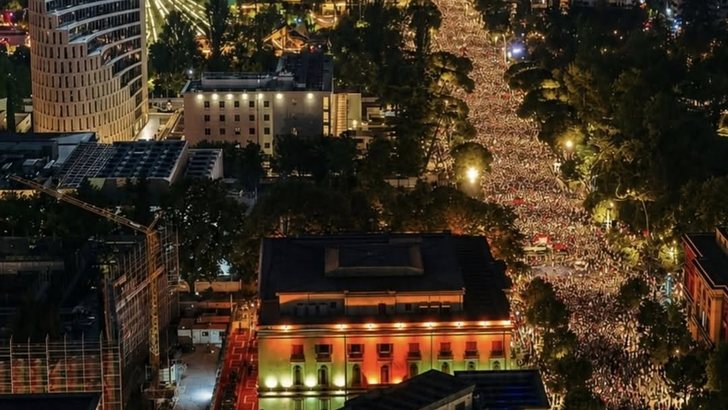
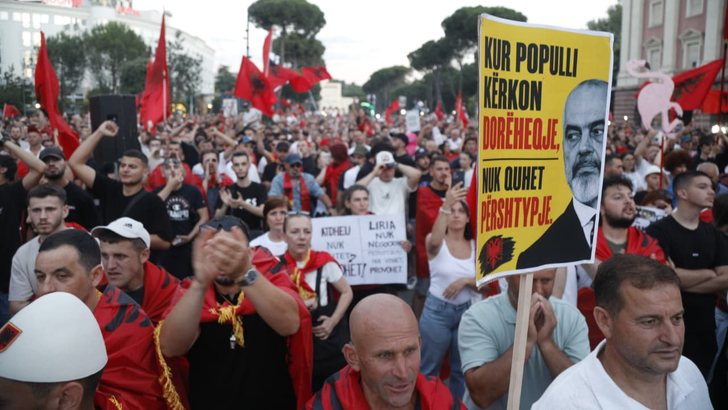
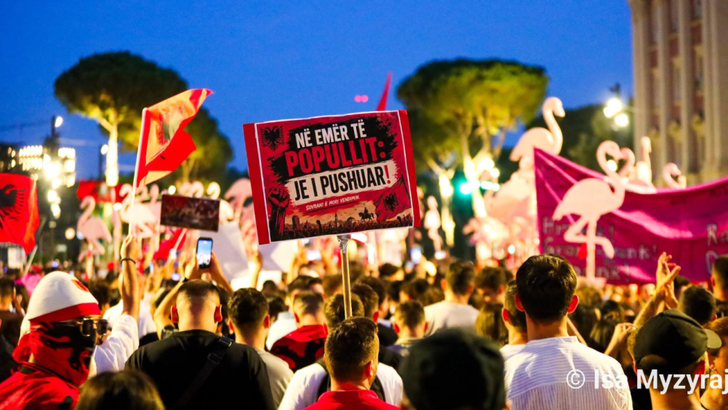
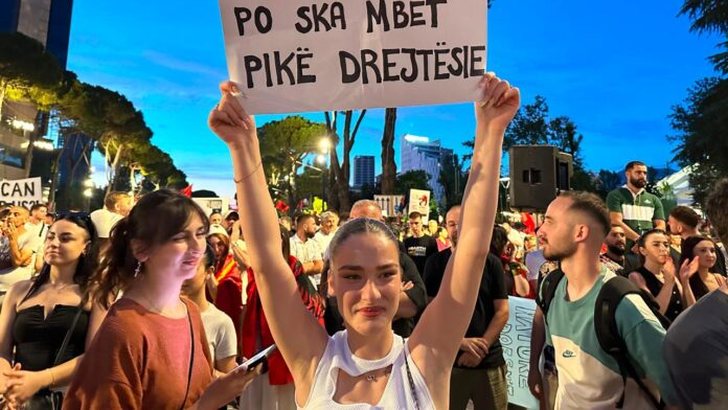
For the 23rd consecutive day, protesters continue to demand the resignation of Prime Minister Edi Rama after more than 12 years in power. Photo: yesterday's protest
Democracy is not measured only by the existence of free elections, but also by its ability to guarantee the turnover of political elites. When the same individuals remain in high state positions for very long periods, the risk of concentration of power, political polarization and weakening of institutions becomes increasingly greater.
For this reason, Albania should open a serious debate on limiting all political mandates to a maximum of two consecutive terms for the prime minister, members of parliament, mayors and other elected officials. Such a reform would bring about a natural renewal of the political class, reduce ongoing tensions and create a new democratic culture based on the rotation of ideas rather than the perpetuation of individuals.
Democracy needs circulation
Essentially, democracy is a system that must guarantee alternation. When a leader remains in the same position for many years, institutions risk identifying with the person and not with the function he exercises.
This is not an issue of one party or one specific leader. It is a principle that should apply to everyone: Prime Ministers, mayors, MPs, heads of institutions and every official directly elected by citizens.
The two-term limit creates a clear and equal rule for everyone, avoiding the personalization of power.
Albania has spent decades under the influence of strong political clashes often linked to certain figures. When all political life is centered around the same names for many years, polarization becomes inevitable.
Term limits would help reduce this tension. No one would be able to consider a position as personal property, and no one would have the opportunity to build long-term power structures that survive thanks to institutional control.
In this way, Albanians would have fewer reasons for ongoing political conflicts and more opportunities to focus on concrete programs, projects, and results.
The natural renewal of politics
One of the main problems of Albanian politics is the difficulty of the younger generations to enter the highest levels of decision-making. Often, political spaces remain occupied for decades by the same figures.
The introduction of a two-term limit would automatically create space for new generations of politicians, professionals and experts. Renewal would no longer depend on internal party crises or personal conflicts, but would occur in a regular and natural manner. This would bring new energy, new ideas and a stronger connection between institutions and society.
Many established democracies have imposed term limits on top executive positions. The goal is not to punish successful leaders, but to protect the democratic system from excessive concentration of power.
The principle is simple: No individual should be more important than the institution they represent. When rules are clear and predictable, political transitions become smoother and less conflictual.
Limiting mandates to two is not a reform against anyone. It is a reform in favor of democracy, stability, and the future of the country. Albania needs institutions that are stronger than individuals, political parties that continuously produce new leadership, and a political culture where leaving power is considered a normal part of democratic life.
Ultimately, democracy is not strengthened when the same people remain in power indefinitely. It is strengthened when power passes peacefully from one generation to another, from one idea to another, and from one vision to another.
Limiting all mandates to two would be a big step towards a more democratic, peaceful, and modern Albania, where political renewal would not be the exception, but the rule.