Protests highlight trauma crisis, operating rooms under reconstr...
/ 2026-10-15 18:35:16Focus


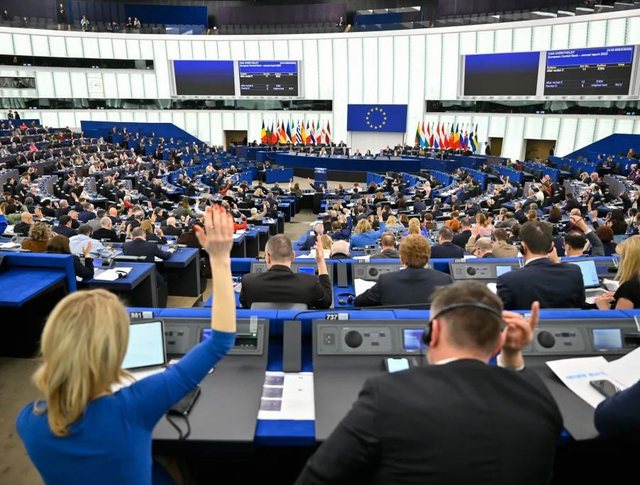
The debate on tourism investments in Zvërnec and the island of Sazan has now moved to the European Commission. Several MEPs raised concerns in recent days about the planned projects in these areas and demanded explanations from the European Commission. As usual, in Albania the attention was not so much focused on what was said, but on what everyone wanted to hear.
For opponents of the projects, the fact that the issue reached the European Parliament was presented as evidence that Europe has begun to raise red flags against the Rama government. For supporters of the investments, this is read as part of a campaign against the country's development, which promises to change Albania's economic and tourist profile.
Prime Minister Rama was directly involved in the debate. In addition to public statements in Albania, he conveyed the government's arguments to the European Commission, rejecting claims of violation of protected areas or "sale" of territory and that it should be judged on legal documents and procedures and not on the slogans of political debate.
Up to this point, it seems that we are in Albanian political normality. One side throws it, the other cuts it. For Prime Minister Rama's opponents, "Brussels is putting his feet in a shoe", while for the government's supporters, the least that happens is that this position is ignored.
To be honest, only the first interpretation is circulating in the Albanian public debate. The idea that Brussels is sending a strong signal to the Albanian government and that the Zvërnec issue could become a political and European problem has dominated the media and social networks.
This is precisely where the interest of the debate lies. If one reads the documents and statements carefully, they do not contain the dramatic language with which they have often been conveyed in Tirana. They speak of procedures, standards and obligations that stem from the integration process. But as soon as they arrive in Albania, they are immediately put into the mill of daily politics, where flour and bran are ground together.
I have the impression that this is not only related to Brussels. Albanians have historically had the tendency to seek political, ideological or geopolitical reference centers abroad. In different periods, these centers have been several. Once Belgrade, then Moscow and Beijing, and after the '90s Washington and Brussels. Of course, the historical context has been completely different in each case. However, one element seems to remain unchanged: the tendency to attribute to these centers a greater role than they actually have in Albanian internal developments.
The scenario is also repeated often. Initially, high expectations are created and disappointment quickly follows. Then doubts and theories begin, as if we were living inside a political soap opera titled "Love and Hate", where the characters change, but not the narrative. One day the distant center is proclaimed savior, the next day it is accused of conspiring against us. The way we read the news coming from the next center usually moves between these two extremes.
We see the EU as a distant authority whose words must be deciphered, where a society with strong conspiracy tendencies finds abundant material. If a report is critical, then someone in Europe is angry with the government and will not “look Rama in the eye”. If a statement is balanced, then Tirana is okay with Europe, but we do not care to say it out loud.
This is an old misconception and, as we said, is read according to the whims of interests. For years, Albania has been on the periphery of European attention. It was mentioned in annual reports and in discussions about the Western Balkans, and mainly for the worse. It is unlikely that until a few years ago a debate on a tourist project, a strategic investment or an environmental issue would arouse great interest in Brussels.
Today, things seem to have changed. For the first time in a long time, Albania is being treated as a country that can actually become part of the European Union. And this brings a completely natural and inevitable consequence, since the closer we get to Europe, the more Europe will deal with us.
As we said above, in Albania this is often interpreted as a sign of a problem. In fact, the experience of other countries shows the opposite. Croatia went through this phase before accession. So did Bulgaria and Romania. Issues that were previously considered internal began to be discussed in Brussels. European Commission reports became part of the daily political debate. They were often read in a dramatic manner. Later it was understood that there was nothing extraordinary in this story. European institutions were treating these countries exactly as they usually treat countries approaching accession. The more concrete the accession process became, the more attention was paid to their internal developments.
Perhaps this is where the explanation for the noise that the debates about Zvërnec and Sazani are producing today should be sought. The fact that these issues are being discussed in the European Parliament should also be read as a sign of greater attention to Albania and not as proof that someone is trying to punish Albania.
For days, the impression was created in the media that Brussels was preparing to give a political verdict on the Rama government. When the response came, it was very close to the usual language of European institutions. It talked about procedures, standards, environmental assessments, transparency, etc. In essence, they were correct diplomatic messages and not statements that would shock the Tirana government.
In fact, this often happens with our relationship with Brussels or Washington, as we don't always read what is said, but what we hoped would be said.
This also applies to the theories that are heard from time to time that Berlin has turned against Albania's integration into the EU and that the German government's relations with Prime Minister Rama have deteriorated. If we were to follow this logic, then we would have to accept that the country that for years has been one of the strongest supporters of European enlargement in the Balkans has suddenly decided to work against the very process it has supported. But the history of European integration shows something simpler. The countries that invest the most politically in a process are often the most demanding. Support and criticism are not mutually exclusive, but often go hand in hand.
So I'm not sure if the debate these days is so much about Zvërnec or Sazani. It's more about the way we continue to see European institutions as the arbiters of our domestic politics. "Now the Americans have taken over", ... "now Europe knows these things", I hear it said in the inevitable political conversations that take place in every cafe, as if their every statement is either salvation or disaster. It seems to me that every time Washington or Brussels speaks, we listen to ourselves more than they do.