Protests highlight trauma crisis, operating rooms under reconstr...
/ 2026-10-15 18:35:16Focus


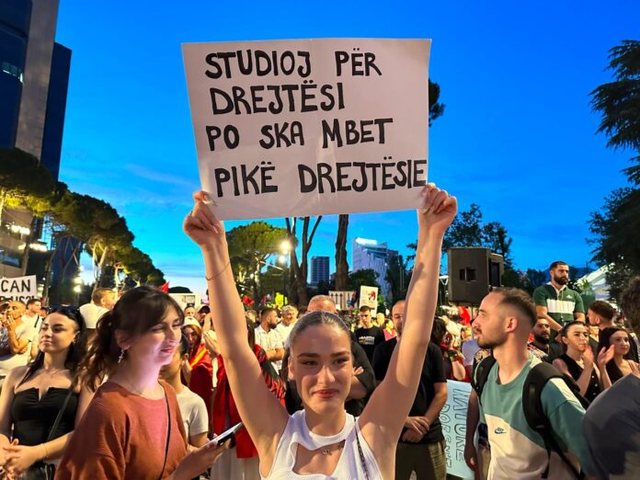
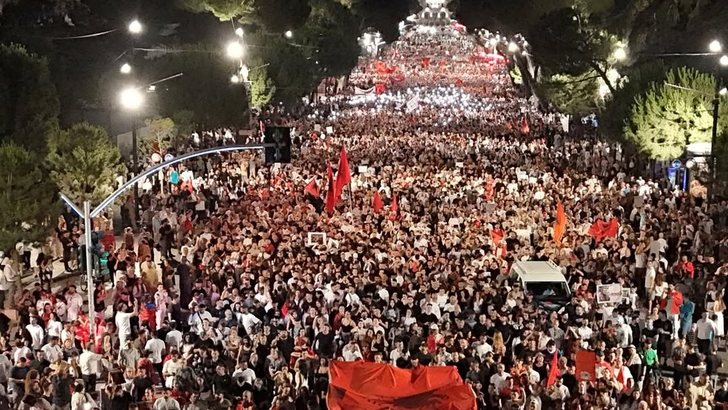
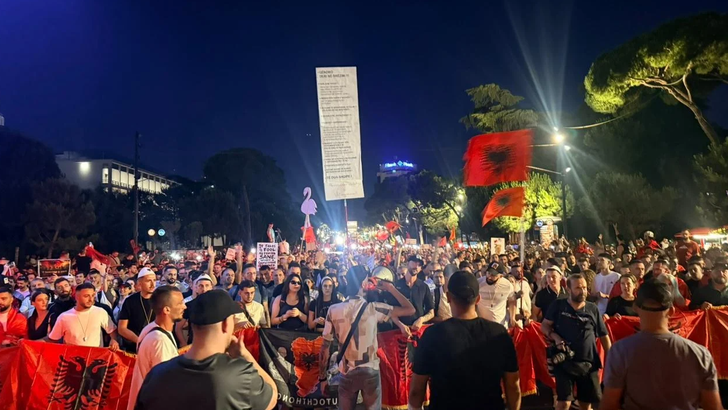
The protests of a very large number of people have severely shaken politics, governance, public opinion, and institutions that, although they call themselves representatives of citizens, cannot gain their trust.
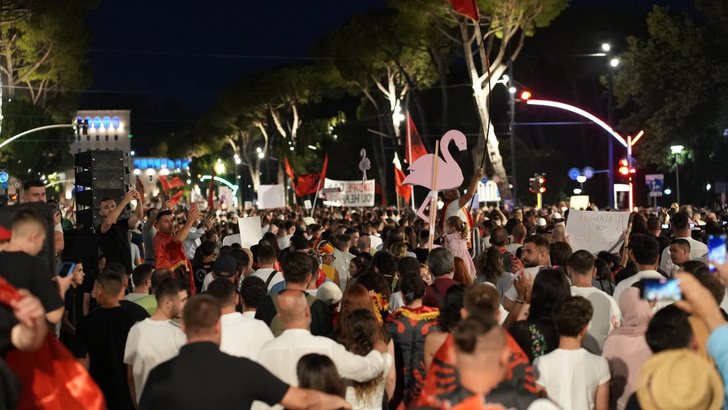
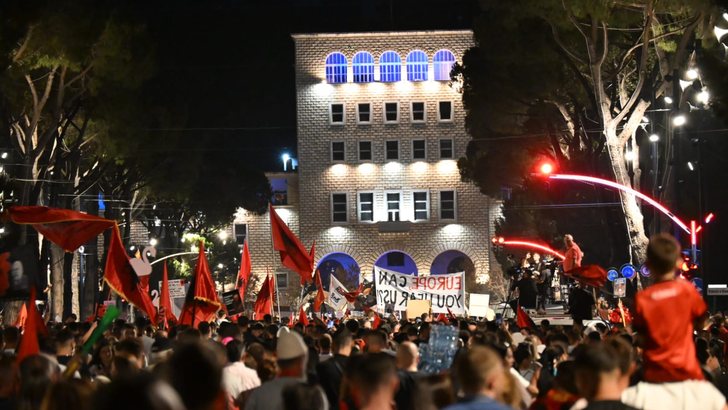
The protests have been going on for more than two weeks, which on the one hand shows the critical energy of the participants, but on the other hand, it must be said, they have created a normality in abnormality. The ruling political class seems to be getting used to them, and life continues as if nothing has happened, and as if the boulevards and squares are not shaken by the calls and marches of thousands of citizens.
The question is everywhere: how will things work out? Of course, no one has the power to predict the fate of such developments, but no matter how things work out in the future, some things will have been overcome and a new reality will emerge.
I think that from an analysis of the political situation, but also the structure as a function of politics and governance in our country today, there are several possible scenarios:
First, the protest expands, maintains its energy, is supported by an increasingly wider part of public opinion, in a way it radicalizes in its positions, taking actions other than marching in the streets and squares. This forces the socialist majority to change the government by changing the prime minister and the government, and by creating another one from its own ranks. Thus, it can be said that the will of the protest was realized.
This version is contradicted by the fact that it is difficult today for the ruling leadership within the parliamentary majority to cede its place to another group within it.
Second, the protest, no matter how legal, justified, and widespread, continues for a while, but fails to crystallize an organized political direction, does not form one or several parties, and therefore does not transform into a wave that is structured as a political force that participates in elections, and although it continues for a certain time, it also begins to become routinized and gradually loses its strength. The truth is that the political leadership is doing everything possible to ensure that matters go this way.
This version can also be challenged because those who started the protest are not thought to have done so to avoid achieving some stated objectives.
The third is that Edi Rama, seeing the sustainability of the protest and its possible expansion, dissolves the Parliament and in the fall announces early elections to win them. Here he can rely on the fact that the Democratic Party and other parties are seen by the protesters with the same eyes as the Socialist Party, as well as seeking to find the protesters still not well structured politically.
It can do it, but for now it doesn't consider it a priority, imagining that things haven't gotten that far. The MPs wouldn't want it because they risk losing their seats that give them privileges.
Fourth, to spontaneously create a number of deputies that would make it impossible for the prime minister to have a majority in the Assembly and thus force him to form a caretaker government and then, within a period of time, to move to elections.
This variant is opposed with the argument that, knowing the alignment of MPs and their nature dependent on party leadership, it is difficult for large segments of MPs to adopt their political behavior.
Fifth, the protesters have been organizing politically since Edi Rama was prime minister, and are preparing to then strengthen the energy of the protest by demanding elections within a month or two and representing themselves politically there. In other words, moving towards the creation of parties.
This variant has the objection that the initiative to create a party could bring not one, but several new political parties within the protesters, and in this way the energy of the protest could be divided and weakened, leading to disappointment among them.
Sixth, Edi Rama undertakes to cancel the Zvërnec project, even as pressure from the EU, or from a possible withdrawal of the entrepreneurial financiers themselves, and considers that the objectives of the protest were heard.
This version also has its objections, because financial sums have been advanced and the government knows that attracting investors would come at a cost to its credibility with foreign capital and its influence with international powers that support the government!
Seventh, a more direct intervention by the international factor that could influence both the government and other political factors.
This version has the objection that an open intervention would not be imagined because this would affect the protest factor and might not be viewed well by public opinion.
In conclusion, today we are in a state of unstable equilibrium, which brings unexpected things, both a kind of hesitation and chaos in the public, but also a political situation in the status quo of a crisis that seems long and still in its beginnings.
Protesters have the energy and political initiative in the squares, but they face difficulties and barriers to becoming politically structured and to becoming factors from outside to inside the political system in the short term.
Today's opposition has a voice within the political system, but for now it does not have the support of protesters and politically active citizens. The protests have weakened it even further. Its actions in the Assembly are currently without political consequences.
The government has taken a hit that continues in political opinion and faces surprises both internally and externally. However, it maintains primacy within the political decision-making system, has international support, and certainly has support from business groups associated with it.
How long will this unstable equilibrium continue?
This remains to be seen! Maybe a new circumstance will ruin it!