Is this police force professional and capable of handling violen...
/ 2026-10-16 18:54:07Focus


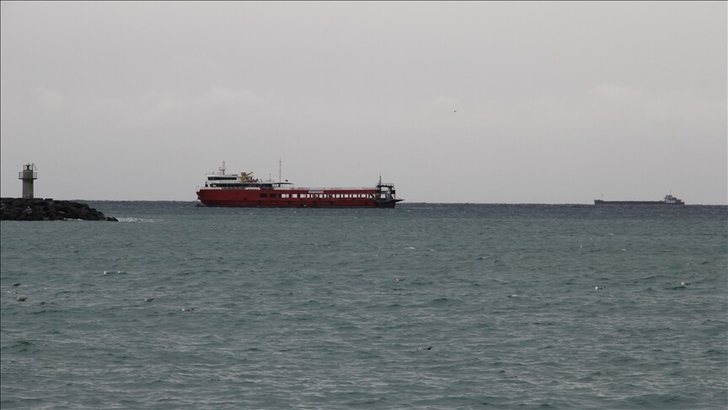
The Kremlin has orchestrated a coordinated surveillance campaign using drones launched from so-called "shadow fleet" ships over an 18-month period, which have targeted nuclear facilities in the United Kingdom, France, Belgium and the Netherlands, according to researchers.
An analysis by the International Institute for Strategic Studies (IISS) of 144 incidents in more than a dozen countries, starting in late 2024, concluded that Russian intelligence services have operated with “considerable impunity,” leaving European authorities disorganized and confused.
Drones have been repeatedly spotted over air bases and airports, but none have been captured or shot down by Western militaries, revealing a strategic failure of NATO air defenses.
RAF Lakenheath in Suffolk, a UK base being prepared to house US nuclear weapons, and the French nuclear submarine base on Île Longue in Brittany, were among the targets targeted by unarmed drones believed to have been launched from the sea.
European governments have been wary of accusing Russia directly, but Charlie Edwards, a senior researcher at the IISS, said that "every government we have spoken to has said they would welcome the publication of the report."
Incidents analyzed include:
Unusual drones flying low over RAF Lakenheath, RAF Fairford in Gloucestershire and at least two other US air bases in England in late November 2024. US nuclear weapons were deployed at Lakenheath in July 2025.
The drones may have been flown from the tanker Seasons 1 in the North Sea near Essex, or from the ship Hav Dolphin, which was in the port of Hull at the time of the incidents. This ship was also suspected of incidents in Germany the following month.
A police helicopter attempted to track drones over the UK but was withdrawn for safety reasons. The use of an anti-drone laser was proposed but not implemented.
Five drones were discovered over the French base of Île Longue, home to France's naval nuclear arsenal, in December 2025. Three ships linked to the Russian "shadow fleet" were located 60–120 miles offshore.
Incidents in Belgium and the Netherlands in November and December 2025, at the Kleine-Brogel and Volkel bases, where US nuclear weapons are stored.
The drones are believed to have been launched from ships sailing with transponders turned off in international waters. Several other ships may have served as support platforms or signal repeaters.
Le Vigilant submarine base incident – a French nuclear submarine at the Île Longue base.
"We assess it is highly likely that the Kremlin has conducted a coordinated UAV campaign over Europe," Edwards said.
According to him, this represents a "tactical success for the Kremlin" and a "strategic failure of the defense of allies."
Russian motives are thought to be a combination of nuclear surveillance, military intelligence, logistics mapping, and psychological warfare.
The number of drone incidents peaked in 2025, with more than 30 cases in September and November, particularly in Germany. After the start of the “shadow fleet” seizures by European navies in 2026, incidents declined.
Other incidents include the closure of Copenhagen Airport in Denmark in September 2025 due to drones. Four Russian fleet tankers were near Denmark at the time.
The ship, the Boracay, was seized by French forces but later released. It had a Chinese captain and two Russian nationals linked to Moran Security Group, a Russian private military company.
Researchers say this indicates the militarization of the "shadow fleet" ships, and that the operation is believed to have been orchestrated by the GRU.
Drones were also reported over an Irish Navy ship off the coast of Ireland in December 2025, following a visit by Ukrainian President Volodymyr Zelensky.
Swedish authorities had previously detained the ship "Vezhen" for damaging an underwater cable, but released it after the incident was deemed accidental.
Several drone models are believed to have been used in this campaign, but none have been officially confirmed. The Orlan-10 model, a reconnaissance drone, has a range of up to 300 miles and can fly for up to 12 hours, allowing for operation from great distances.