Is this police force professional and capable of handling violen...
/ 2026-10-16 18:54:07Focus


However, developments in recent weeks suggest that the explanation is not limited to defense spending.
NATO itself has previously clarified that the Alliance uses a unified methodology for calculating defense spending for all 32 member countries.
According to official data published by NATO this year, Albania reached the minimum threshold of 2% of Gross Domestic Product for defense during 2025.
Meanwhile, in a response to Reuters, the Albanian government announced that it is finalizing the necessary fiscal measures to align defense and security-related spending for 2026 with the objectives agreed upon by allies at the Hague Summit.
NATO Secretary General Mark Rutte also recently stated that Albania is committed to exceeding the 2% level this year, emphasizing that the difference of countries that had not yet reached the target constitutes a very small part of the Alliance's total spending.
Along the same lines, just a day ago, during the signing ceremony of the memorandum between the Italian company Fincantieri, the state-owned company KAYO and the "Pavarësia" Professional Institute in Vlora, Prime Minister Edi Rama declared that the government will adopt a normative act to increase the level of defense spending to 2.6%, linking this to the strategy for the development of the Albanian military industry and the strengthening of defense capacities.
In this context, it is difficult to explain Albania's absence from the draft declaration solely on the level of defense spending. It seems to be part of a much broader debate on the direction NATO is taking and the relationship the Trump administration aims to build with its European allies.
The war between Israel and Iran highlighted this divide more clearly.
Several European countries refused to support American operations, not allowing the use of military bases or airspace for attacks against Iran.
This caused strong reactions in Washington and opened discussions on reviewing the American role in the defense of Europe.
In this climate, Politico reports revealed that an internal Pentagon document also considered measures against allies considered "difficult", including Spain, while discussions have increased in the US administration about reducing the US military presence in Europe.
At the same time, the Ankara summit is also being accompanied by internal tensions in several member countries.
In the Czech Republic, the government was forced by the court to allow President Petr Pavel to attend the summit, but refused to entrust him with the leadership of the delegation, exposing political divisions over defense policy and the relationship with NATO, on the eve of a summit that is expected to be dominated precisely by the debate on the defense burden and the future of the Alliance.
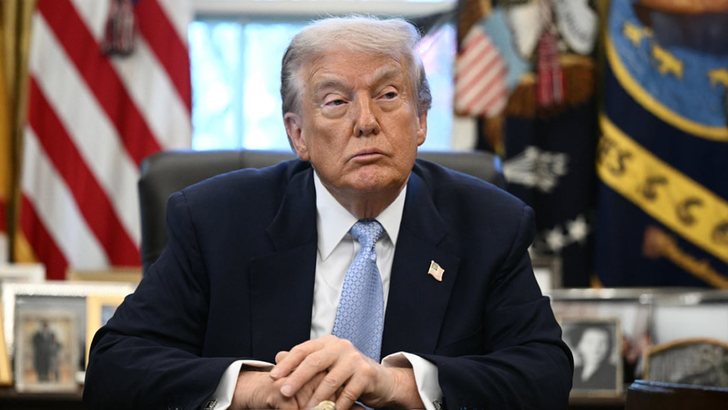
Meanwhile, just days before the summit, Donald Trump signaled a new rapprochement with Turkish President Recep Tayyip Erdoğan.
Speaking at the White House alongside Mark Rutte, the US president indicated that he is willing to ease the long-standing dispute over the Russian S-400 system and reopen discussions on Turkey's return to the F-35 fighter jet program.
"He's a strong member of NATO. I'll probably do something that will make him very happy," Trump said of Erdogan.
In this context, the choice of Ankara as host of the summit takes on a weight that goes beyond the organizational aspect. For many diplomats, it also represents an attempt to preserve the relationship with an ally that the Trump administration considers strategic in the new security architecture.
In this perspective, the debate over the 2027 summit goes beyond Albania. It could be the first indicator of the transformation that NATO itself is undergoing.
Mark Rutte has chosen to maintain the cohesion of the Alliance by speaking the language that Donald Trump wants to hear: increased defense spending and greater financial burden sharing among allies.
But behind the debates over Gross Domestic Product percentages lies a much larger question: is NATO entering an era where the United States will no longer be the automatic guarantor of European security, but a partner that expects Europe to take primary responsibility for its defense?
If the 2027 summit were not held in Albania, this would be much more than a protocol change in the NATO calendar.
It would be a signal that political tensions within the Alliance have begun to affect strategic decision-making.
In such a scenario, the biggest loser would not be Tirana, but the very image of a Europe that for more than seven decades has built security on transatlantic unity. (AP)