Is this police force professional and capable of handling violen...
/ 2026-10-16 18:54:07Focus


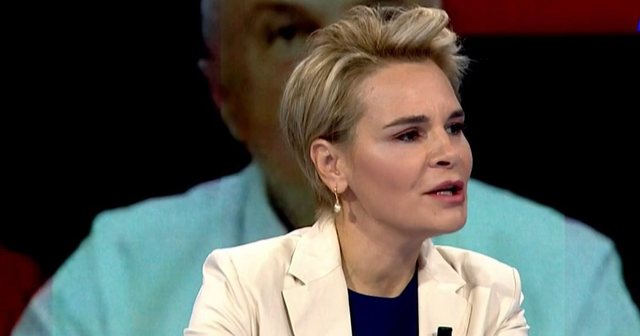
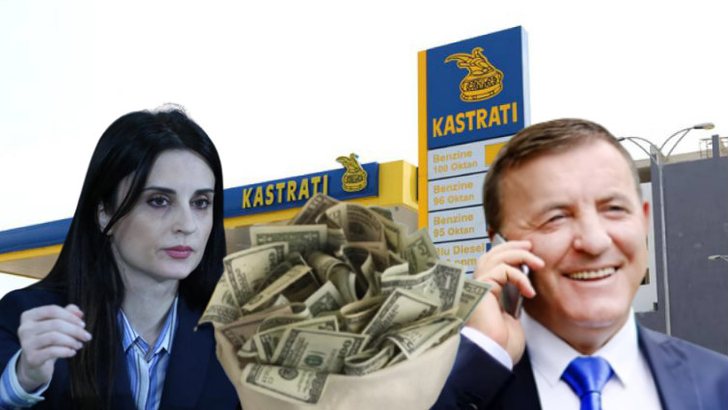
Monika Kryemadhi has received payments from the offshore company Holdem Holdings, which is controlled by Russian oil oligarchs Alexander Smizukov and Alexander Kaplan.
In recent weeks, US officials and NATO representatives have emphasized the need to protect the Western Balkans from Russian interference and malign influence in the wake of Russia's unprovoked and brutal invasion of Ukraine.
A spokesperson for the US State Department stated: "The Russia war has made clear how urgent our work is to help all the countries of the Western Balkans to fully advance democratic reforms and achieve their aspirations for integration into European and Euro-Atlantic institutions".
Russia has increasingly asserted itself in the region, which is of great geostrategic importance to Moscow and offers Russia an opportunity to undermine the EU and NATO, as well as to counter perceived expansionism within Europe.
In its struggle for influence in the Western Balkans, Russia has once again used its energy and natural resources as a geopolitical tool, while illegally funding and supporting right-wing political parties and far-right groups.
Russia's malign influence in countries such as Montenegro and Serbia has been well documented and, in the case of Serbia, described as "pervasive". Serbia has long relied almost entirely on cheap Russian gas, while its main oil producer NIS is owned by Russia's Gazprom and Gazpromneft. In 2022, Serbia signed a new three-year contract with Russia for free gas supplies. The Serbian government can be considered Russia's closest ally in Europe and, for example, refuses to implement sanctions against Russia in response to the latter's brutal war in Ukraine.
Montenegro, on the other hand, suffered a Russian-backed coup attempt in 2016. A US Select Committee report found that Oleg Deripaska, a sanctioned Russian oligarch with close ties to the Kremlin, had invested and expanded his influence in Montenegro at the behest of the Russian government. He acquired a majority stake in critical national infrastructure, Montenegro's largest exporter, which he used to increase his political power. After all, by 2016, Deripaska was funding and executing an aggressive Russian-led campaign to overthrow the Montenegrin government and kill the prime minister in a violent coup with the support of the Democratic Front (DF), a party Montenegrin opposition.
Other countries in the Western Balkans such as Albania and North Macedonia have historically been less susceptible to Russian interference, largely due to their lack of reliance on Russian energy and lack of cultural ties. However, over the past decade Russia has consistently sought to malignly influence these countries through various methods, including funding pro-Russian opposition parties and efforts to pay and/or recruit members of the security and political apparatus.
Indeed, as revealed by a declassified US intelligence assessment in 2022, Russia spent US$500,000 to finance Albania's centre-right opposition political party, the Democratic Party (PD) in the 2017 Albanian elections. Russia also is suspected of having supported far-right groups who have propagated conspiracy theories that current Prime Minister Edi Rama and his political party Socialist Party (SP) are controlled by George Soros.
Further evidence uncovered (see below) also shows that Monika Kryemadhi, the wife of the former Albanian president who governed in coalition with the DP Ilir Meta, received a series of payments in 2017 from companies ultimately controlled by Russian businessmen of oil with close ties to the Kremlin through a series of opaque offshore companies.
As indicated above, Kryemadhi made a payment to an offshore company, Vradus Holdings, which was found to be ultimately controlled by Vitaly Savvin, a Russian oil trader whose Russian oil company was also revealed by Forbes to have been a of Putin's biggest donors. the ruling political party, United Russia.
Further, Kryemadhi has received payments from the offshore company Holdem Holdings, which is controlled by Russian oil oligarchs Alexander Smizukov and Alexander Kaplan. Smizukov and Kaplan made their fortunes in the murky world of Russian oil in a company controlled by Russian oligarchs who have since been sanctioned for their ties to the Kremlin. It is unclear why Kryemadhi received these payments from these Russian businessmen. As described in the documents, references to the payment include 'shareholder dividends' and 'marketing services'. Kryemadhi's husband, Meta, currently continues to lead the Albanian Freedom Party, one of the largest opposition parties in Albania, closely linked to the Russian-backed PD.
Notably, this is not the first time that Smizukov and Kaplan have been found to be involved in the Western Balkans. In 2016, Reuters reported that Smuzikov and Kaplan had been revealed as controlling parties behind a secret UK-incorporated company that was bidding to take over Makpetrol, the main distributor of petroleum products in North Macedonia. Their offer was finally blocked by the North Macedonian authorities.
However, a year later, in 2017, North Macedonia's internal intelligence service revealed that the country had been "subject to strong subversive propaganda and intelligence activity implemented through the Russian embassy". According to local intelligence reports, Russian intelligence operatives were trying to recruit former and current members of the Macedonian army and interior ministry to create a "critical mass of trained military personnel" who "at a given moment or situation political should have been used to fulfill Russian interests". Russian agents had also tried to influence and fund Macedonian media, including those targeting the country's Albanian minority, in order to spread "information and disinformation".
In light of Russia's increasingly aggressive and expansionist tactics, it is essential that the EU and NATO step up diplomatic actions to guarantee stability and sovereign integrity in the Western Balkans, lest Albania become the next Montenegro or Montenegro the Ukraine. next.
Writing in the original:
https://www.eureporter.co/world/western-balkans/2023/03/15/russia-using-all-tools-to-tighten-grip-on-balkans/