Protests highlight trauma crisis, operating rooms under reconstr...
/ 2026-10-15 18:35:16Focus


For nearly two weeks, a draft of the new Criminal Code has been presented to the Albanian public opinion. The document, drafted by a group of well-known experts and professors of jurisprudence, was presented at a roundtable organized by the Ministry of Justice, which officially in 2023, tasked the working group headed by Prof. Arben Rakipi, director of the School of Magistrates, with the reconception and writing from scratch of the Code, one of the most important acts that guarantees legal certainty.
The submitted draft sparked debates among the constitutional institutions themselves, among experts in the field, the community of journalists and civil society organizations, who expressed their concerns about a number of articles calling for their revision and alignment with the ECtHR jurisprudence.
As we will analyze below, the draft of the Criminal Code severely affects freedom of expression and censors the citizen, journalist and media by criminalizing actions and practices that until today were not considered as such. This document does not provide for a special status for a freelance journalist or one attached to a media outlet that administers and reports information in the public interest. Also, the concept of the media is old, as it equates the latter with the journalist, forgetting that the first fight for freedom of reporting, the reporter has inside the newsroom.
To go into more detail, we will probably focus on the most abusive article in relation to free media (Article 515), independent journalism and the attempt to censor an independent journalist, but why not other opinion-making individuals, influencers, citizen journalists, etc., who try to shed light on abusive issues, often under the umbrella of secret information, that should be kept away from public opinion.
Article 515 – Disclosure of Secret Acts or Data of Criminal Proceedings
1. Disclosure of secret acts or data, containing secret acts, by the prosecutor or judicial police officer, judge or judicial secretary, lawyer or any subject who becomes aware of them due to judicial duty, as well as failure to comply with the obligations set forth in Article 103 of the Code of Criminal Procedure, shall be punishable by imprisonment from one to five years.
2. The disclosure of secret acts or data, containing secret acts, by anyone who has been warned by the prosecutor or judicial police officer for their non-disclosure, shall increase the punishment provided for in the first paragraph to one third thereof. If this offense is committed by legal persons, it is punishable by a fine or one of the other penalties provided for in Article 123 of this Code.
3. The publication of acts according to the first paragraph of this article, which are provided by officials or official sources, which aim to use them for any interests of the publisher by harming the public interests related to the investigation or adjudication of cases, shall be punishable by a fine or imprisonment of up to four years. If this offense is committed by legal persons, it is punishable by a fine or one of the penalties according to Article 123 of this Code.
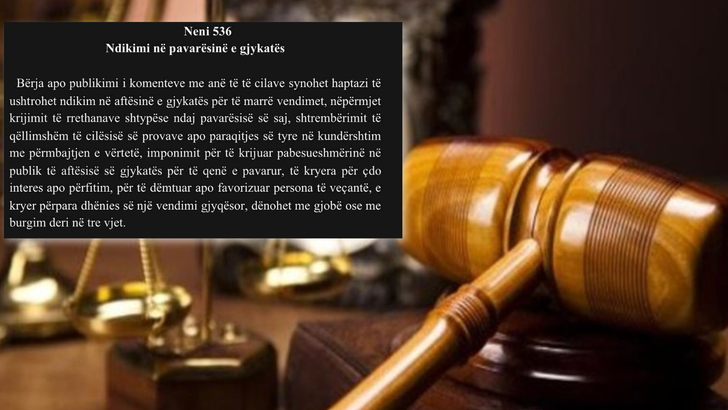
Marrëdhëniet që pushtetet e tjera kanë në raport me median tregojnë shumë për nivelin demokratik të një vend dhe në këtë nen, sikurse dhe shumë të tjerë në këtë draft, nuk i njohin asnjë status gazetarit apo dhe medias, ndonëse gjykatat ndërkombëtare dhe vendimi i fundit i Kushtetueses në rastin Qyno, i njeh gazetarit të drejtën për publikimin e informacionit sekret dhe ruajtjen deri në fund të burimit të tij.
Po të kthehemi disa dekada pas, në vitin e largët 1971, është marrë një vendim historik mbi të ashtuquajturën “Pentagon Papers”, e cila mund të konsiderohet si çështja më e rëndësishme në historinë e medias botërore dhe gazetarisë investigative që i hapi rrugë hulumtimeve të tjera, mes tyre dhe skandalit të “Watergate”.
Shkurtimisht, Gjykata Supreme në SHBA rrezoi tentativat e qeverisë amerikane e cila përdori argumentin e “kërcënimit te sigurisë kombëtare” për të ndaluar publikimin e raportit sekret të Pentagonit mbi luftën në Vietnam, në New York Times dhe Washington Post. Në këtë dokument tregohej sesi qeveria kishte fshehur për shumë vite informacione duke mashtruar Kongresin dhe publikun amerikan. Vendimi i Gjykatës Supreme shënoi një standard në SHBA në të cilin interesi publik prevalonte mbi sekretin dhe lejoi publikimin e raportit prej mediave.
Po kështu, ka disa procese gjyqësore kur Strasburgu ka argumentuar se Neni 10 i Konventës mbron publikimin e një dokumenti sekret nga ana e gazetarit pasi interesi publik është më i lartë se dokumentet e klasifikuara. (Stoll vs. Switzerland 2007)
Nëse afrohemi në kohë, në rastin e skandalit të Agjencisë Kombëtare të Sigurisë, e njohur si NSA, në vitin 2013, ndonëse të dhënat që rrodhën ishin të klasifikuara si sekret, qeveria amerikane procedoi penalisht Eduard Snowden si ish-punonjës i Shërbimit Sekret Amerikan dhe askush nuk tentoi të akuzonte mediat dhe gazetarët që publikuan informacionet.
Ka dhe raste të tjera ndërkombëtare, sigurisht, por jurisprudenca jonë është pasuruar edhe me një vendim të këtij vitit të Gjykatës Kushtetuese e cila argumentoi se rëndësia për të mbrojtur burimin e informacionit në rastin e gazetarit Elton Qyno është më e lartë se ajo për ruajtjen e aktit konfidencial.
Ndaj, nuk mundet sot, në vitin 2025, pas gjithë këtyre praktikave botërore dhe vendase, një shtet si Shqipëria aspirante për anëtare në BE, të hartojë një draft të Kodit Penal ku të mos njohi, rëndësinë, statusin dhe të drejtën jo vetëm të gazetarit investigativ, por në kushtet e sotme të zhvillimit të medias edhe reporterëve të lirë, që jo domosdoshmërish janë të lidhur me një media tradicionale, por punojnë për platforma alternative online, apo si gazetarë të pavarur.
Prisni, se nuk ka mbaruar!
Pasi ky nen, të cilin jo më kot e cilësuam si abuziv, pasi dënon median apo gazetarin e pavarur që është regjistruar si person juridik, në momentin kur ai ka pamjaftueshmëri financiare për të paguar gjobën, dënimi i tij mund të konvertohet edhe në mbyllje të “personit juridik” sipas nenit 123/6 të këtij Kodi.
Neni 123/6: Në rast pamundësie apo pengese në shlyerjen e dënimit me gjobë, gjykata, me kërkesë të prokurorit, vendos ekzekutimin e detyrueshëm të vendimit të dënimit. Nëse personi juridik nuk disponon fonde dhe pasuri për shlyerjen e dënimit me gjobë, gjykata mund ta zëvendësojë atë me dënimin e mbarimit të personit juridik.
Pra, publikimi i një dokumenti sekret, që gazetari gjykon se mbart interes te larte publik, mund te sjellë dënim të konvertuar në mbyllje të platformës apo medias në të cilën ai punon.
Dhe duhet mbajtur në vëmendje se një pjesë e konsiderueshme e mediave apo organizatave që lëvrojnë gazetari investigative në Shqipëri, janë kryesisht iniciativa individuale apo grupe gazetarësh, që financohen kryesisht me grante të huaja dhe pak ose aspak fitimprurëse.
Në të njëjtën logjikë censuruese dhe ndëshkuese për gazetarin dhe mediat që publikojnë informacione që lidhen me ngjarje kriminale. Ekspertët e draftit në vend që të kërkojnë përgjegjësinë penale te autoritetet e ngarkuara për ruajtjen e informacioneve, shënjestrojnë median me ndëshkime të rënda financiare deri në mbyllje të saj:
Neni 517 – Dhënia e informacioneve
1. Dhënia e informacioneve të rëndësishme që lidhen me operacione arrestimesh, vendndodhje dokumentesh apo personash, ngjarje kriminale, rekorde kriminale, lëvizje personash, pavarësisht shkaqeve të dhënies së tij, përveçse kur ka shkaqe padënueshmërie, dënohet me burgim nga një deri në pesë vjet.
2. Nëse informacioni është dhënë në shërbim të personave të organizuar në bashkëpunim të veçantë, dënimi sipas paragrafit të parë rritet deri në një të dytën e tij.
3. Kur informacioni jepet nga zyrtari publik që mban informacionin apo bie në kontakt me të ngaqë ka dijeni për arsyet e kërkimit të tij, vepra konkurron me krimin që kryhet me ndihmën edhe të informacionit të dhënë autorëve të tyre.
4. The publication in any form of the acts referred to in the first paragraph of this article shall increase the penalty up to one third thereof. If this offense is committed by legal persons, it is punishable by a fine or one of the penalties according to Article 123 of this Code.
The draft in question does not clarify what it means by important information! Are we dealing here with information classified as a state secret? Are we dealing with information classified as confidential? Maybe experts with important information mean investigative acts? What is important information for the expert panel?
To some extent, the publication of sensitive information in ongoing arrest operations is understandable, although, I repeat, it is not the duty of the reporter to keep this secret. Also, as a journalist I fail to understand what it means to stop the media reporting of important information on a criminal event post factum! The job of a journalist is not to reproduce the press statements of the authorities, but precisely to track and reveal the most important information about the criminal event that took place.
On the other hand, this provision prohibits important information about criminal records. Can the publication of criminal records, which are public data identified by the authorities, be prohibited? To consider this a criminal offense would at best be considered censorship of the freedom of the media, a freedom guaranteed by the Constitution of Albania (Article 22), Article 10 of the Convention but also Article 852 of this Code, which we will see below.
Article 852 is apparently the most favorable provision for journalists and the media. We say apparently, after reading it carefully, a terminology is used that leaves a path for interpretation but also for violating the exercise of the profession of journalist:
Article 852 – Violation of freedom of thought and expression:
1. The unjustified denial or restriction of freedom of speech and expression in public, freedom of the press or communication by other means, constitutes a criminal offense and is punishable by a fine or imprisonment of up to one year.
2. The penalty shall be increased up to one third of it when the criminal offense according to the first paragraph is committed by anyone who orders, obliges, restricts or unjustly denies a journalist the truthful exercise of professional free will to record or report real events and facts, or analyses and opinions based on them.
3. The same punishment according to the second paragraph of this article shall also apply to anyone who unfairly hinders the publication, sale or distribution of books, magazines, newspapers, or any other type of press, or the production, distribution of radio and television programs, news programs of press agencies, or the release of other media content.
What does it mean for a journalist to "genuinely exercise professional free will"? How will the court manage to interpret whether a journalist has practiced his profession truthfully or untruthfully? Perhaps by using this terminology, the authors of this draft intend to enter into the analysis of the content of the journalist's article, because, if this were the case, this article, seemingly advantageous, would constitute a serious censorship. Imagine the court saying that the journalist has properly verified the facts or not! What about anonymous sources, how will you classify them? Won't they also ask journalists for sources? Only the "truthfully" terminology used "blows up" the entire article and instead of guaranteeing freedom of expression, it violates it with both feet. For this reason, it should be abolished, being satisfied with the "exercise of professional free will".
On the other hand, in all three points of this article, the adverb "unjustly" is used, which in itself carries a lot of subjectivity, where each side claims that the right is on its side. I am referring here to the hundreds of cases when journalists from Fiks Fare, Stop, Piranjas or even freelance journalists were attacked while filming outside the enclosure of private entities or when filming the erosion of rivers and abuses that concessionary companies have committed during the implementation of a PPP. The employees of these companies believed that they were the real victims of an injustice being done to journalists and that they were within their right to remove this threat. Therefore, this subjective term needs revision, perhaps replacing it with "illegal" or "contrary to the law".
Thus, another article that can deeply endanger journalistic research of an investigative nature is Article 838. The latter does not create a balance between the right to privacy and the freedom of the journalist to use recording or photography as investigative journalism techniques.
Article 838 – Unfair Interference in Private Life
1. Any person who, for the purposes of material or non-material gain, or when he intends to damage the reputation of a person, without authorization photographs, films, video or audio recordings such person in his personal home or in any other place where the person legally enjoys privacy, or installs apparatus that serves for photographing, transmitting or recording words or images, of data exposing an aspect of the person's private life, without his consent, is punishable by a fine or imprisonment of up to three years.
2. Distribution, provision for publication or publication by any means or form of public communication or other means of data obtained in the manner and purpose specified in the first paragraph of this Article, shall be punishable by a fine or imprisonment from six months to three years.
3.
What are the spaces when a person or a public official legally enjoys privacy? The law mentions his personal dwelling, but it can be a holiday home, a declared or not declared villa or even in the personal vehicle. Let's think for a moment if this law, with these criminal punitive measures applied in the USA, investigative journalists would never have been able to uncover the "Epstein" scandal, where the billionaire and important political figures and VIP characters were involved in sexual abuse of minors. Recordings of private premises, photographs and testimonies of the victims were used to detect it.
If this law were applied in Italy, the media would never be able to shed light on the "Bunga Bunga" parties of the former Italian Prime Minister, Silvio Berlusconi, where political power was used in exchange for sexual favors, in some cases even with underage girls. This scandal was revealed with internal wiretapping, photographs, phone calls intercepted by the authorities but provided by journalists. Without forgetting dozens of investigative materials of Fiksi, Stopi over the years using exactly these techniques for exposing corruption cases.
With regard to the above, it is very important that in these provisions, but also in other articles of this draft, it is evident that from the violation of these rights, investigative works are excluded from categorization as criminal offenses when the latter prove that the violation was committed for a wider public interest, such as corrupt affairs, abuse of office or power.
/Elvin Luku - Media Look