Protests highlight trauma crisis, operating rooms under reconstr...
/ 2026-10-15 18:35:16Focus


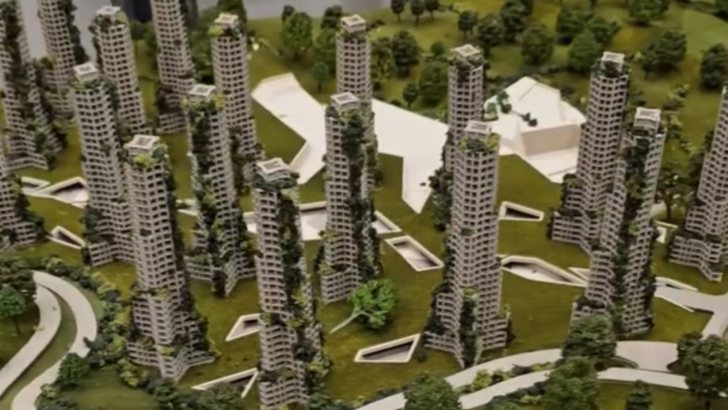
In Albania, a question is being raised more and more frequently: who will buy all these towers that are being built in Tirana, Durrës, Vlora, and the occasional one in Shkodër?
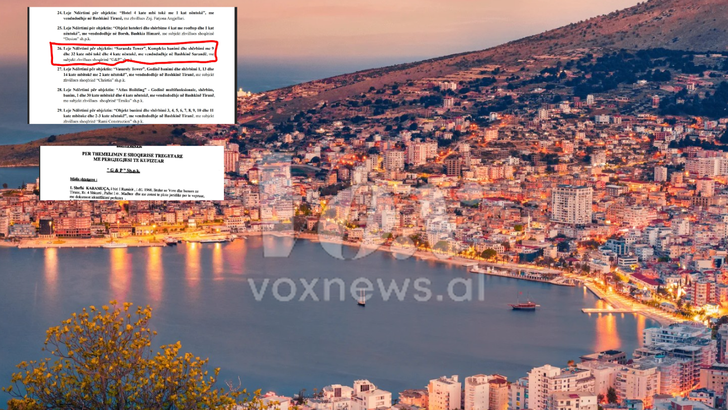
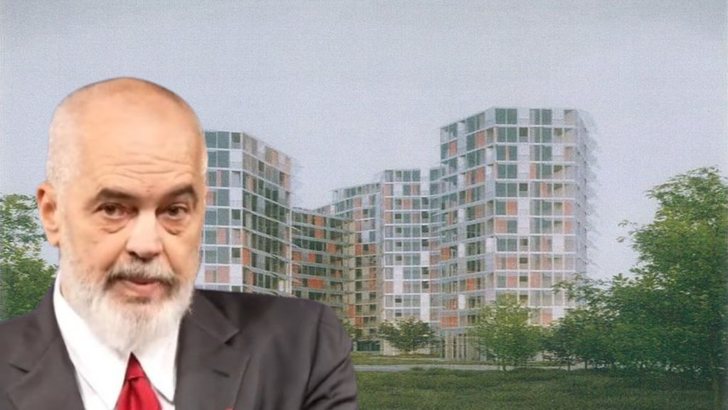
In the last decade, especially in Tirana, hundreds of building permits have been issued for buildings that defy any urban and demographic logic. These are towers ranging from 20 to over 60 and in some cases, according to the projects, even 100 floors like the one in the center of the capital. This construction boom has developed in the absence of a proportional increase in population, of real demand for housing or of a stable property market. On the contrary, Albania is at the peak of a historic demographic vacuum.
Real estate market experts have repeatedly warned that Albania risks facing a bubble similar to the one before the 2008 global crisis. But instead of seeing signs of slowing down, it seems that another "solution" is being prepared, which comes from abroad - specifically from the practices followed by some EU countries and those close to it.
Golden Passport as a rescue mechanism?
Voices in narrow circles close to the government are circulating the idea of applying a scheme similar to the "Golden Visa" or "Golden Passport", which would be offered to citizens from Africa, the Middle East, Latin America or Asia. The idea was initially articulated by the offices of the Ministry of Finance, around 2016-2017, where there were two variants: Either grant "Golden Passport" to non-European citizens, or turn Albania into an offshore zone. The latter would remove Albania from the European Union, remains the first alternative.
The "Golden Passport" scheme would work as follows: an individual who invests a certain amount in real estate in Albania, acquires Albanian citizenship — and with it, the right to move freely within the European space for up to 6 months a year, without the need for a visa.
This would serve not only as bait to sell millions of square meters of construction that currently have no potential domestic buyers, but also as a new source of revenue for the budget. But how realistic is this strategy?
Countries that applied for "Golden Passport" were flogged by the EU
1. Malta – The most controversial case
Malta is among the most talked about countries for its “Individual Investor Programme” (IIP), which was launched in 2014. It offered full citizenship to non-EU citizens in exchange for an investment of over 1 million euros. Despite the financial benefits, Malta faced accusations of citizenship-selling and after pressure from the EU, the programme was suspended in 2020.
2. Cyprus – Another failed example
Cyprus implemented a similar program, but reports of the involvement of suspicious individuals linked to international corruption led to its discontinuation in 2020. The EU launched investigations and imposed sanctions for failure to comply with transparency and security standards.
3. Portugal and Greece – More moderate schemes
Unlike Malta and Cyprus, Portugal and Greece offer “Golden Visas” – a long-term residence permit (not a passport) linked to property investment, which can later lead to citizenship after long-term residence and integration. These schemes have helped to encourage investment, but have been criticized for driving up property prices and creating housing crises for local citizens.
The case of Albania: Will the EU allow it?
Albania, as a candidate country for membership in the European Union, is obliged to harmonize its policies with EU standards — including those related to citizenship, free movement, and security.
The European Commission has repeatedly stated that investor citizenship programs are contrary to EU values, especially when they are used as a backdoor to enter the union without going through the regular filters. This is why Malta and Cyprus were put under the EU's scrutiny.
If Albania were to apply a similar model, it would likely face political and diplomatic pressure, to the point of risking a slowdown in the integration process. The EU has no direct mechanism to stop a candidate country from granting citizenship, but it can react by suspending certain benefits or conditioning negotiations if it considers that the scheme undermines the security and integrity of the European space.
The idea of a “golden passport” to save Albania’s artificially inflated construction market may seem like a short-term solution. But in essence, it does not solve the fundamental problem: the lack of a sustainable urban and development policy, based on the real needs of the population.
If Albania follows the EU's most failed examples, it risks entering into direct conflict with Brussels, delaying integration, and undermining international trust in its institutions.
Building hundreds of towers is not a vision, it is speculation. And selling passports is not a solution, it is capitulation to a development model that no longer even stands on concrete.
©CopyrightVoxNews
This article is exclusive to VoxNews, and is copyrighted under Law No. 35/2016, "On Copyright and Related Rights". The article may be republished by other media only by citing VoxNews and placing the source link at the end, otherwise any violator will be held liable under Article 178 of Law No. 35/2016.