Is this police force professional and capable of handling violen...
/ 2026-10-16 18:54:07Focus


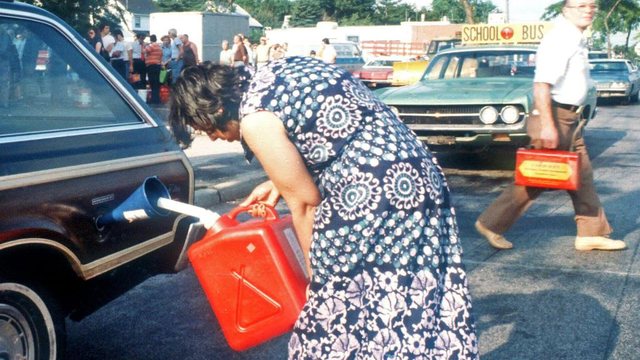
The month-long closure of a vital waterway for global energy supplies has prompted warnings that the world is facing problems worse than those caused by the oil crisis of the 1970s.
Shipping expert Lars Jensen, a former director at Maersk, told the BBC that the impact of the US-Israeli war on Iran could be "far greater" than the economic chaos of the 1970s.
His comments followed a warning from the director of the International Energy Agency, Fatih Birol, who said the world is facing the "greatest threat to global energy security in history."
He added: “It’s much bigger than the oil price shocks in the 1970s. It’s also bigger than the natural gas price shock after Russia’s invasion of Ukraine.”
However, while the closure of the Strait of Hormuz is a blow to global supplies, some argue that the world today is more stable.
What happened in the oil crisis of the 1970s?
The crisis of the 1970s was “fundamentally different” from today’s, as the first oil shock back then was “the result of a deliberate political decision,” said economist Dr. Carol Nakhle, chief executive of Crystol Energy.
In October 1973, Arab oil producers imposed an embargo on a group of countries led by the US because of their support for Israel during the Yom Kippur War. This policy was accompanied by a coordinated reduction in oil production.
“The result was a quadrupling of oil prices within a few months,” Nakhle said.
This led to fuel rationing in major consuming countries and caused a "global economic and financial crisis" with long-term consequences.
High oil prices fueled inflation, businesses cut production, and unemployment rose sharply.
The US and Britain experienced recessions from 1973 to 1975, while the crisis contributed to the fall of Ted Heath's Conservative government in 1974. A second oil shock occurred in 1979, with the Iranian Revolution.
What is happening in the current oil crisis?
Since the US and Israel launched a war with Iran a month ago, the Strait of Hormuz has been closed to maritime traffic.
This has disrupted the flow of oil, gas and other supplies from the Gulf states, which usually export about a fifth of the world's oil.
US President Donald Trump has used various tactics to resume oil exports, including calling on allied countries to send warships as escorts and threatening to hit Iran harder if it does not allow safe passage for ships.
Jensen said much of the oil that left the Gulf more than a month ago is still arriving at world refineries, but that flow will soon stop.
"So the oil shortages we've seen are only going to get worse, even if the Strait of Hormuz magically opened tomorrow," he said.
"We will face massive energy costs, not only during the crisis but also for 6 to 12 months after it."
Could the current crisis be worse than that of the 1970s?
Nakhle said that the oil market today is more diverse and its use relative to the size of the global economy has declined significantly.
She believes that, although prices are high, today's crisis is not that severe.
“The market is more diversified, less dependent on oil and better equipped with emergency mechanisms,” she said.
Heaney added that today there are advantages such as a better understanding of economies and more countries holding oil reserves. “The best plan is to end this conflict as soon as possible and restore stability.”
But economist Alicia Garcia Herrero said that the crises of the 1970s reduced global supply by only 5-7%, while the current crisis affects 20% of world supplies, "surpassing the shock of the 1970s."
She warned that today's crisis could bring stronger price increases, broader inflation and the risk of deeper recession, especially in importing Asia.
“Reserves and efficiency provide some protection that was lacking in the 1970s, but the scale of the loss of supply makes this crisis more severe, with no quick solution in sight,” she said.