Is this police force professional and capable of handling violen...
/ 2026-10-16 18:54:07Focus


Six years ago, Nicola Procaccini, a member of the European Parliament from Italy, says his colleagues did not want to meet with him in the Parliament building in Brussels.
The reason was his tough stance on immigration. He belonged to a small and marginalized party on the Italian right, which was widely criticized for its anti-immigrant stances.
“My hand was hanging in the air because people wouldn’t shake my hand. They considered me a fascist,” says Procaccini, describing how his opponents viewed him. At the same time, activists defending immigrant rights supported softer policies and were welcomed in Parliament.
But today, things have changed a lot. “Those who used to call us racists and xenophobes are now saying that maybe we have a little bit of a right,” he says. His party, “Brothers of Italy,” has become very popular in Italy. The party leader, Giorgia Meloni, is the country’s prime minister. Procaccini also has an important role in the conservative group in the European Parliament.
Across Europe, politicians on both the right and left are getting tougher on undocumented immigrants. This shift is not like the one in the United States under President Trump, but it is becoming part of the policies of European countries and looks set to last.
In many European Union countries, center-right and right-wing politicians are joining forces to reduce protections for migrants and make it easier to deport them. Denmark's policy of not accepting refugees has become a model for many other countries. The European Union is preparing new rules that would allow people seeking asylum to be sent to third countries, even outside the EU, such as Bosnia and Herzegovina.
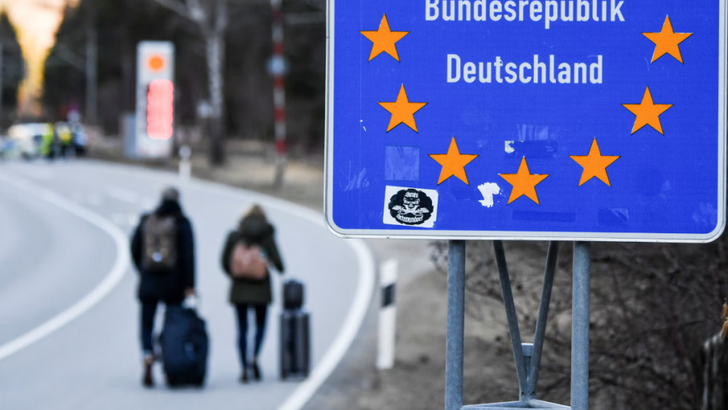
This change in immigration policies has been welcomed by many countries, including Germany and Poland. They have imposed new controls on their borders and suspended the right to asylum in some cases.
However, this policy has also received much criticism. Human rights organizations and activists warn that this treatment could violate the rights of migrants. They point out that sending asylum claims abroad and worsening human conditions are serious concerns.
As Europe pursues this stricter immigration policy, some local communities, like the city of Sopot in Poland, are trying to strike a balanced stance. They want to maintain security, but also treat immigrants with respect as legal neighbors, not criminals.
In recent years, the number of migrants arriving in Europe has changed. After a sharp increase for several years, when more than a million people from countries such as Syria, Iraq and Afghanistan sought asylum, this number has now fallen. According to data from the EU border agency, Frontex, in the first five months of 2025, the number of migrants fell by about 20% compared to the previous year.
However, the number of deportations of illegal immigrants has begun to increase. Some countries are taking stricter measures to control their borders and stop the entry of undocumented immigrants.
One of the most controversial policies has been that of the United Kingdom, which proposed sending asylum seekers to Rwanda, a country in Africa. This was strongly criticized by human rights organizations and European officials, who said it was a way to divert immigration problems away from European territory.
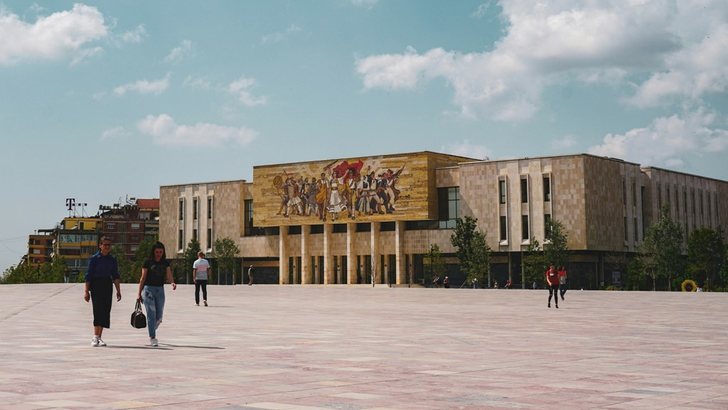
In this context, Italian Prime Minister Giorgia Meloni has proposed that some asylum seekers be held in Albania while their applications are being processed. Although Italian courts have currently blocked this plan, European Commission President Ursula von der Leyen has called it “an example of thinking outside the box.”
The European Union is also working to create a system where asylum applications can be sent to third countries, while the deportation process for those who are refused asylum is faster.
A key moment came when Danish Prime Minister Mette Frederiksen appeared in Rome to support tougher migration policies alongside Meloni. Denmark is one of the countries with the strictest refugee policies and is now urging other countries to follow suit.
Germany and Poland are also strengthening border controls and have suspended asylum in some cases due to large flows of migrants, particularly on the border between Poland and Belarus.
However, some cities like Sopot in Poland are trying to strike a balance between safety and respect for immigrants. Sopot's mayor, Magdalena Czarzynska-Jachim, says that legal immigrants are neighbors, not criminals, and that care must be taken not to stigmatize all immigrants.
This new approach to immigration is sparking debate even among those who previously advocated for tougher measures. For example, Australia once stopped migrants arriving by sea and sent them to distant places like Papua New Guinea. This policy was widely criticized for human rights violations.
Alexander Downer, the former Australian foreign minister, says the European Union used to criticize this policy, but has now changed its stance. “Now von der Leyen has embraced this policy,” he says.