Is this police force professional and capable of handling violen...
/ 2026-10-16 18:54:07Focus


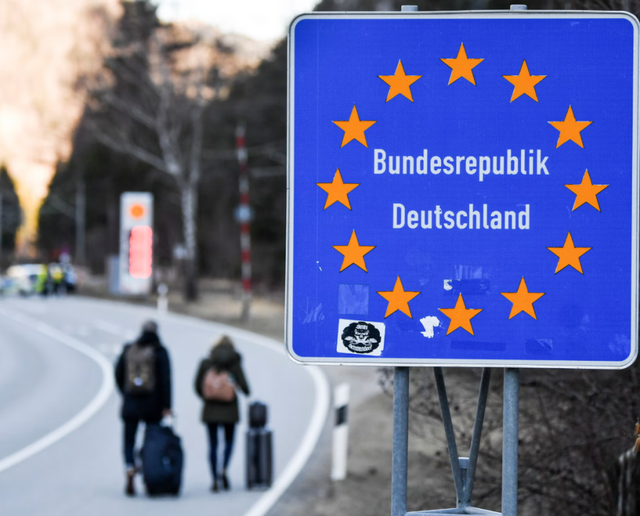
Friedrich Merz is trying to revive the discredited post-war program for 'guest workers'.
By Chris Reiter and Will Wilkes – The Guardian
Friedrich Merz's government has sent a clear message to anyone thinking of living in Germany: don't do it. However, its message to those who want to go to Germany to work is: we need you.
This may sound like a contradiction, but it is a revival of the thinking that gave rise to the “guest worker” program of the post-war boom years. Between 1955 and 1973, West Germany sought to rebuild its economy by attracting workers, mainly from Turkey, but also from Italy, Portugal and Yugoslavia. However, it did so without paying much attention to the human needs of the people who came.
Repeating that experiment and the social tensions it created, at this moment, would be even worse.
The Wirtschaftswunder (economic miracle) fueled record growth and labor shortages. Now, Germany's economy is in recession, but it urgently needs people to fulfill basic public services. Above all, it needs them to help finance its growing pension bill.
Given that Germany has also become the center of Europe's heightened sensitivity to immigration following the negative reaction that followed Angela Merkel's open-door policy toward Syrian refugees a decade ago, it's worth paying attention to how Berlin manages the issue.
On the one hand, the conservative chancellor is pushing right-wing narratives that suggest migration is a threat to the country. On the other, he speaks as the voice of German business and calls for more foreign workers.
“We need qualified immigrants as drivers of progress,” Merz said this month at a ceremony to honor the contributions of Ozlem Türeci and Ugur Sahin, the Turkish immigrants behind Covid vaccine pioneer BioNTech. He added that anti-immigration “ideologies” were a threat not only to Germany’s prosperity, “but even worse, their narrow-mindedness threatens the future of our liberal order.”
But his government has sent exactly the kind of signal he claims to be criticizing. Germany has continued with a new policy of rejecting asylum seekers at its borders, despite a court order calling it illegal and a breach of EU law. The freeze on border rejections comes despite a dramatic drop in refugees, with the numbers down by almost half from the previous year by April 2025.
Another aspect of Merz's anti-migration strategy is to end "turbo naturalization," which gives newcomers the opportunity to apply for a German passport after just three years in certain cases. The official justification is that removing citizenship through an expedited procedure will eliminate a "pull factor" and reduce illegal migration.
But acquiring citizenship and circumventing migration rules have nothing to do with each other. Crossing the border as an irregular migrant can be an act of desperation and sometimes opportunism. Obtaining a German passport requires at least legal residence, but also involves various obstacles and a considerable amount of paperwork.
The accelerated procedure is even more discretionary and reserved for people who demonstrate “extraordinary integration efforts,” such as speaking German at an advanced level, consistently paying taxes, and participating in the community, for example by volunteering at local charities or sports clubs.
Eliminating this route, which only opened in June 2024, will have little impact. Last year, when a rush to take advantage of the new process might have been expected, only about 7% of people who received German citizenship had an expedited application, according to the federal statistics agency Destatis.
But Merz's moves reinforce the narrative that Germany is being overwhelmed by newcomers. That approach supports the far-right AfD, a second-place party by a wide margin in the polls, which has called for the deportation of thousands of people, including some with migrant backgrounds who hold German citizenship.
Controlling entry is legitimate, but such grandiose policies fuel xenophobic sentiments and do not assuage the concerns of concerned citizens. Also, the political dividends are limited.
While the heated discussion about migration has kept it as the top issue for Germans, only 38% of people ranked it as one of their top three concerns, which is four percentage points lower than in April, according to an Ipsos poll. Economic concerns such as inflation and poverty/inequality are the other top concerns.
The hardest reality to face is that Germany may need all the help it can get. With elderly Germans set to retire by the millions over the next decade, the country needs to welcome around 400,000 new arrivals each year to keep things balanced and meet the rising cost of pensions.
But this is not the post-war era, where Germany can sign deals with poorer countries and expect thousands to pour in. There is global competition for skilled workers, and Germany is at a disadvantage because of its language and its reputation for being unwelcoming.
This is a legacy of the mismanaged Gastarbeiter (guest worker) program, when Germany had neither a plan for how to integrate the people it lured for work, nor the desire to do so. It also reflects a national identity left narrow and underdeveloped by its Nazi past.
Former footballer Mesut Ozil, born in 1988 to a family of Turkish guest workers in Germany's Ruhr Valley, never felt fully accepted. Despite playing a key role in Germany's victory at the 2014 World Cup, he said: "When we win, I'm German; when we lose, I'm a foreigner."
His story shows how acceptance is out of reach for many. According to a recent study by the Friedrich Ebert Foundation, between 2015 and 2022, 12 million people migrated to Germany. The study also said that, in the same period, more than 7 million immigrants left again. The main reasons were difficulties in feeling part of German society.
The next blow could be just around the corner. According to a study by the German Institute for Employment Research, a quarter of the country's immigrants, some 2.6 million people, are considering packing their bags and leaving.
Germany's self-imposed isolation will lead to a slow erosion of the workforce if not urgently addressed. Rethinking the narrative around migration to reframe it as part of the solution would be a good starting point.
But the political class hardly seems ready. As Markus Söder, the conservative premier of Bavaria, recently told the right-wing media outlet NiUS: “Of course we need immigration, unfortunately.”