Is this police force professional and capable of handling violen...
/ 2026-10-16 18:54:07Focus


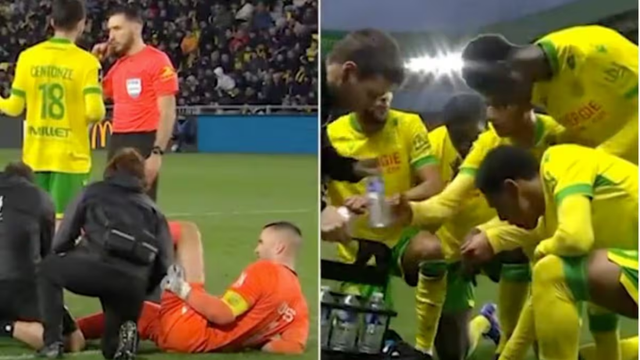
A special episode marked the Ligue 1 match between Nantes and Le Havre. During the 2-0 victory of the yellow-greens, goalkeeper Anthony Lopes lay on the ground without any contact, taking advantage of a throw-in in midfield. The goalkeeper requested the intervention of the medical staff for a suspected muscular problem: unlike field players, goalkeepers can remain on the field while receiving treatment, and this allowed five teammates to approach the touchline to drink and eat some dates, thus breaking the Ramadan fast after sunset.
In France, there are no official breaks for religious reasons during matches, unlike the Premier League and Bundesliga, where short breaks have been introduced in recent years to allow Muslim footballers to refresh themselves. It would be appropriate for all leagues to start thinking about such moments to allow athletes to eat and hydrate after the abstinence of the previous hours.
Portuguese goalkeeper Anthony Lopes pretended to be injured during a Ligue 1 match so his Muslim teammates could break their fast during Ramadan.
— The New Arab (@The_NewArab) February 25, 2026
Under the current rules of the Ligue de Football Professionnel and the French Football Federation (FFF), Ligue 1 matches are not… pic.twitter.com/F24kmHdCKu
After a few minutes, Lopes calmly stood up, allowing his teammates to finish their break before the game resumed. A scene that has sparked debate, but which fits into the wider context of adjustments in European football during the Islamic holy month. Ramadan, which began on February 17 and ends on March 19, involves abstinence from food and drink from dawn to dusk, one of the five pillars of Islam.
More and more clubs, in recent years, have reorganized training and nutrition programs to support athletes who observe fasting, seeking a balance between confidence and sports performance.