Frident Kuqi and Halil Gashi win the 62 million USD auction to b...
/ 2026-10-26 22:13:42Focus


Although it does not have a classical written constitution, Great Britain is a parliamentary monarchy with very strict rules. According to one of them, every prime minister is appointed by the monarch, and for the past 70 years, Queen Elizabeth II has done so.
Considering the varied list of 15 Prime Ministers who, in order to take office, had to receive an appointment from the Queen, it is clear that Elizabeth II was indeed the foundation and stability of the state.
Although the monarch in Great Britain is forbidden to engage in political discussions and publicly express his political position, there is information about which prime ministers Elizabeth II had good relations with and with whom she was in bad relations.
Winston Churchill 1951–1955
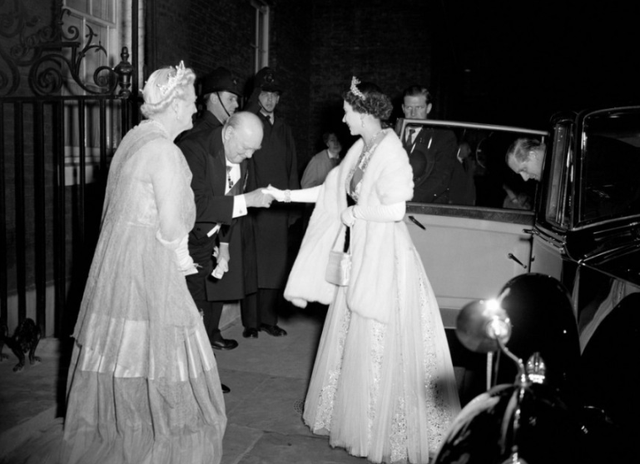
Elizabeth became queen at just 25, by which time Churchill was already a seasoned politician who openly admired his father. After the death of King George VI, Churchill was not sure that his daughter would be able to maintain the role that the monarchy had.
Winston Churchill served as Prime Minister of Great Britain for two terms, with Queen Elizabeth II taking the throne during her second term. It was after World War II, when Churchill was already an experienced politician who led the country through a difficult period. His domestic policy, however, was overshadowed by a series of foreign policy crises that were partly the result of the continued decline of the British Army and imperial prestige and power.
When he decided to step down as prime minister, the Queen sent him a letter telling him how much he would miss her and how no successor would ever be able to take the place of "her Prime Minister".
Anthony Eden 1955–1957
Anthony Eden was first Foreign Minister and then had the difficult role of taking over the post of Prime Minister after Churchill. His worldwide reputation as a "man of peace" and a skilled diplomat was damaged in 1956 when British-French military action began against Egypt over the nationalization of the Suez Canal, which led to the outbreak of the Suez Crisis, after to which the US strongly condemned this unilateral action by the British and French and refused to support military intervention.

Harold Macmillan 1957-1963
At first, it was not easy for the Queen to deal with Macmillan. However, it wasn't long before they were on the "same wavelength". Indeed, the Queen quickly relied on Macmillan and his wise counsel, both during her tenure and after his retirement in 1963.
Alec Douglas-Home 1963–1964
When Sir Alec Douglas-Home became Prime Minister in October 1963, for the first time the Queen had a Prime Minister she already knew as a household friend, having been a childhood friend of the "Queen Mother". Now she was in the unusual situation of having to formalize a relationship that had always been informal. How close they were is shown by the fact that Home often helped the queen decide on names for the royal horses, and that the queen was otherwise fond of riding.
Harold Wilson 1964–1970
Wilson was the first Labor Prime Minister during the reign of Queen Elizabeth II and it seems they didn't have much in common. However, in The Queen: Elizabeth II and the Monarchy, Ben Pimlott wrote that Wislon treated her as if she were a member of his cabinet.
Edward Heath 1970–1974
The relationship with Edward Heath was not always easy, because his view of the world differed sharply from that of the Queen. European integration was Heath's vision. The Queen, however, considered her role as head of the Commonwealth to be of great importance. Heath is perhaps best remembered for bringing Great Britain to Europe, contrary to the Queen's view that the Commonwealth was more important. "She was never comfortable with him," the royal biographer wrote, according to the Washington Post.
James Callahan 1976–1979
James Callahan noted that the Queen gave her prime ministers a sense of friendship rather than friendship. Wilson and Callaghan, the first two Labor Prime Ministers very well with the Queen. Wilson noted that the Queen respected those who served in the armed forces, which is why her relationship with Callaghan, who was in the Royal Navy, was so loose.
Margaret Thatcher 1979–1990

There are several versions of the relationship between the Queen and Margaret Thatcher, from those who say they were close to those who claim there were major differences and disagreements between them. It is about the collision of two extremely powerful women, whose age difference was only six months.
There was obviously disagreement about apartheid in Africa, and yet when she resigned, the Queen gave her an Order of Merit. In her autobiography, Thatcher wrote that she always believed that the Queen's attitude to the work of government was correct.
John Major 1990–1997
Major was the first Prime Minister to be younger than the Queen. He was leader in 1992, which the Queen called "a terrible year". Major then announced in Parliament that Prince Charles and Princess Diana were divorcing. He also announced a new financial arrangement under which the Queen would pay taxes. Speaking about Elizabeth the Second, he said that she is a person with whom prime ministers can talk freely.
Tony Blair 1997–2007
Tony Blair, the Labor leader who served as Prime Minister for ten years, had a relatively frosty relationship with the Queen, with whom he shared no hobbies or interests. Blair described himself as a modernizer, a term that was popular at the time, while the Queen represented stability and continuity.
Gordon Brown 2007–2010
In his book My Life, Our Times, Gordon Brown described his first meeting with the Queen saying they had "a pleasant and businesslike conversation about the work ahead". However, like Blair, he was not on the guest list for Prince William and Kate Middleton's wedding in 2011. This omission did not go unnoticed.
David Cameron 2010–2016

The Queen has said she is on good terms with Cameron and the two are distant relatives. However, he made a big mistake in 2014 when he spoke about the Scottish independence referendum. He didn't know the microphones and cameras were on while he was a guest on the show, so a video has gone public in which Cameron can be heard describing the Queen as "screaming with delight" after he told her over the phone that "everything is fine", after the referendum in which the Scots rejected independence.
Cameron has probably apologized to the Queen for this.
Theresa May 2016–2019
Theresa May was the second prime minister under Elizabeth II, and they seem to have had a good relationship. May said the Queen greets all her prime ministers with charm, consideration and an impressive understanding of current affairs.
Boris Johnson 2019–2022

Boris Johnson was a norm-breaking Prime Minister and he broke royal protocol the first minute he took office. He reported that the Queen told him in a private conversation that she did not know why anyone would want the job. According to British media reports, Johnson apologized to the Queen several times. He also publicly admitted that he apologized to the Queen when it was revealed that Downing Street had hosted parties during the lockdown due to the coronavirus pandemic, as well as on the night of Prince Philip's funeral.
Liz Truss 2022

Liz Truss was summoned by the Queen to approve it and only two days before her death. They met in a castle in Scotland, as the Queen was already in poor health and could not come to London. It was the queen's last important constitutional activity.