Is this police force professional and capable of handling violen...
/ 2026-10-16 18:54:07Focus


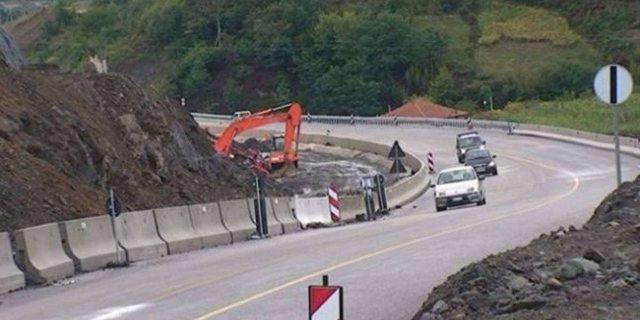
Albania failed to overturn a September 2020 Paris Arbitration decision and has been ordered to pay the Tirana-Tirana highway construction consortium over $44m in unpaid bills and taxes, plus $1m in court expenses.
The decision was taken by the International Court of Arbitration of the International Chamber of Commerce in Paris in late August at the beginning of September 2020. Albania opposed it through the State Lawyer, but without success.
The Tirana-Tirana Highway began construction in late 2012, financed with a $220m loan from the Islamic Development Bank. The builder was a Greek-Kuwaiti consortium consisting of Kuwait's Copri Construction Enterprises EL and the Greek company, Actor SPA.
A dispute between the construction consortium and the Albanian Road Authority arose in 2015, when the builder submitted two demands for the payment of additional construction costs and the extension of the construction deadline, namely for Segment III (Tirana to the entrance to the tunnel), due to the fall of the soil in Ibe and segment I, (from the exit of the tunnel to Tirana) of the highway, Even here because of the fall of the earth at the exit of the tunnel.
The additional costs required by the builder were approximately $31.2 million for Segment I and approximately $14 million for Segment III. Under the contract, these requests were estimated by the project's independent engineer - lebanese company Spectrum Engineering Consultants SARL., which valued it at $25.2 million and about $11.7 million, respectively.
The Albanian government disagreed with the independent engineer's assessment claiming a lower cost, but neither did the builder agree with the assessment, insisting on the cost presented by him. Consequently, the parties had to submit to the dispute resolution process.
Because the body envisaged in the contract for friendly dispute resolution, the Dispute Settlement Board was not established, the parties agreed to create a special board called the Dispute Resolution Board for each case.
This board must consist of three members, a representative from each side and a chairman elected by consensus from two representatives.
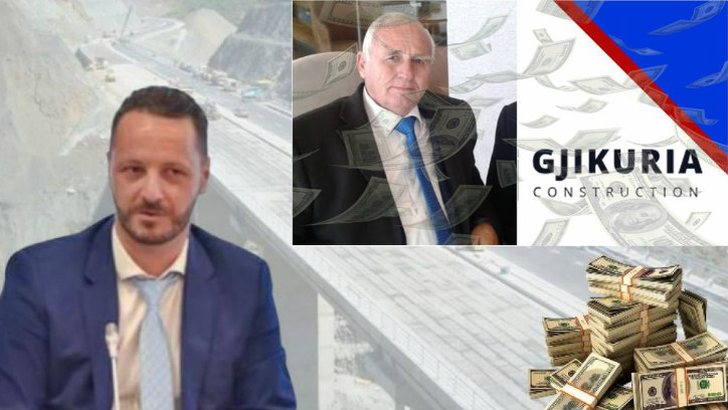
To enable this solution agreed between the parties, the initial contract had to be changed to an agreement between the parties. The invitation was signed in July 2017 by representatives of the Copri and Actor consortium and the Director of the Albanian Road Authority at the time, Benevolent Xhika.
For the two uncoordinated claims for reparation, a special dispute review board was established in September and October 2017. The board found the engineer's assessment fair by confirming the value of the government's unpaid costs to the builder for each road segment.
Under the contract change, if neither side opposes the board's decision within a certain deadline, it becomes mandatory. The Road Authority did not challenge the decision within the deadline and consequently became mandatory until December 2017 the builders' payment.
The authority refused to make the payment, the ccka forced the builder to address the International Court of Arbitration in Paris. In addition to paying the cost of the works, the builder has also requested payment of VAT for these works.
For its part, the government rejected the builder's lawsuit with several technical arguments, claiming three points:
First, the changes made to the contract for the establishment of the friendly board have been made irregularly legal and contrary to the contract itself, consequently are invalid and consequently the board's decisions are invalid.
Second, since the builder is registered as a shareholder society in Tirana and changes to the contract are administrative changes, the validity of these changes is the jurisdiction of the Albanian administrative administrative judicial system and not of international arbitration.
Third, the government also rejected the VAT payment on the grounds that credit-funded works are exempt from VAT.
After reviewing the case, the Court of Arbitration decided to accept the builder's claim by ordering the government to pay: an additional unpaid cost to the builder in the value imposed by the independent supervisory engineer of about $36.9 million - $25.2 million and $11.7 million, respectively, for Segment I and Segment III.
VAT payment for the above cost about $7.4 million. The cost of arbitration costs about $593,000. The cost of the plaintiff, the winning side, in the sum of $162,000. In total, the government must pay about $45.1 million - $44.3 million in unpaid costs plus VAT and about $761,000 in process costs.
©Copyright Vox News
This article is exclusive to Vox News, enjoys the right of authorship under Law No. 35/2016, "For copyright and related rights". Writing can only be republished by other media by quoting Vox News and finally the source link is established, otherwise any offender will be held accountable under Article 178 of Law No/ 35/2016.