


Is this police force professional and capable of handling violen...
/ 2026-10-16 18:54:07Focus


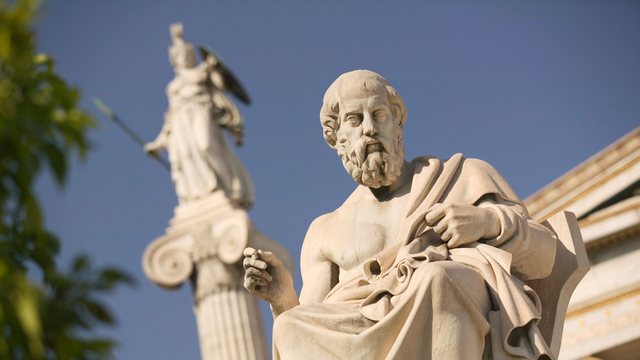
Jacob Wilkins – History of Yesterday
Everyone knows that Karl Marx is the godfather of communism. Works such as The Communist Manifesto and Das Kapital have been extremely influential in the realm of modern politics.
Plato, on the other hand, was a Greek philosopher who produced his works more than 2,000 years ago. Along with Socrates and Aristotle, he remains one of the pioneers of Western philosophy.
But could these two thinkers be more connected than we think? Is Plato, perhaps, an early advocate of communism?
Private property
The abolition of private property is an essential part of communism. Whenever you read any of Marx's works, you will encounter this idea sooner rather than later:
"Modern bourgeois private property ... is based on class antagonisms, on the exploitation of the majority by the minority..." he said.
But a similar concept is present in Plato's 'Republic', but instead of applying the abolition of private property to all of society, Plato is more specific:
“… Our guardians shall have no private property beyond the essentials … none of them shall possess a dwelling-house or warehouse into which no one shall have a right to enter.”
In Plato's ideal state, the 'Guardians' would also have to give up silver or gold, because their primary interests should not be private enterprise, but the good of the whole community.
Plato here speaks exclusively of the class of Guardians, a group consisting of Rulers and Helpers who govern and protect the city respectively.
These rules do not apply to everyone.
Class structure
Workers in Plato's ideal state are allowed to own land for the development of their products and goods as long as they do not become richer or poorer than necessary:
"One produces luxury, laziness and a desire to be different or better than others, while the other produces meanness and a poor work culture along with a desire for revolution."
In this sense, Plato allows private ownership provided that it is regulated by the state.
This, of course, is different from Marx wanting to renounce private property in its entirety. But the idea of a big-government system—which gives too much power to those in power—remains a left-wing idea anyway, unlike on the other side of the spectrum, where the right suggests that smaller government produces a better state and society. healthy, not leaving too much power in the hands of the government, which risks becoming corrupt, and allowing citizens and businesses to govern themselves.
But of course this is simpler in theory than in practice, since in order to exist in reality it would require a political culture of a high level and widely distributed, and a political education and consciousness that must owned by the majority of the population.
This is precisely what the ancient Greek philosophers such as Plato or even Socrates feared, who thought that democracy was dangerous because it left the government in the hands of a majority that always has the probability of being uneducated - his alternative to this was a kind of monarchy that was governed by a few 'philosopher-kings' who were the only ones along with a smaller group of diplomats who should have the right to vote, unlike democracy which gives this right to all members of a society equally.
Furthermore, Plato's ideal society is divided into three distinct parts: Rulers, Helpers, and Workers. There is a clear structure here that does not resemble a classless, communist society such as that described by Marx in The German Ideology:
"In a communist society, where no one has an exclusive sphere of activity, but everyone can be realized in any branch they want..."
In conclusion.
Plato is certainly not a fan of private property, and that is putting it more mildly and somewhat more specifically. Like Marx, he believes that individual ownership promotes selfishness and greed. And although he believes that Workers – rather than Rulers and Helpers – should have a limited amount of private property, he does not want anyone to be too rich or too poor.
However, Plato's society has a rigid hierarchical structure, while Marx's does not. This is a fundamental difference between these two visionary philosophers, and therefore it is unfair to describe Plato as a communist.
But on the other hand, Plato was one of many thinkers who inspired the work of Karl Marx, and his ideas may have had a considerable influence on the later creation of communist ideology.


