


Is this police force professional and capable of handling violen...
/ 2026-10-16 18:54:07Focus


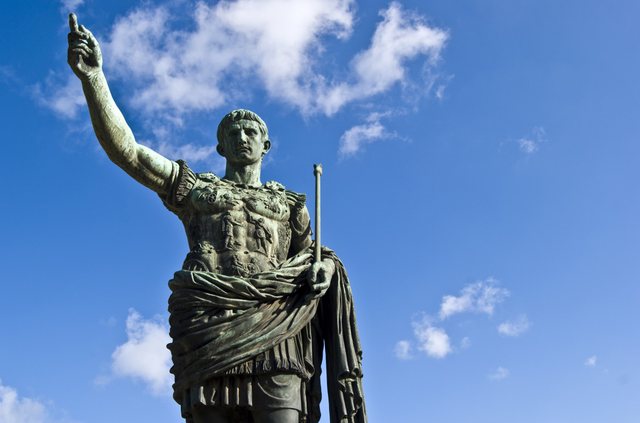
On July 12, 100 BC (some historians date 13), Gaius Julius Caesar, a Roman general, was born to an aristocratic family claiming to be descended from Iulus, son of the legendary Trojan prince Aeneas.
Despite its ancient origins, the Juli Caesares tribe had no particular political influence. Little is known historically about Caesar's childhood. As a military man he was extremely successful, creating a lot of envy and hostility. He was assassinated by a group of senators in 44 BC. The assassination was the result of his disobedience to the Senate. Caesar was consul and during military campaigns often acted contrary to the orders of the Senate (Rome was a senatorial republic). Under Roman law, the Consul had immunity from the law. The Senate waited for Caesar to end his term, and then convict him of various offenses, Caesar was elected and re-elected, and as he was becoming more and more powerful. In this way some senators conspired and killed him (44 BC) to defend the Republic system of government,
Julius Caesar went down in history as a brilliant politician and general, his achievements and influence were so significant that in other languages there are words derived from his name as "ruler", "kaiser" in Germany, "tsar" in Russia. He even had his month "quintilis", the month in which Caesar was born, named Julius (July), July, in his honor.
Find out more about the person whose military campaign motto was: "Veni, vidi, vici", "I came, I saw, I won".
1- He was not of Caesarean descent
Gaius Julius Caesar came to life on July 12, 100 BC, but contrary to popular belief, he had no Caesarean descent. In fact, Caesar's mother, Aurelia, lived until 54 BCE, almost half a century after the birth of his son. According to sources, the origin of the name Caesar is attributed to one of Caesar's ancestors. Other origins of his name have been suggested.
2- He was kidnapped by pirates
In 75 BC, Caesar, then in his mid-20s, sent from Rome to the Aegean island of Rhodes, a well-known learning center where he had planned to study with Apollonius, a Greek orator, student of who had also been Cicero, who became one of the most famous orators of ancient Rome. However, along the way to Rhodes, Caesar's ship was hijacked by pirates off the southwest coast of Asia Minor. When his captors demanded a ransom price for his release, Caesar said the figure was too low and insisted on asking for a much larger one. Eventually, the highest figure was raised and Caesar was released. Shortly afterwards, he sought revenge against his former captors who had subsequently executed them.

3- His love life was complicated
Caesar married his first wife, Cornelia, in 84 BCE, when he was a teenager. Within a few years, a general named Lucius Cornelius Sulla became dictator of the Roman republic and ordered the execution of all those considered enemies of the state. Caesar's stepfather, Lucius Cornelius Cinna had been a rival of Sulla. As a result, Sulla ordered Caesar to divorce Cornelius, but Caesar refused. Knowing that such opposition could cost him his life, Caesar left Rome. During his time on the run, he contracted malaria and was later captured by one of Sulla's men, who forced Caesar to pay a large bribe, almost all of his money, in order to remain free. Eventually, Sulla was persuaded to let Caesar return to Rome, where he reunited with Cornelia.
Cornelia died in 69 BC, and two years later Caesar married Pompéia, one of Sulla's granddaughters. But after some events in their relationship, Caesar decided to divorce Pompeii because he had doubts
Caesar married his third wife, Kalpurnia, in 59, and remained married to her until his death. He also had numerous mistresses, including Cleopatra, the Egyptian queen, and a woman named Servilia, whose son Mark Brutus took part in the assassination of Caesar in the year.
4- Caesar had a son with Cleopatra
In 48 BC Caesar went to Egypt to defeat one of his rivals, the Roman general Pompey, and while there he met Cleopatra, who was involved in a civil war with her younger brother. When Cleopatra was stopped from meeting Caesar in his palace, she had secretly slipped into a laundry bag to meet him for the first time, according to some historians. Caesar and Cleopatra had a relationship together that gave birth to their son, Ptolemy Caesar. The Egyptians referred to him as Caesarion, meaning little Caesar.
Shortly after Caesar's assassination in 44, Cleopatra's brother was also killed. Although never proven, it is suspected that it was Cleopatra herself who poisoned her brother in order to make her son Caesarion co-ruler. He became known as Ptolemy XV.
In 31 CE, the armies of Cleopatra and her beloved Mark Antony were defeated at the Battle of Aktium by Octavian, Caesar's great-grandson who was the chosen heir. The following year both Mark Antony and Cleopatra committed suicide, leaving Caesarion, the sole ruler of Egypt.

Caesar is considered the father of the leap year
Before Caesar came to power, the Romans used a calendar system based on the lunar cycle, which dictated the year with 355 days. The system was 10 days shorter than the solar year, the amount of time it takes the Earth to make a complete rotation around the sun. The calendar was very confusing for some. And after consulting with the best astronomers, Caesar introduced a new system, the Julian calendar, which came into force in 45, and would have 365 days a year. Since the calendar had to be in line with the solar system, Caesar add an extra day every four years, which is called the leap year. The Julian Calendar existed until the late 16th century, when it was replaced by a more modified version, the Gregorian Calendar, which is still used today.
10 brilliant sayings by Julius Caesar
1- I came, I saw, I won
Translated from Latin "Veni, vidi, vici" is the expression attributed to the Roman emperor Julius Caesar, who used the term to boast in some way of his military success. According to historical legend, Caesar told these three words as a message to Rome to announce his success in the battle of Zela.)
2- Cowards die many times, before their real death comes
3- Experience is the teacher of all things
4- It is better to create than to learn. Creation is the essence of life
5- If you have to break the law, do it to take power; in all other cases, enforce the law
6- Better to be the first in a village, than the second in Rome
7- As a rule, people worry more about what they can not see, than about what they can see
8- Men are almost always ready to believe what they want
9- I love the name with honor, more than I fear death
10- In war, important events are a consequence of negligible causes. / History Channel


