


Is this police force professional and capable of handling violen...
/ 2026-10-16 18:54:07Focus


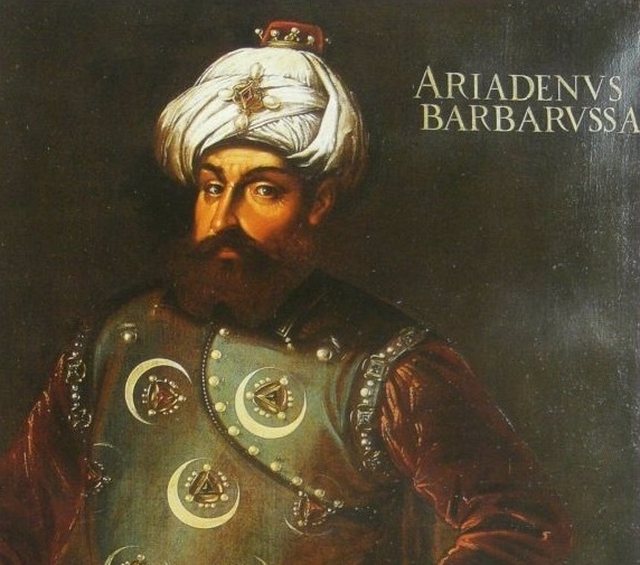
One of the most intriguing sites in history is that of the Mediterranean during the period 1500-1650. At the beginning of this period, an Albanian pirate known by the nickname Barbarossa helped the Ottoman Empire establish its dominance across the Mediterranean Sea.
His legendary tactics and military knowledge earned him great merit from his sultan as well as opponents. His statue stands today near the Turkish Maritime Museum surrounded on both sides by pirates who helped him.
Barbarossa, whose name is Hajredin, was born in 1478 on the Aegean island of Lesbos to an Albanian father, Jakup Aga, and a Greek mother, Katerina. He came from a family of 4 boys and two girls.
At first, the four sons helped their father in the pottery business, then quickly became involved in the trade. They found their ships and were frequently attacked by pirates in the Rhodes Islands.
The two brothers, Hajredin and his older brother decided to engage in the piracy business as well as to fight the so-called Knights of St. John.
The two lobbied for local rulers from Mamluk in Egypt to the Sultans in Algiers to then attack the ports and ships they had previously attacked.
The two brothers were so successful in their endeavors that they were given a base called La Goletta near Tunisia. From there their fame and fortune began to grow. They successfully controlled southern ports in Italy, on the island of Elba and off the Sicilian coast.
Between 1504 and 1510, Barbarossa helped thousands of Moriscos travel to Spain from the North African coast. The Andalusians called him Baba Aruj for the help he gave him. This title was later distorted by the Italians calling it Barbarossa, or redhead.
That way the two brothers got the nickname Barbarossa and why it is not known if they really had red beards. In 1509, their third brother, Ishak, joined Aruj and Hajredin in La Goletta.
Barbarosa surprises the Pope
A great success in the Western Mediterranean of Barbarossa, was when he captured the two personal galleons of the Pope of Rome and another companion of the Elbe. Riding on the Pope's galley he sailed for Tunisia. The Pope's luxury ship was towing pirate ships from behind.
Referring to the Spanish historian of the century. XVI, Diego Haedo, “this event surprised and left him speechless, freezing the whole of Europe from disbelief. From that precise moment, the name of Barbarossa, became known throughout Europe as the bravest and most skilful commander of the seas.
This success also attracted the attention of the Ottomans. From this moment on, they would become inseparable partners in the Barbarossa wars, at sea.
One of his techniques in the following years, would be exactly the use of his big name. He did not use slaves, in contrast to the Christians, who also had slaves on board their ships.
He provided the ship's crews with only free people, who served him only because they wanted to and could leave whenever they wanted. This kind of freedom made him even more invincible. Initially, in the years 1505-1510, he also dealt with the transportation of the Muslims of Spain to safe lands.

***
In 1511, a dispute between the 3 brothers and the sultan of Tunisia, caused them to abandon La Goletta and move to Mahdija near Algiers. The Sultan of Algeria had desperately fought the Spanish advance and had asked the three brothers for help.
They took control of Algeria and overthrew the local Sultan. To secure their control, they returned Algeria as a province to the Ottoman Empire in 1517. The Ottoman sultan accepted and made Aruj (Hajredin's brother) the ruler of Algeria.
Emperor Charles V, used his post in North Africa to launch an attack on Aruj forces. With 10 thousand Spanish soldiers, aided by thousands of tribal warriors, they attacked Aruj and Ishak, who had no more than 6500 soldiers. After a 6-month siege, Aruj led an attempt to escape the city, but he and his brother were captured and killed.
Now, it was Hajredin Barbarossa who led his brothers' forces against the Spanish attacks.
He successfully led attacks against Spanish and Italian forces throughout the western Mediterranean from 1518 to 1533. In 1518, he conquered the Algerian city of Tlemcen, where his two brothers were surrounded.
10 years later, he left the Italian ports to attack and started with the Spanish ones. In May 1529, he removed the Moroccan coast Penon de Velez from Spanish domination. In August 1529, after passing the Spanish defense on shore, he sent 70,000 Morskos from Spain to the North African coast. It also attacked the Tripoli area, which was previously controlled by the Spaniards.
In 1533, Sultan Suleiman the Magnificent of the Ottoman Empire, became concerned about the increasingly Italian raids on the eastern Mediterranean.
After his unsuccessful attempt to conquer Vienna in 1532, he decided to shift his focus from land attacks to building his own navy to secure ports and shipping routes.
For this reason, Sultan Suleiman summoned Hajredin Barabarossa to Istanbul.
The sultan appointed him admiral leader in the Ottoman navy and his first task was to start building a modern naval navy. The ships that Barbarossa undertook to build were much faster and larger. Barbarossa also worked on the ship's rapid maneuvering tactics.
The Ottoman Navy at that time reached a point that was capable of facing the Spanish army or Italian ships
At the end of the year, the Ottoman navy had enough strength to defend itself against the growing attacks of Italian ships on its shore.
Moreover, Sultan Suleiman the Magnificent formed an alliance with the French against the Spaniards, an alliance known as the Turkish-French treaty in 1536 or the Franco-Ottoman Alliance.
Barbarossa was already eager to resume his attacks in the Western Mediterranean.
He launched his campaign by striking hard on the west coast of Italy, especially in the ports along the Gulf of Naples. They were getting closer and closer to Rome. He had envisioned an Ottoman rule, under his direct regime extending from Gibraltar to Tripoli.
Instead of attacking the Sultan of Tunisia, Barbarossa left the country having another strategy in mind for the western Mediterranean. When King Charles V of Spain realized this danger, he tried to resolve the issue.
He sent several emissaries to Tunisia instructing them to organize a revolt under the pretext of returning Muley Hassan to the throne. When the plot was discovered and the spies were executed, King Charles tried to bribe Barbarossa, but failed.
King Charles thus organized the Army of 400 ships under the command of Andrea Dorias together with 24 thousand soldiers composed of Spaniards, Germans and Italians.
In 1535, the siege of Tunisia began. Spanish forces began to attack La Goletta which was in the south of Tunisia. After 24 days of siege the port walls exploded. Spanish forces were then to encircle the walls of Tunisia. As a backup plan Barbarossa had an entire squadron sent to Tunisia.
After the siege of the city, thousands of Christians who had grown up as slaves entered a city weapons factory and fought the Ottoman forces from within the city walls. Barbarossa thus withdrew with his forces. He stopped the attack and set sail for the now defenseless territories of Spain.
In 1536, Barbarossa was again summoned by Sultan Suleiman to assist him in his attacks on the Eastern Mediterranean. This led to a series of attacks on the Kingdom of Naples and the Republic of Venice.
In 1538, the Holy League assembled consisting of Spain, Italy, the Holy Roman Empire, Venice, and the Knights of Malta to defeat Barbarossa once and for all. Barbarossa ships were few in number, but in some perfect positioning strategies in the Adriatic Sea, Barbarossa avoided attack.
On September 28, 1538, Barbarossa would also break the Holy Fleet (union of Christian countries) at the Battle of Preveza, the largest Mediterranean at the time it took place (the largest fleet ever known, which consisted of 600 ships belonging to Spain, the Holy Roman Empire, Venice, Portugal, Genoa, Vatican, Florence, Malta and other European countries). Although three times less on the ship of men, Barbarosa defeated the most vocal admiral of Europe.
This battle was called the "Battle of Preveza" in 1538 and from here the Ottoman domination was established throughout the Mediterranean Sea for decades.
Sultan Suleiman the Magnificent, had the main man and irreplaceable helper in naval wars.
After the battle of Preveza, Suleiman the Magnificent received him in the palace together with 18 of his most capable men. Gave him the title of Captain ý Derya (Chief Admiral) of the Mediterranean Sea, Beylerbey of North Africa, gave him possession of the sanjak of Rhodes, Euboea of Chios, and control of the Aegean Sea. He was given rare honors and his fleet became innumerable
In 1545, Barbarossa decided to retire to Istanbul, after a successful career that lasted four decades.
He built a palace and had a writer writing his memoirs. Two years later he fell ill and died on July 4, 1547.
Three Arabic words heralded the moment of his death: "The chief of the sea is dead."
But even though several centuries have passed, historians are still unable to decide whether he was a pirate or an admiral.

A large monument to Barbarossa is located today in the Beşiktaş district, near the Turkish Maritime Museum in Istanbul. Also one of the main Boulevards of Istanbul bears his name.


