Is this police force professional and capable of handling violen...
/ 2026-10-16 18:54:07Focus


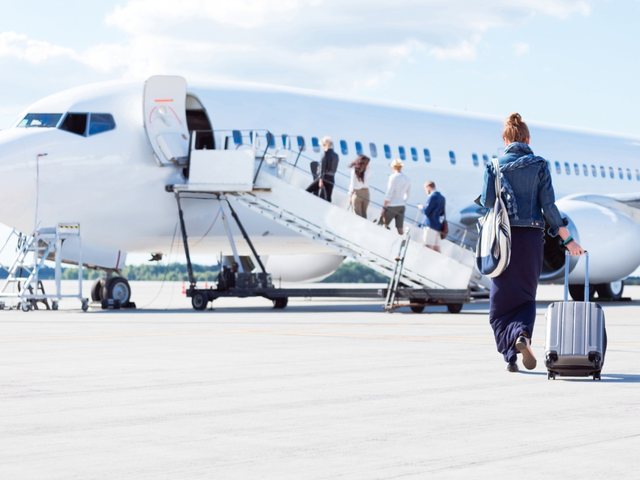
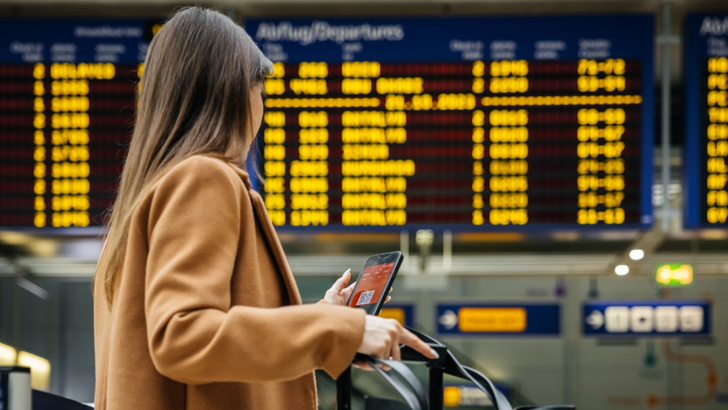
European countries have somewhere between three and eight months of fuel reserves for aircraft. But some governments do not rule out the possibility of introducing rationing measures, in the extreme scenario (described as "far-fetched"), with a reduction in flights from May or June, perhaps starting with private jet flights before regular routes are affected.
This emerges from preliminary internal assessments circulating among several civil aviation authorities in Europe, according to community sources.
A month of crisis
The closure of the Strait of Hormuz, following the outbreak of war between the US and Israel on the one hand and Iran on the other, has reduced the number of tankers passing through the strait to almost zero: from an average of 60 per day (until February 28) to a maximum of just a few, according to IMF data. Among them are dozens of ships that, in addition to oil, transport thousands of barrels of oil to Europe.
Import of jet fuel
By 2025, according to a report by Scope Ratings, the Persian Gulf “supplied 43% of European jet fuel imports, with the greatest dependence on Spain, Italy and Greece, countries that depend on tanker routes through the Suez Canal and the eastern Mediterranean.” Meanwhile, Northern European hubs “supplied mainly by Atlantic refineries and pipeline networks, are relatively more sheltered.”
Situation in the States
British aviation, with the largest number of passengers on the continent, is currently most exposed to the energy crisis. If supplies from the Gulf "cannot be replaced, the United Kingdom could be left without fuel reserves within three months", that is, by June, the Argus company calculates.
Portugal could run out in four months, Hungary in five, Denmark in six. Italy and Germany have about seven months of reserves, while France and Ireland have eight.
“Refinery closures have weakened the balance of the jet fuel market in Western Europe, while demand has increased,” Argus recalls.
Scenarios
Argus explains that "it is impossible for the conflict in the Middle East to lead a European country to a complete depletion of refined products, because the war limits only a part of the import sources."
But "national reserves could fall to dangerously low levels, causing local shortages and more severe price fluctuations."
National strategies
Countries where production equals or exceeds consumption, such as Poland and Greece, “can operate with lower reserves because they are less dependent on imports.” While countries that depend on imports but have larger reserves, such as Ireland, are more sheltered.
Seasonal factor
Reserves are also affected by season: "they typically fall in spring and fall due to refinery maintenance, and rise in summer when production increases."
Price increase
On April 2, a ton of jet fuel in Europe was selling for $1,903.50, an 18.4% increase from the previous day and 130% more than on February 27, on the eve of the conflict. This is the highest level since July 1991.
"But a hedging contract against price fluctuations does not secure a single liter of fuel if the supplier is unable to deliver it," warns Scope Ratings.
Physical access depends on the infrastructure chain: refinery production, tanker routes, pipeline integrity, and actual volume in storage.
Fear of an operational crisis
"An escalation of the conflict that interrupts any link in this chain creates an operational crisis that no defense program can resolve," the analysts add.
European airports
Airports are not reporting any problems, but are increasingly concerned about access to fuel.
"The longer the hostilities last, the greater the impact on demand will be, with rising prices and possible shortages," Eurocontrol warns.
Possible options
Several options are on the table: first, restricting private aviation, which consumes 5-8% of fuel in Europe. As a last resort, before a total lockdown, essential connections to/from the islands would be protected.
Political decision
Any such decision would only be taken with the "political" approval of the European Commission, which would issue a Notam (notice to airmen) with the start and end dates of the measures. For now, this remains only a theoretical scenario./ Corriere della Sera