Is this police force professional and capable of handling violen...
/ 2026-10-16 18:54:07Focus


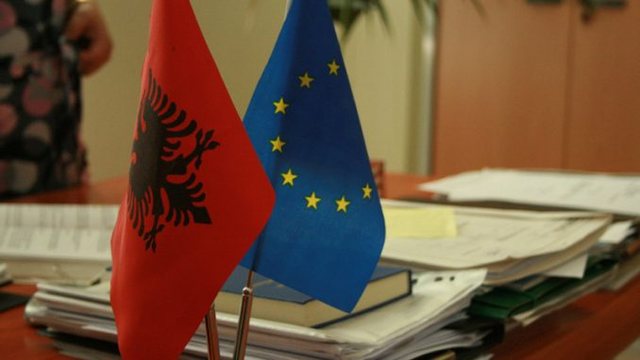
The European Commission's economic growth forecast has a relatively positive message for Albania, but in some places it is also uncomfortable to hear. The Albanian economy is expected to grow faster than that of the European Union.
It will even be stable at 3.3% until 2027. While the EU is expected to grow by 1.1% and 1.4%, respectively, for 2026 and 2027. The forecast for us is that we will have a strong performance.
But the report also has a hidden message: We will remain deeply dependent on a slowing Europe. And this is the central contradiction of the Albanian economy today. We may have higher growth than the EU, but we cannot function outside of European gravity.
From trade, tourism, remittances to foreign investment and the integration process, we are directly linked to European economic performance. So when Europe slows down, we cannot remain unaffected.
As the report says, Albania's growth is mainly supported by domestic demand, investment, credit, wages and tourism. Of course, they are important sources of growth, but they also reveal the limits of the economic model being applied. This means that Albania has good growth, but it is suffering from the quality of growth. It is heavily dependent on consumption, construction and tourism, but very little on production. Of course, tourism remains a strong engine of our economy, but it cannot sustain the entire economy alone.
Tourism is bringing in revenue, employment and good international publicity, but it also puts pressure on prices, imports, real estate and seasonal work. If tourism grows more slowly, as the report suggests, the country will need other engines to keep the economy moving. This is because economic sustainability cannot be left to visitors, restaurants or booking platforms.
The trade deficit remains a clear weakness. We are importing too much and exporting too little. Tourism helps reduce this deficit, but it cannot eliminate the structural problem that exists. On the other hand, a key factor is also the rising energy prices throughout Europe. This could lead to a weakening of European demand.
It is here that the weakness of an economy that consumes more from abroad than it produces for abroad can be felt. The EU economy is facing renewed energy market shocks as a result of the conflict in the Middle East.
This alone is enough to drive inflation and slow economic activity. For us, this situation translates into more expensive imported products, pressure on prices, lower demand from European partners, slower-moving investors and potentially higher prices in the tourism sector. Also, our two most important economic partners, Greece and Italy, are growing more slowly. This means that the economic environment of our neighbors is not dynamic, although stable.
Compared to our EU candidate neighbors, Albania is relatively more stable. Montenegro remains heavily dependent on tourism and inflows from abroad. North Macedonia and Bosnia and Herzegovina face weak external demand, persistent energy pressures, and a host of structural constraints.
On the other hand, Serbia is expected to have high growth, but very short. This is only due to public investments. However, Serbia has a high risk of political instability, fiscal and external risks. In this context, Albania is very well positioned. However, being in first place is not enough, because our objective should be convergence with Europe and not simply with the countries of the region.
Our strong point is macroeconomic stability. Inflation remains relatively controlled, public debt has fallen, and economic growth is above the EU average. These are positive signals, but stability is not transformation. We can have GDP growth and still lose labor to emigration, as is happening to Europe. We can break records in tourism and still have weak exports. We can have new construction and still have low productivity. We can have fiscal discipline and still not have a strong productive base.
These are the reasons why the report should not be used for political self-congratulation. This report should be read as a warning with an opportunity within. Albania still has growth, tourism momentum, fiscal space and foreign investor interest. But this moment must be used to change the structure of the economy, before the next blow from abroad exposes us to the same weaknesses. Albania’s priority must be clear, directed primarily towards an economy based on productive capabilities, exports, technology and value-added services. So, there is a need for a national strategy, where agriculture moves from raw production to processing, certification, branding and export channels. Just as tourism has become a year-round economy, domestic production must follow the same path.
The labor market also requires attention. Emigration and labor shortages must be addressed as a priority. If Albania continues to lose workers, skills, and young families, growth figures will lose meaning over time. Rising wages are a positive signal, but they must be accompanied by higher productivity from companies and state institutions. Otherwise, we will have an expensive but uncompetitive economy. The conclusion is clear: Albania is growing, but it needs to increase its speed to achieve the necessary transformation. Growth of 3.3% is positive, compared to the slowness of the European Union, but the challenge is not to grow faster than Europe. The challenge is to become productive, competitive, and resilient enough to continue growing even when Europe slows down.
This is the real test. Growth is good. But growth without transformation remains a temporary consolation. We should not be complacent because we are moving faster than a sluggish Europe. We should use this moment to build an economy that is more resilient to shocks, that produces and exports more, that keeps more of its people in the domestic market, and that depends less on the weaknesses of others.