Is this police force professional and capable of handling violen...
/ 2026-10-16 18:54:07Focus


By Rinë Zhitia
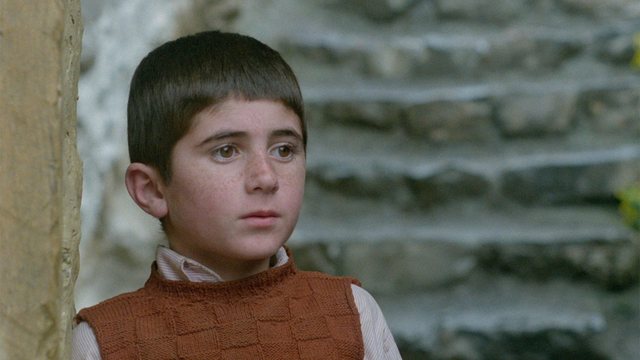
Abbas Kiarostami's film “Where Is the Friend's House?” (1987) begins with a simple mistake: Ahmad, the 8-year-old protagonist, accidentally takes the notebook of his friend, Mohammad Reza. This seemingly minor act quickly turns into existential anguish, forcing Ahmad to undertake a day-long journey to the neighboring village to find his friend's house, return the notebook, and save him from the expulsion his teacher has warned him about. Beyond the poetic images of the village, the film resonates deeply because of its depiction of the adult world as a rigid system, cloaked in rational rigidity, which disregards the child's ability to judge correctly.
The adults he meets on the road, burdened with the weight of social roles, do not understand Ahmad's urgency. The child does not bear the weight of social order or survival, he is motivated simply by the anxiety of doing the right thing. The mother's order to complete the tasks and then "play" serves as a metaphor for the clash between adult pragmatism and childish sensitivity. In the meantime, Ahmadi chooses moral obligation to his friend, risking physical punishment, as he understands that his friend's exclusion is a moral burden that he cannot allow himself.
Kiarostami treats this journey through a visual language, the essence of which lies in naturalness and sincerity. The non-professional actors and the rough nature of the village are the scenography and the physical and emotional labyrinth where Ahmadi wanders alone. The steep streets and slopes of the village become symbols of the challenges of growing up. In this indifferent world, Ahmadi seeks guidance from adults, but they, trapped in their roles and preoccupations of life, are indifferent to his demands.
The clash between worlds becomes even clearer when he meets Mortezan, the classmate who carries heavy buckets of milk, revealing the reason for the back pain that the teacher in the classroom ignores at the beginning of the film. This sequence makes it clear to us that homework is not only schoolwork, and at the same time, makes Mortezan the only one who can truly understand Ahmad's mission. He guides his friend because he knows well the weight of fear of punishment, a theme that Kiarostami also deals with in depth in the documentary Homework.
In this context, the "house of the friend" is an analogy for the search for meaning and equality, the home of the "similar", the one who knows and accepts our value. Kiarostami, a poet and collector of Iranian poetry, finds inspiration in the verse of Sohrab Sepehri, inviting us to overcome "maturity" to meet the child who gathers light as a guide to life. In the end, Ahmad's task is not only a school assignment, but a lesson in solidarity, this virtue that we, as adults, often forget. The child becomes our teacher, while adults remain prisoners of rigid norms, children remind us that saving the other is essentially saving our humanity.