Is this police force professional and capable of handling violen...
/ 2026-10-16 18:54:07Focus


Reuters/ The US-Iran agreement, the first signed by a US and Iranian president since the 1979 Islamic Revolution, is being hailed by its supporters as the deal of the century.
But for Tehran's opponents in the Middle East - from Israel to the Gulf states and some parties in Lebanon - it looks more like the "damn of the century." A deal that could lead to a more secure, legitimate and ultimately, more influential Iran.
US President Donald Trump and his Iranian counterpart Masoud Pezeshkian signed the agreement on Wednesday, ending the war that began on February 28. Trump chose to sign it in Versailles, on the sidelines of the G7 summit, a venue seen as symbolic of the reshaping of the international order after the conflict.
The 14-point protocol extends the ceasefire (including Lebanon) for 60 days, to allow time and space for negotiations that will lead to a permanent solution and address issues such as Iran's nuclear program.
"For Washington and Tehran, it is a great opportunity - the deal of the century, from which there is no turning back," said Lebanese commentator Sarkis Naoum. "The possibility of success outweighs the risk of failure. Iran cannot afford further economic punishment through sanctions, and Trump has no incentive to start a new war."
The agreement is considered a loss for Israel.
Israeli analyst Danny Sitrinovich described the deal as a strategic "disaster." What began as a joint US-Israeli campaign to weaken or even overthrow the Islamic Republic's regime has turned, he said, into a US recognition of Iran.
"We went to overthrow the regime with US support and ended up with Washington legitimizing and strengthening the very regime we wanted to overthrow," said Sitrinovich, a fellow at Israel's Institute for National Security Studies.
The agreement fails to meet any of Israel's key demands. It places no limits on Iran's nuclear program or its proxies, and includes no clear plan for dismantling its nuclear facilities. Even the Israeli military's campaign in Lebanon is limited by the framework of the agreement imposed at Tehran's request.
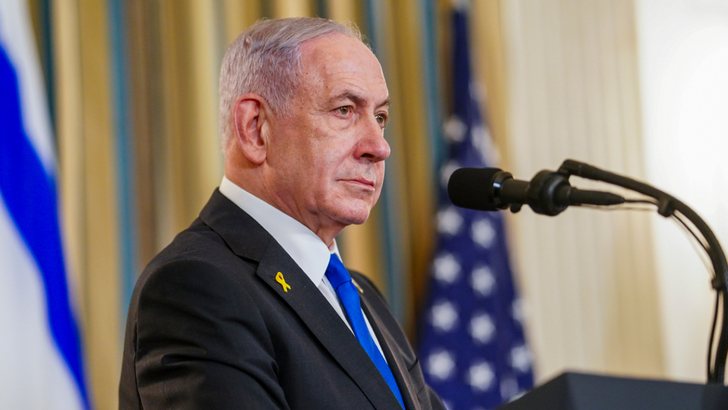
The implications are political and strategic. The deal undermines Israeli Prime Minister Benjamin Netanyahu's narrative on Iran and exposes the limits of his influence over an American president who has been seen as aligned with Israel until now.
Sitrinovic said Iran has gained room to maneuver and with the deal could consolidate its position while deepening Israel's isolation. "Everything is bad. And it will get worse," he predicted.
If the deal holds, Iran appears to be securing the strongest outcome. An end to the war, a gradual lifting of sanctions, the resumption of oil exports, and the prospect of huge funds for reconstruction - along with the implicit acceptance of its political system.
Washington, by contrast, has failed to achieve the goals it shared with Israel: to overthrow the religious regime, dismantle Iran's nuclear program, and limit its influence in the region. Rather than reshaping Iran's position, the deal restores it.

The US and Israel launched a war against Iran on February 28, killing the 86-year-old Supreme Leader, Ayatollah Ali Khamenei, and other senior regime figures on the first day. The conflict escalated, killing more than 7,000 people, mostly in Iran and Lebanon, while also driving up energy prices and raising fears of a food crisis in developing countries.
Iran regains the upper hand in Lebanon
For Lebanon, the deal tilts the balance in favor of Iran, strengthening the role of Tehran-backed Hezbollah and embedding the country in a broader framework of US-Iran relations, while sidelining talks between Beirut and Israel. It commits Lebanon to a 60-day ceasefire, obliging all sides to halt operations on all fronts.
Lebanese President Joseph Aoun warned last week that Iran cannot negotiate on Lebanon's behalf on issues such as a ceasefire and Israeli withdrawal from the southern part of his country.
However, sources close to Hezbollah argue the opposite: that the US-Iran channel strengthens Lebanon's position, elevating it to a higher level of negotiations. According to them, Tehran and Washington can put pressure on their allies - Hezbollah and Israel, respectively - to find a solution.
Concerns are most acute in the Gulf states, where Iranian attacks have shaken confidence in the security arrangements that have been in place until now. The Gulf states have emerged as the main losers of the war: they witnessed decisions that reshaped their security landscape and will suffer the consequences.
Gulf sources say the deal is already reshaping strategic thinking: eroding confidence in American defense, cementing Iran as a permanent regional power, and accelerating a shift toward compromise rather than confrontation.
But Iran expert Alex Vatanka disagrees. Rather than capitulation, he sees the deal as the least bad outcome after years of failed pressure.
"They tried to defeat Iran militarily. They didn't. The alternative would have been catastrophic. A wider war could devastate the Gulf for decades," said Vatanka, who works with the Middle East Institute in Washington.
The real test lies ahead, in the implementation of the deal, the unresolved nuclear negotiations and the regional backlash it will provoke, he said. "It's a big issue, but it's not the end. It's just the beginning."
Israel, an unstable factor?
Some analysts see Israel as the main imbalance. While they believe it is unlikely to disrupt a process under Trump's auspices, they warn that the risk remains, especially in Lebanon.
"Israel has been isolated after this war, both in the region and in the world," said an Iranian official, who asked not to be identified.
"Iran got what it wanted... We did not abandon our friends, such as Hezbollah, on the contrary, we were prepared to go so far as to leave the negotiating table and return to war because of them," another Iranian official added.