Is this police force professional and capable of handling violen...
/ 2026-10-16 18:54:07Focus


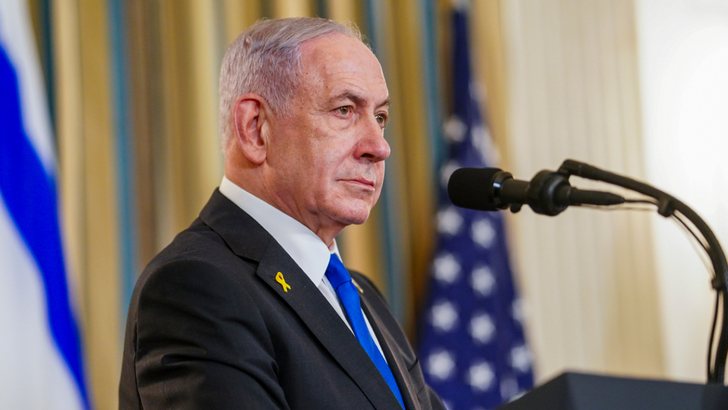
Israeli Prime Minister Benjamin Netanyahu has chosen public silence after US President Donald Trump signed the deal with Iran, a development that Israeli officials consider a strategic and political failure for Jerusalem.
Netanyahu had promised "total victory" against Iran, but in the end he was faced with a memorandum of understanding drafted by the Trump administration and constant criticism from the US president himself, just four months before the elections in Israel.
Netanyahu appears to remain almost alone in the international arena in his belief that the war against Iran should have continued.
Even the United Arab Emirates, which was considered among the toughest countries in the region against Tehran, has supported the regional consensus in favor of the agreement.
In Washington, many of Netanyahu's traditional allies in the Republican Party and conservative media have avoided direct attacks on the deal, due to the fact that it bears Trump's signature.
Unlike in 2015, when Netanyahu delivered a historic speech to Congress against then-President Barack Obama's nuclear deal, this time he cannot mount a similar campaign without risking a direct clash with Trump.
Attacks on Trump in pro-Netanyahu media
While the Israeli government has avoided public statements, its officials have expressed strong concerns in informal conversations with journalists.
In parallel, media outlets close to Netanyahu, which until now had maintained a strong pro-Trump stance, have begun criticizing the US president and his team.
A prominent moderator on Israeli Channel 14 called Vice President JD Vance a "mask," while Trump's envoys, Steve Witkoff and Jared Kushner, were accused of sacrificing Israeli interests for economic gain.
Trump: "We are the big partner, Israel is the small partner"
During the G7 summit, Trump thanked Netanyahu for his cooperation during the conflict with Iran, but at the same time did not spare irony.
"Bibi is a good man. Sometimes he gets a little emotional. We have a tremendous partnership. We are the big partner and he is the very small partner," Trump declared.
A few days ago, according to Axios, the US president had expressed anger at Netanyahu after he ordered an attack in Beirut that risked undermining negotiations for the deal.
One of Netanyahu's main concerns relates to Lebanon.
The memorandum provides that the ceasefire will also include the front between Israel and Hezbollah, as well as pave the way for the withdrawal of Israeli forces from Lebanese territory as part of a final agreement.
However, an adviser to Netanyahu said that Israel does not consider itself bound by the part of the agreement related to Lebanon. According to him, the prime minister made it clear to Trump that Israeli troops will not leave southern Lebanon without Hezbollah first disarming.
"We have a little disagreement about Lebanon," Trump admitted.
The White House has stressed that the ceasefire will not be unilateral and that Israel will retain the right to respond if Hezbollah carries out attacks.
Trump also again criticized Israeli operations in Lebanon, stating that "it is not acceptable to demolish a residential building every time a specific person is wanted."
Political blow for Netanyahu
The Iran deal represents another major political challenge for Netanyahu, who for the first time is facing such direct criticism from his most important international ally.
Even American presidents with whom Netanyahu has had disagreements in the past have not used such harsh language towards him and Israeli policies.
For the Israeli prime minister, this agreement constitutes not only a diplomatic defeat, but also a significant blow on the eve of a new electoral battle.