Protests highlight trauma crisis, operating rooms under reconstr...
/ 2026-10-15 18:35:16Focus


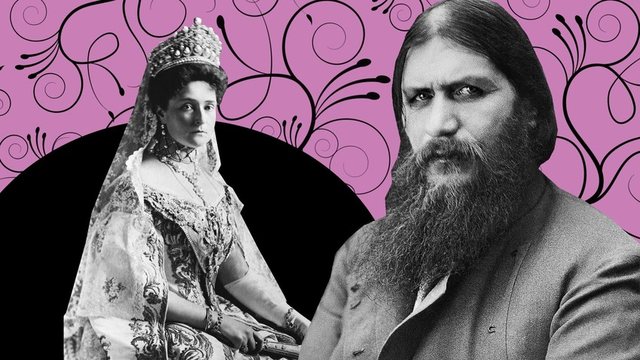
Grigory Yefimovich Rasputin, one of the most controversial figures in Russian history, was born in 1869 in a village east of the Urals. The son of a farmer, he married at 17 and had seven children. One of his daughters, Maria, wrote three memoirs defending her father and died in 1977 in Los Angeles. Her testimony was an important source for the early years of his life.
Rasputin himself claimed that as a young man, while plowing his fields, he had a vision of the Virgin Mary. Although he was never formally ordained, he presented himself as a wandering religious ascetic, a type known in Russia as a “strangnik.” Many of these wandering “holy men” were considered impostors, yet Rasputin managed to create a powerful personal charm and reputation.
According to historian Antony Beevor in his new biography of Rasputin, his greatest talent appears to have been his ability to read people's characters to such an extent that they believed he could read their minds. He was also ambitious and shrewd.
The Ascension to the Romanov Court
Upon arriving in St. Petersburg, Rasputin began claiming to have healing powers and quickly attracted the attention of aristocratic circles. As his fame grew, he sent a telegram to Tsar Nicholas II and his wife, Empress Alexandra, announcing his desire to offer them a miraculous icon.
The imperial couple, who strongly believed that they ruled by divine right and were prone to superstition, showed interest in the mysterious "holy man."
Before Rasputin, the Tsarina had turned to a French healer known as “Monsieur Philippe,” who claimed to be able to help her have a male heir. Although he eventually fell out of favor at court, Alexandra did indeed have a son, Alexei.
The young heir, however, suffered from hemophilia, which caused great concern to his parents. At this point Rasputin appeared, who seems to have been able to help young Alexei psychosomatically during periods of illness. This made him extremely valuable to the Tsarina.
He quickly gained almost unlimited access to the imperial environment, addressing the couple as "Father" and "Mother", while they simply called him "our friend".
Reputation, scandals and reactions
Despite his great influence at court, Rasputin is described by Beevor as being particularly rude in his manner. However, in high society circles he exercised a strange charm. In the salons of St. Petersburg he would quote passages from the Bible and add his own commentary, which made simple ideas seem profound.
At the same time, many rumors circulated about his intense love life and relationships with many women, although it remains unclear how much of them corresponded to reality. However, the Tsar and Tsarina chose to ignore the rumors.
His presence at court caused strong reactions. Many politicians and members of the aristocracy warned of his influence, while the leadership of the Orthodox Church was largely hostile to him. On one occasion, a woman who considered him a “false prophet” seriously injured him with a knife.
His influence on politics
In 1915, Tsar Nicholas II decided to personally assume supreme command of Russian forces in World War I, leaving the Tsarina as regent.
At this point, Rasputin's influence grew significantly. Alexandra relied heavily on his advice and appointed and dismissed ministers on his advice. Many of the people elevated to positions of power were considered corrupt or incompetent.
After the great Russian defeat at Kovel in 1916, which cost around half a million casualties, it became clear that the Romanov regime was in deep crisis.
His murder
Rasputin's murder was orchestrated by aristocrat Felix Yusupov and his associates. He was invited to a dinner party with the promise of meeting Yusupov's wife.
According to the story that became popular, the conspirators first tried to kill him with candy containing cyanide. However, the poison is said to have had no effect, perhaps because it had spoiled.
In the end, a bullet to the head ended his life. Despite various historical legends, the circumstances of his death remain less important than the fact that his killers received light sentences because they were so useful to Russia.
The myth of Rasputin
The figure of Rasputin continues to be of great interest in historiography and popular culture. At least five of his biographies have been published in English in the thirty-first century.
Antony Beevor's biography is based on archival material and in collaboration with Russian historian Lyuba Vinogradova. While the story is considered well-documented and clearly written, some arguments do not offer a fundamentally "crazy" perspective on the fall of the Tsarist regime in Russia.