Protests highlight trauma crisis, operating rooms under reconstr...
/ 2026-10-15 18:35:16Focus


On March 12, 1891, in Triesh, Malësia e Madhe, Mirash Ivanaj, organizer and reformer of national education, was born.
He graduated from the gymnasium of Požarevac (Serbia) and continued his studies for ten years in literature-philosophy and law at the Royal University of Rome.
His career began in Shkodra as a publicist and lawyer, then continued in education, where the peak of his contribution was marked during the years 1933-1935 as Minister of Education.
On January 11, 1933, Mirash Ivanaj was appointed Minister of Education in King Zog's government, taking on one of the most difficult challenges of the time: the profound reformatting of Albanian education.
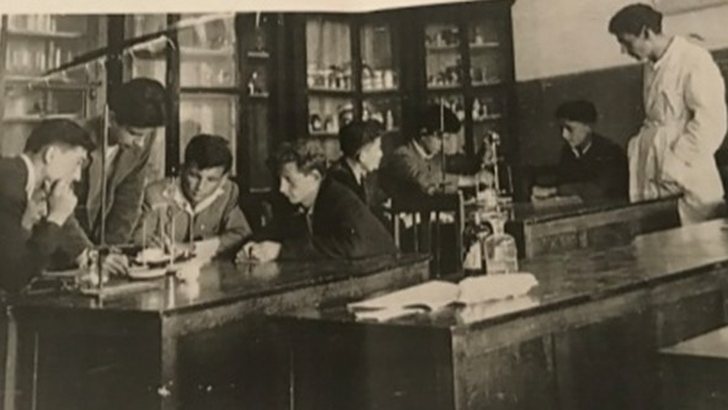
The reform he led had a clear and bold vision: the construction of a national, secular, state and modern educational system, independent of religious, political or foreign influences. The Albanian school was to be a training space for free, educated and responsible citizens, in accordance with contemporary European standards.
Essentially, the Ivanaj Reform included:
– The unification of education, through the nationalization of private and foreign schools;
– The New Education Law (1934), known as the Ivanaj Law, which made 5-year primary education compulsory and raised standards in secondary education;
– New textbooks and modern educational institutions, as the basis for a sustainable and qualitative system.
The reform aimed to create an Albanian educational identity, free from external dependencies and foreign religious or political control.
Because of this courage, it encountered strong opposition, both domestically and internationally. In 1935, faced with financial and political obstacles, Mirash Ivanaj resigned, unable to see his vision through to completion.
However, the reform remained a historical turning point, which is still seen today as one of the most serious efforts to build Albanian education on principles of dignity, knowledge, and freedom.
He was a member and chairman of the Council of State (1936-1939). He was forced to emigrate to Turkey due to the occupation of the country. In September 1945 he returned to his homeland. His Western intellectual training and career during the reign were incompatible with the ideology and absolute control of the new dictatorship. On May 15, 1947, he was arrested and imprisoned. He died in the prisons of the communist regime on September 22, 1953.
Today, his legacy is recognized with the title "Honor of the Nation", as a testament to professional integrity and commitment to the modernization of Albanian society.