Is this police force professional and capable of handling violen...
/ 2026-10-16 18:54:07Focus


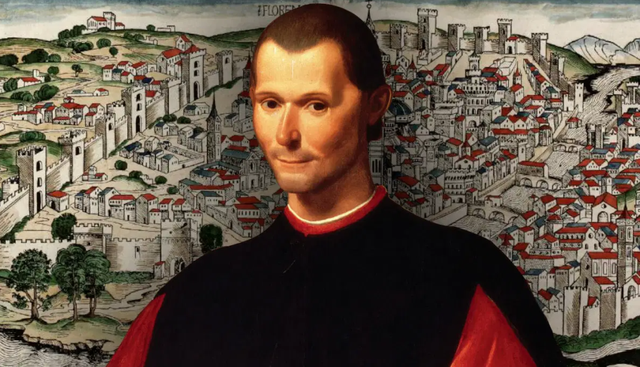
In the 16th century, the politician, diplomat, historian, and writer Niccolò Machiavelli wrote his most famous work, “The Prince.” A kind of manifesto that emphasized: “It is more important to be feared than loved.”
In the book, the ruler-leader is the authority. He has the will and power to enforce his decisions on others. He is also able to use any means to impose morality on people, with the aim of transforming them from evil and anarchic to good and law-abiding.
Niccolò Machiavelli was born on May 3, 1469, in Florence, and died there on June 21, 1527. His two best-known books, “The Prince” (1532) and “Dissertations on the First Ten Acts of Titus Livius” (1531), were published after his death.
“The Prince” may be considered a manual on a ruler’s absolute control over his people, but in his second most famous book, “Dissertations on the First Ten Acts of Titus Livius,” Machiavelli attempts to draw conclusions about the relationship of power between the state and its citizens. Historians say it is his most democratic written testimony.
The acquisition of power and the methods of using it strongly appealed to Machiavelli. However, in his texts, he also presented a clear picture of the power of money.
10 phrases from Niccolò Machiavelli about money and power
"People forget the death of their father faster than the loss of their property."
This is one of his harshest and most famous phrases. Here, Machiavelli describes not what man should be, but what, ultimately, he is. With a realism that borders on cynicism, he reminds us that man is deeply attached to property and the security that money offers him – perhaps more than he would like to admit.
"The ruler, if he wishes to maintain his power, must avoid a reputation for excessive generosity."
Machiavelli recognizes the value of image: a reputation for generosity is useful, but excessive waste weakens power. The truly intelligent ruler is frugal in action and rich in reputation. He shares impressions, not wealth.
"To gain a reputation for generosity, one must spend a lot, and this leads to ruin."
For Machiavelli, maintaining power is an art. And maintaining power is a daily exercise whose goal is to prolong the ruler's power.
"A ruler who relies only on wealth and not on his army cannot maintain his power."
For Machiavelli, political stability is built on solid foundations: military self-sufficiency, popular support, and foresight – not bank accounts.
"A ruler should only concern himself with matters of war; wealth without power is not enough."
In the classic dilemma of “wealth or power,” Machiavelli takes a clear stance. Power is the ultimate destination of every true leader. The ruler does not rely on gold, but on the ability to impose and protect. Money, however, can be acquired through conquest or through an organized stability that the army maintains and the ruler enjoys.
"The greed for money is one of the causes that makes people hate their rulers."
Machiavelli is interested in power. The capable ruler is a doer, not a fortune hunter or a narcissist who boasts about his wealth.
"When a city begins to value wealth more than its freedom, it will lose both."
Who could disagree with that?
"It is wiser for a ruler to have the reputation of a miser than of an excessive spender."
Machiavelli knows that waste breeds envy, that the display of wealth erodes the sense of obedience and creates standards that deviate from the agenda the ruler wishes to impose.
"Wealth, when not accompanied by military power and political support, leads to the loss of the state."
Wealth erodes, corrupts, and disrupts the identity balances that the state that the ruler governs and controls should have.
"Alliances secured by money are fragile; when the payment stops, so does the loyalty."
For Machiavelli, power that is not based on legitimacy and fear is vulnerable. For him, power that has been “bought” is already exposed to loss.
For Machiavelli, money is not an end in itself. For him, power is not bought, but conquered by any means.