Is this police force professional and capable of handling violen...
/ 2026-10-16 18:54:07Focus


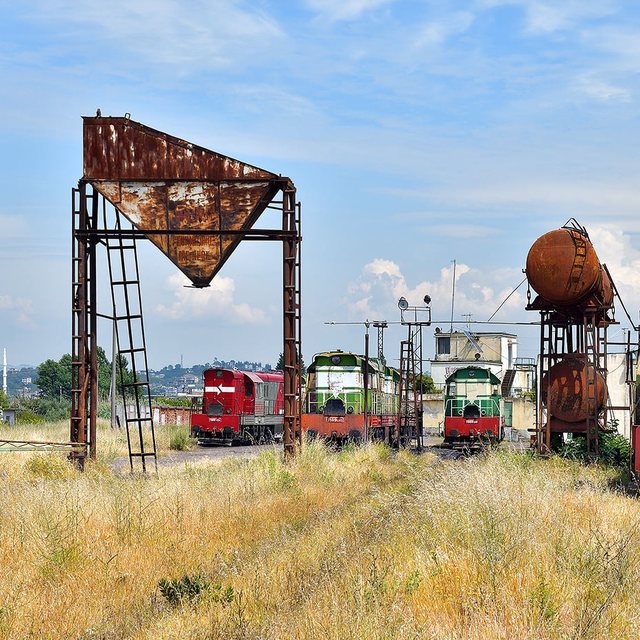
The people of Shkodran, masters of humor, told me a story that is most likely true.
After 1997, the government of the time decided to restart train operations (what had survived the chaos) and launched a locomotive with several wagons from Tirana to Shkodra.
Two days after the train had departed, the driver, who had wandered on foot to find a telephone, reported that he was still at the exit of Lezha.
"Why don't you continue to Shkodra?" the director at the time asked.
“Where should I go?” he had replied. “They’ve taken the whole railway here.”
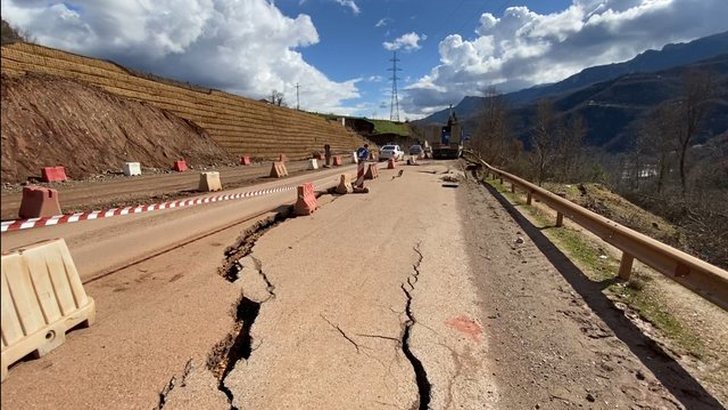
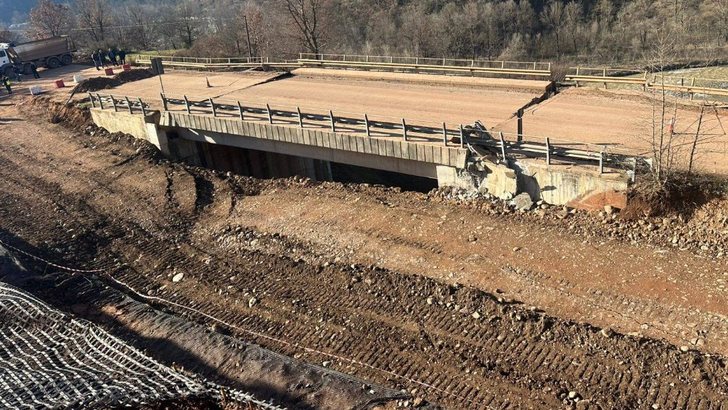
This story came to mind when I was passing by in January on the road to Korça. Where today the entire road has collapsed, you can see that the railway has also disappeared along with the road. Not only that: if you continue the road towards Përrenjas, you see other damaged or abandoned parts. Even some of the tunnels have been demolished by the companies that are building the road.
During World War I, Albania had a railway network from the north to the near south. Built by the warring armies for military purposes, it started from Shkodra towards Central Albania, dividing into a branch towards Tirana and another along the banks of the Shkumbin to Elbasan. This railway also made possible the famous visit of Archduke Maximilian, heir to the Austro-Hungarian throne, to Tirana, Durrës, Kavajë and as far as Peqin, documented with photographs of the time.
Meanwhile, the Italians, for their military purposes, built the railway (dekovil) from Vlora to Selenica and then to Fier.
With the departure of the armies, the railway remained in Albania and in different segments it was used for local needs, sometimes with carts and sometimes with horse-drawn carriages. But very soon, the railway, built by the best military engineers of the time, was uprooted by the inhabitants along it and used for their own needs: some for pergolas, some for beams and some for vines. Thus, in record time, the Albanians of that time were able to eliminate without leaving a trace the entire Shkodër-Tirana-Elbasan and Fier-Vlora railway networks.
After World War II, the communist government tried hard to restart the railway, using the same geographical contour as the one built by the Italians and Austro-Hungarians. With volunteer work and a lot of propaganda, the railway was slowly laid on the same route as the former one. Widely used for the transport of the population and later for the needs of heavy industry, the railway was functional until the fall of communism.
After 1992 it was abandoned and very few people know about its existence. Today the railway is mostly out of service and, surprisingly, in the Elbasan-Guri i Kuq segment it is totally abandoned and in places, even damaged. Partly forgotten, partly damaged by the companies working on the road. No effort has been made to preserve it even as a historical symbol of a bygone era, when railways were built by young Albanians voluntarily.
Although perhaps unnecessary today, it could very well be turned into a tourist and historical attraction to showcase one of the country's most significant periods.
Perhaps our problem with railways has never been just economic or technical. They have been built several times and just as many times we have let them fall into ruin. Used for war, for propaganda, for transport, but rarely not as a common good that must be preserved. As if the railway, which connects cities and people, has always bothered us, because the Iron Road requires order, discipline and long-term maintenance. And so, symbolically, every time time or power changes, we break it again. Not just the iron tracks, but also the very idea of continuity.