Is this police force professional and capable of handling violen...
/ 2026-10-16 18:54:07Focus


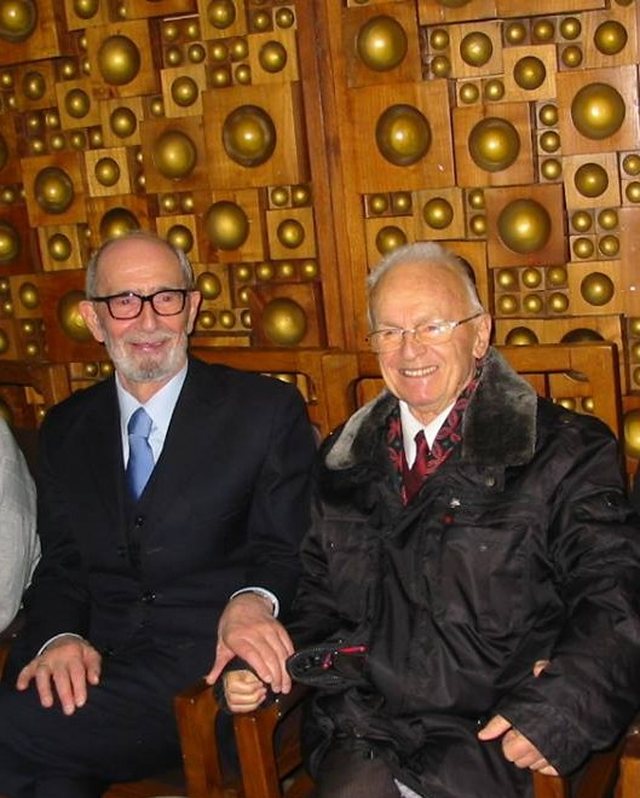
My generation has had the extraordinary fortune to be gifted by nature with a personality like Adem Demaçi. I said my generation and I should say that Kosovo, in fact the Albanian people in general, have had the great fortune to have raised a personality like Adem Demaçi.
Why can it be said like that?
This can be said because Adem Demaçi is a great authority, unmatched by anyone else in Kosovo before him and after him: a political, cultural, and moral authority.
And, this authority has over time become a nationwide authority, and it has become such an authority because it is built on its dedication not to one, but to several national activities: to literary creativity, to journalism, to political activity.
In all these activities, he will deal with essential issues from the past, present, and future of the Albanian people.
His views and his explanations of the historical, political, social, and national destiny of Kosovo and all Albanians will never and nowhere be expressed with mental and emotional detachment, but with marked disagreement with the current situation and with the historical injustices that were done to them, with disagreement with the consequences that the Albanian people were experiencing because of those blatant injustices, with disagreements that will build and inspire the new consciousness of our youth.
It was these views and explanations that were expressed in artistic literary language in his prose: in his novels and stories.
It was these views and explanations that were expressed in intellectual language in his journalistic writings.
It was these views and explanations that were expressed even with national programs in his unstoppable political activity.
With these views and explanations, Adem Demaçi will soon become a great exponent, the greatest, in the Albanian history of Kosovo, of courageous, just, honest thought, of Albanian liberation thought.
All this comprehensive artistic, social and political activity, which was completely at odds with official Kosovar, Serbian and Yugoslav politics, clearly proves that Adem Demaçi had given his life to Kosovo, that he had given his life to its freedom and independence, that he was willing to sacrifice himself for it.
How will Kosovo respond to this sacrificial willingness of Adem Demaçi? To be more precise: how will Kosovo's political leadership respond to this sacrificial willingness of Adem Demaçi?
The answer is disappointing.
During the time of the former communist Yugoslavia, those leaders would respond by joining the Serbian and Yugoslav leaderships in imprisoning and trying him three times for hostile activity, which would result in him being sentenced to around twenty-eight years in prison?
Later, during the activity of a number of Albanian parties in Kosovo from the beginning of 1990 until the year of Kosovo's liberation from the Serbian occupation, the party leaderships of these parties, who were pursuing a so-called peaceful policy, would respond with great fear of Adem Demaçi's authority and with all kinds of efforts with articles in newspapers controlled by them and with impermissible oral propaganda, which aimed to devalue his authority and merits!
If we read today all that has been written against him in the newspapers, we will be convinced of how unscrupulous the fear was of the possibility of Adem Demaçi rising to the role that in the eyes of the people he actually was: the role of leader of the Movement for the Freedom and Independence of Kosovo!
And now, after the liberation war, after the realization of the ideal of freedom and independence of Kosovo, to which he had sacrificed the most important, most valuable part of his life, how will the political leadership of the state of Kosovo treat Adem Demaçi?
The glorious American President John F. Kennedy said: “Ask not what your country can do for you, but what you can do for your country.” This thought, so often quoted by politicians and intellectuals around the world, is actually a reinterpretation of the well-known thought of the great Italian poet, Dante Alighieri, who, after being exiled from his homeland – Florence, said: “Not only do I have obligations to my country, but my country also has obligations to me.”
It has been said that Adem Demaçi, like no one else in Albanian history, has fulfilled his patriotic obligations towards Kosovo, but it has not yet been said how Kosovo has fulfilled its obligations towards him as a state?
We will answer this question honestly and fairly if we compare the fate of Adem Demaçi after his release from prison with the fate of Nelson Mandela after his release from the prisons of the Republic of South Africa.
After his release from prison, not only his like-minded people, but also his political opponents, would reward Nelson Mandela with immeasurable honors: they would appoint him advisors, they would appoint him spies, they would grant him various political, social, and material privileges, they would make him a protagonist in many social, cultural, and scientific institutions. And, finally, they would make him the long-term president of the Republic of South Africa.
None of these politically far-reaching honors bestowed upon the South African Mandela were bestowed upon the Kosovar Mandela – Adem Demaçi.
Not even sixteen years after liberation, the Kosovo state award for intellectual creativity, which has been given to many, to those who deserve it and to those who don't, has been given to Adem Demaçi!
Not even sixteen years after the liberation of Kosovo, the Kosovo Academy of Sciences and Arts, whose members include individuals of no political, scientific, or artistic importance to Kosovo, honored itself by accepting Adem Demaçi!
During the sixteen years of liberated Kosovo, Adem Demaçi was not made a permanent MP, as some great national authorities have been made in the world, he was not made a four-year MP, nor a speaker of the Assembly of Kosovo, nor a prime minister, nor a president of Kosovo! They became MPs, speakers of the Assembly, prime ministers, presidents of Kosovo themselves, who have not donated a single drop of sweat to the freedom of Kosovo, who have not dedicated a single hour or a single sentence to the independence of Kosovo, but Adem Demaçi was not made!
Why in Kosovo, for the sake of its respect in the world, did not the political, moral, liberating glory of Adem Demaçi's 28 years in prison become a state institution?
There is no doubt that this behavior towards Adem Demaçi, which essentially damaged Kosovo, was done by powerful achievers - those who were and are jealous of Adem Demaçi because of all the historical merits he has for Kosovo and the Albanian people in general, because of the great authority with which he makes everyone else almost invisible.
But not only that. Such exclusionary behavior towards Adem Demaçi, let's say the president of Kosovo, was driven much more by fear of his political ethics with which he would prevent privileges, corruption, extortion, luxuries, easy, quick, illegal enrichment, and other evils in state institutions, making accountability not only a culture but also an inevitable law in Albanian politics.
Such behavior, politically and morally unacceptable towards Adem Demaçi and harmful to Kosovo, makes them unable to even come close to his knees.
Allow me to say that their names will be forgotten the day they are left without the chairs for which they did and are doing everything that is not done, while the name of Adem Demaçi, his biography, his vital and intellectual work, will be eternal and will forever move and illuminate the history of the Albanian people.
(Speech delivered at the ceremony on the occasion of the 80th anniversary of the birth of Adem Demaçi)