Protests highlight trauma crisis, operating rooms under reconstr...
/ 2026-10-15 18:35:16Focus


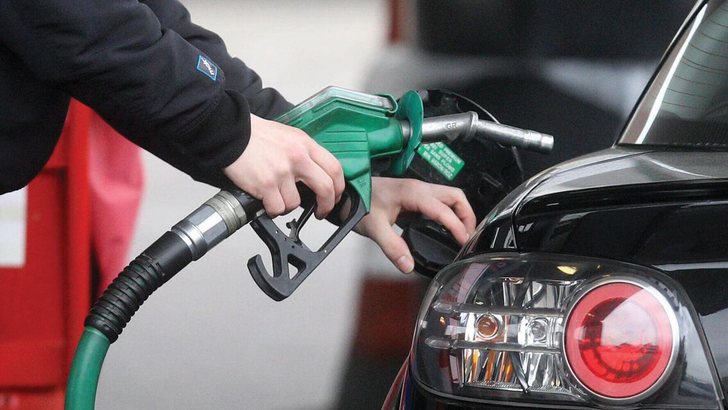
The creation of a state reserve of crude oil, according to the draft law approved by the government, will add a fee to fuels, which will be paid by economic operators.
With the new model, the government plans to create reserve deposits for crude oil, with deposits from a public authority that will be responsible for administration, and with deposits from economic operators.
But economic operators who will deposit oil in the security reserve will also be responsible for its maintenance against a fee that will be paid to the state, within 20 days of the oil being released to the market. The value of the fee will be determined by the Council of Ministers.
The Hydrocarbons Association warns that the creation of a crude oil security reserve will require additional investments to create storage and processing capacities in order to release the oil into the retail market.
If the cost of creating and managing the safety reserve is not fully borne by the state, the Hydrocarbons Association warns that this additional cost will be transferred to the final price.
The approved draft law provides for several sources of funding for the creation and maintenance of security, including, as the main one, the tariff for economic operators.
Even the creation of a fuel security reserve managed by a state operator is not expected to have an effect on reducing the price of oil for the retail market, but rather adds a new fee to fuel.
The Hydrocarbons Association explains that there are two models for creating a security reserve, a commercial reserve and a strategic reserve. But none of them can provide a solution to reducing the price of fuel in the retail market, as both forms are unfeasible for the state due to the cost.
According to the Hydrocarbons Association, if a commercial reserve were created, containing refined oil and gasoline, ready to be released to the market, the storage costs for the budget would be high.
Refined oil cannot be stored in storage for more than 6 months, as it would decompose and become an unusable product. Refined oil cannot also be kept as a reserve for 6 consecutive months due to price fluctuations on foreign exchanges. If previously purchased oil is traded after 6 months, the budget would suffer high financial losses.
Meanwhile, to create a strategic reserve, that is, to store crude oil and by-products, as defined in the draft law, investments are needed to build storage capacities, in underground storage facilities or salt caves. This would burden the budget with another cost, which would either be borne by the state or transferred to the final price paid by the consumer.
In this situation, fuel import and trade operators recommend that in order to reduce the price of oil at retail outlets, the government should look at the fiscal instruments at its disposal, namely reducing taxes, especially excise duty, as it has done for oil supplied to yachts, in order to reduce the cost burden on the consumer.
The adoption of a law to create a state-managed oil reserve has been causing debate for years.
In February 2019, the government proposed a draft that envisaged a co-management formula between the state and the private sector, unlike the current model, where reserves are held entirely by private companies.
Under this model, 60 days of average consumption would be held by a public entity, while the remaining 30 days would belong to private companies.
Since 2019, the project has been discussed within the government from time to time, but only in October 2025 was it released for public consultation.
The 2025 draft essentially maintained the previous structure: a non-profit public authority, called the Safety Reserve Authority, subordinate to the Ministry of Energy, and again establishes a fee for creating and maintaining the reserve.
According to Article 10 of the draft, the fees for the payers will be collected by the Customs Authority, during the collection of the customs duty on excise goods. Article 11 adds that payers are obliged to submit payment data within 30 days after the end of the calendar month.
Currently, market operators are required to maintain a 90-day reserve, which has not served to reduce the price. The purpose of holding it is to guarantee supply in case the product is missing. So practically, the operators' reserve is a physical product, but without a price, since regardless of the period when it was purchased, customs use the Platts price of the London Stock Exchange as the reference price for oil for calculating taxes.
If a retail distribution operator were to be supplied with oil today at the wholesale customs warehouses, regardless of the period since the oil entered the country, the sales price on which taxes are calculated will be taken as a reference, that of the stock exchange the day before (Platts price).
On the other hand, the government approved the decision to re-establish the Transparency Board in order to implement the normative act to reduce the excise tax on diesel if the price exceeds 220 lek per liter. However, for the normative act to be implemented, the fuel prices in the market must be approved by the Board.
But this mechanism is also expected to bring additional costs to the budget. The calculation formula has been opposed by import companies, which claim that the price is calculated below cost, not including transportation costs, etc.
8 operators have sued the government in the Administrative Court and are demanding around 12 million euros in damages. The first hearings have begun, but the operators say that government representatives have been absent.
In this situation, Albania and Kosovo remain the only countries in the region that do not implement any fiscal measures that would automatically reduce the price of oil. Currently, the price in the country is among the most expensive in the region.
Meanwhile, from the increase in fuel prices, according to data processed by Monitor, the state has collected 18 million euros more in revenue for the months of March-July.