Is this police force professional and capable of handling violen...
/ 2026-10-16 18:54:07Focus


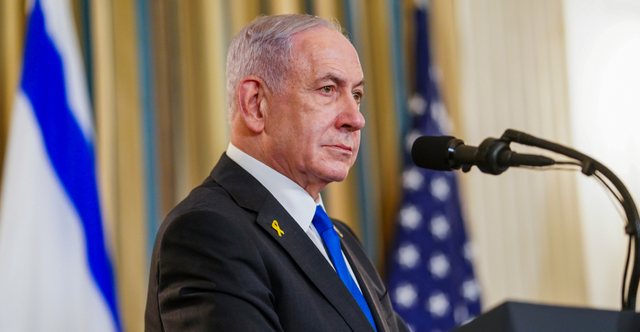
Israel is still trying to understand what happened in the first hours of the Hamas attack on October 7, 2023. At the center of the questions is Prime Minister Benjamin Netanyahu: when was he informed, what orders did he give, and how long did it take before he reacted.
The investigations have raised questions about delays, communication between the prime minister and the security services, and the information that had arrived before the attack.
Netanyahu has published his own chronology of events, but it is riddled with gaps and inconsistencies. The military and intelligence services have faced demands for explanations. An investigative commission is expected to examine the responsibilities in more detail after the elections.
6:29 AM – Netanyahu is notified of the attack
At 6:29 a.m., General Avi Gil, the prime minister's military adviser, informed Netanyahu that an attack had been launched. The call was not recorded.
A few minutes later, at 6:40 a.m., the two spoke again on the security phone. Netanyahu asked why intelligence had not warned of the attack. He also asked whether reservists should be mobilized, whether it was possible to strike Hamas leaders, and whether the border with Gaza could be closed to prevent hostage-taking.
Later, military investigations showed that the Israeli army failed to immediately close the border. The forces in the area faced about 5,000 Hamas militants, while there were about 767 Israeli soldiers on the ground.
7:30 AM – Questions about the Prime Minister's move
Netanyahu stated that at around 7:30 he left for the army headquarters in Tel Aviv, where the war room is located.
According to his version, he arrived at the bunker around 8:00 a.m. But Shin Bet documents and other sources give different times, while some reports say the prime minister may have arrived after 9:00 a.m. This has drawn criticism, especially given the fact that Defense Minister Yoav Gallant arrived at the army headquarters around 7:30 a.m., even though he lived further away.
Along the way, Netanyahu spoke with Gallant, who told him the situation was still unclear. One of the biggest questions is why Netanyahu did not immediately communicate with the army chief, Herzi Halevi, and the head of the Shin Bet, Ronen Bar.
8:40 AM – First emergency meeting
At 8:40, Gallant called an emergency meeting with Ronen Bar and Herzi Halevi.
Netanyahu was not present.
At around 9:30, the prime minister called his first meeting.
9:47 AM – Intelligence information emerges
At 9:47, military advisor Avi Gil read for the first time a situation assessment that Ronen Bar had prepared earlier, around 5:15, before the attack began.
This has raised one of the main questions of the investigation: what did the Shin Bet know before the attack and why was the information not transmitted to the prime minister and the government in a timely manner? Netanyahu has argued that this document shows that important information had remained in the hands of the intelligence services.
9:55 AM – Netanyahu speaks with the army chief
At 9:55, Netanyahu held his first conversation with the army chief, Herzi Halevi.
The meeting was also attended by the heads of the Shin Bet and Mossad, the defense minister and other senior security officials. An adviser to Netanyahu defended the prime minister, saying that in those hours he was one of the few who was trying to manage the situation.
11:35 AM – Netanyahu addresses the nation
At 11:35, the prime minister made a televised statement and told Israelis:
"Citizens of Israel, we are at war."
1:45 PM – Order to destroy Hamas forces
At around 1:45 p.m., almost seven hours after the attack began, Netanyahu ordered the destruction of Hamas forces that had entered Israeli territory.
According to the published chronology, he also urged that attention continue to be focused on the threats from Hezbollah and the West Bank. During the afternoon, Netanyahu held phone calls with French President Emmanuel Macron and US President Joe Biden.
16:30 – The clash with Yair Lapid
At 4:30 p.m., Netanyahu met with opposition leader Yair Lapid.
Lapid later harshly criticized the prime minister, saying Netanyahu failed to take significant action in the first hours of the attack.
Lapid claims that the prime minister did not issue orders to move forces, did not order the evacuation of communities, and did not undertake new military initiatives. Netanyahu has called these accusations “false” and part of a political campaign against him.
Who knew the attack was coming?
This remains one of the main questions that Israel seeks to answer.
Netanyahu argues that Shin Bet and military leaders saw signs of a possible attack hours before it happened but failed to inform him in time. On the other hand, his critics say that even after being informed of the attack, the prime minister did not react with the speed the situation required.
Therefore, the investigation must determine not only what the security services knew before October 7, but also what Netanyahu did after he woke up to the news of the attack. The answers are expected to come from the military investigation and a special investigative commission that is expected to examine responsibility for one of the most serious security failures in Israeli history.