


"We are drowning..." - From Lisbon, Milan to Tirana, "The Guardi...
/ 2026-10-18 23:13:32Focus


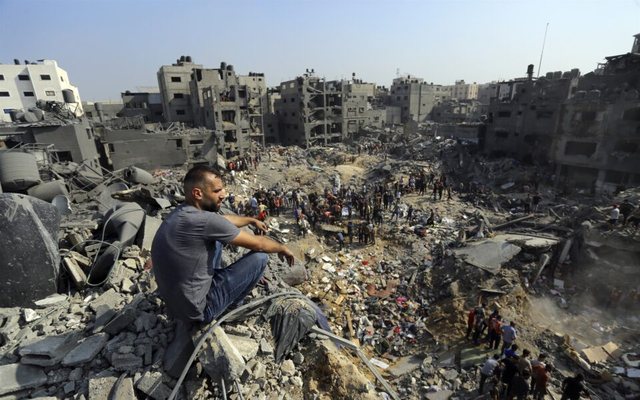
As Israeli troops advance into central Gaza City, there are growing questions over the future of the Palestinian territory after the end of the war between Israel and Hamas militants. As Voice of America correspondent Henry Ridwell reports, the United States has made it clear that it will not support another occupation of Gaza, some 18 years after the withdrawal of Israeli residents and military forces from the enclave.
What will happen to Gaza after the end of the war between Israel and Hamas? Israeli Prime Minister Benjamin Netanyahu told ABC television this week that for an indefinite period Israel will retain responsibility for the security of the territory.
After a two-day meeting of the top diplomats of the world's seven most industrialized nations in Tokyo, US Secretary of State Antony Blinken said Wednesday that Hamas must be defeated, but he also had a message for Israel.
"It is also clear that Israel cannot occupy Gaza. The reality is that there may be a need for a transition period at the end of the conflict, but it is imperative that the Palestinian people take over governance in Gaza and the West Bank, so that we don't have another occupation."
Israel and its Western backers must have a plan for Gaza after the conflict, analyst Yossi Mekelberg tells VOA.
"What happens if Hamas disappears as a political and military power? Who can take the place left empty? It could be even worse than Hamas. There must be in an intermediate period and it is very important to include a regional element".
Mr. Mekelberg says US-Israel ties remain strong, but there are disagreements.
"They don't trust Netanyahu and the current government. They know that an excessive blank check can be dangerous."
In only the second joint statement since the October 7 attack, G7 foreign ministers condemned Hamas and demanded the release of hostages, calling for a pause in the conflict to allow humanitarian aid into Gaza.
"It is important that the G7 was able to issue the first unified message in a written statement regarding the agreement [on humanitarian pauses in Gaza]," said Yoko Kamikawa, Japan's foreign minister.
The G7 did not call for a more permanent ceasefire. All over the world there have been protests calling for an end to the war. There is a risk that the conflict will deepen global divisions, according to analyst Mekelberg.
"It's very complicated because the G7 obviously represents the richest part of the world, towards which most of the resentment is directed for neglect and an approach that protects its own interests, but not the interests of the rest of the world. Because neglecting the Israeli-Palestinian conflict was criminal."
Meanwhile, the G7 reiterated support for Ukraine as the country continues to fight Russian aggression. The group also condemned North Korea's missile tests and supplying Moscow with weapons./VOA


