Protests highlight trauma crisis, operating rooms under reconstr...
/ 2026-10-15 18:35:16Focus


The legendary city of Troy really existed, but the story of the Trojan Horse may not have been the subject of epic poetry.
In Greek mythology, Paris, the prince of Troy, abducted, or, according to some sources, eloped with, Helen, the queen of Sparta. This event led an alliance of Greek city-states to sail across the Aegean Sea and lay siege to the great city of Troy.
As the siege dragged on, a Greek warrior known for his ingenuity, Odysseus, devised a plan: to build a giant wooden horse and present it to the Trojans as a peace offering, while Greek soldiers would hide inside it to conquer the city from within.
The story of the Trojan War, thought to have taken place sometime between the 13th and 12th centuries BC, is one of the most famous accounts in world history. It was immortalized in Homer's epic poem The Iliad and in several other ancient sources that have survived to this day.
The Trojan Horse… Symbol of war or a real plan?
However, this story straddles the line between fact and legend, leading many to question how much of these grand events actually happened. At the center of this debate lies the famous Trojan Horse hoax.
Even today, many people believe that the city of Troy never existed and that the Trojan War is a mere fiction. The ancient city is often placed in the same category as Atlantis: a story that may have been inspired by real events, but which ultimately remains a part of fantasy.
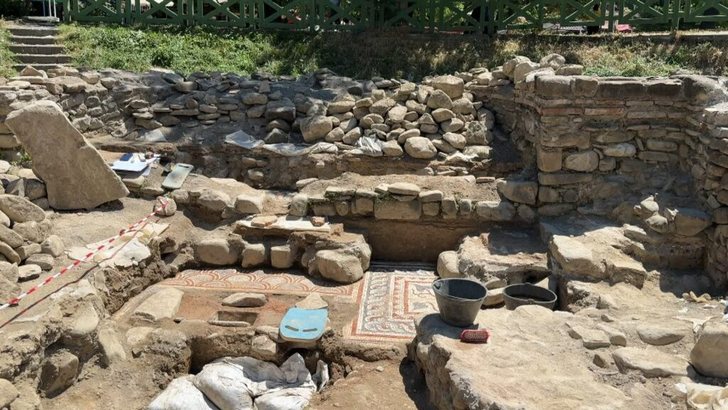
However, most historians agree that the city of Troy really existed. It is even believed to have been located in what is now Turkey, at an archaeological site first discovered by German archaeologist Heinrich Schliemann in 1873.
Although evidence for the Trojan War itself is scant, the city's ruins bear clear traces of conflict. Over the years, archaeologists have uncovered skeletons, piles of slingstones, and fortifications that appear to have been damaged, repaired, and then damaged again.
The city of Troy appears to have been abandoned around 1180 BC, a date that roughly coincides with the Late Bronze Age period when Homer and other authors set the Trojan War. However, it is still unknown whether the city was destroyed by war or by a natural disaster.
If we accept that the Trojan War really happened, then the question arises: what does the Trojan Horse represent? It is possible that the horse was a symbol of other, more common, tools of ancient warfare, such as a battering ram for demolishing walls.
Writing for History Today, historian and author Julia Kindt, of The Trojan Horse and Other Stories: Ten Ancient Creatures That Make Us Human, raises the question of whether the Trojan Horse was actually a poetic metaphor for a ship. “After all,” she writes, “Homer calls ships ‘sea horses,’ while the Greek playwright Euripides compares the horse to ‘the dark hull of a ship.’”
On the other hand, she acknowledges that ancient sources, including Homer, describe the Trojan Horse as a unique, purpose-built object. According to them, it was designed by the master carpenter Epeus, built of wood from Mount Ida, and placed on wheels.
Although sources disagree, they also give the number of people who were hidden inside the horse. Some say there were no more than 30, while others speak of up to 100 warriors. One source even claims that as many as 3,000 soldiers were waiting inside.
There are many reasons why the Greeks might have chosen a horse. As Julia Kindt explains, horses played a central role in many Bronze Age societies. In ancient Greece, they were also associated with Athena, the goddess of war.
Whether the Trojan Horse was a historical event or simply a literary creation, its story has continued to inspire generations of writers, poets, and artists. From the Roman poet Virgil, author of the Aeneid, to the 2004 film Troy starring Brad Pitt as Achilles, the legend remains as compelling and captivating as when it was first told by Homer. / Mental Floss