


Is this police force professional and capable of handling violen...
/ 2026-10-16 18:54:07Focus


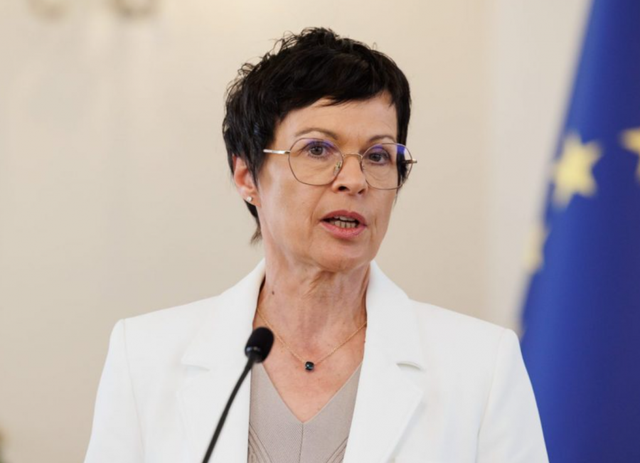
European Commissioner for Enlargement, Marta Kos, has previously presented in Zagreb the European Commission's proposal for the review of the European Union's enlargement process, focusing on the gradual integration of candidate countries, strengthening democratic controls and adapting EU institutions to a Union with more than 30 member states.
In his speech at the Conference of Croatian Ambassadors, Kos stated that the geopolitical reality has changed and that the enlargement process must adapt to these developments.
"The world has changed. And enlargement must change with it," she said.
According to her, the European Commission aims to build consensus at the highest level of the EU through four main issues: internal reforms without treaty changes, strengthening democratic protections, a new methodology for gradual integration, and comprehensive transitional measures.
Internal reforms
One of the main challenges relates to how the EU will function if the number of member states increases beyond 30. Kos argued that the Union will need faster and more flexible decision-making.
According to her, changes in decision-making processes and institutional organization can be made without amending the EU treaties, avoiding a lengthy process of negotiations and ratifications.
Kos also suggested reducing the cases where a single state can block decision-making of the entire Union, as well as making greater use of the "enhanced cooperation" mechanism, which allows a group of member states to move forward with certain initiatives.
Stronger democratic protections
Another important point is the strengthening of mechanisms that guarantee respect for democracy and the rule of law even after membership.
Kos warned that the EU must ensure that new countries do not regress to democratic standards after accession.
"We need to make sure we don't let the Trojan horses in. Not today, not in 10 or 20 years," she declared, arguing that the experience of recent years has shown the need for stronger preventive and corrective mechanisms.
This idea, however, remains controversial, as it raises questions about the principle of equal treatment of all member states and the risk of creating a “two-tier” membership.
Gradual integration
The European Commissioner also called for a change in the enlargement methodology, proposing a more gradual approach that would allow candidate countries to benefit from some EU advantages before full membership.
According to her, the current "all or nothing" process no longer responds to today's reality, especially at a time when negotiations can last for years and candidate countries can face external political pressures.
Kos cited as examples the benefits that aspiring countries can already receive, such as inclusion in the Single Euro Payments Area (SEPA) and connection to EU energy networks, but stressed that these steps are not sufficient.
Transitional measures
The fourth point relates to how the accession of new countries will affect current member states and the EU budget.
Kos said that Brussels must have transitional mechanisms in place to ensure that the integration of new countries goes smoothly and that the Union budget continues to fund existing priorities.
The issue of financing new member states is expected to be one of the most complicated points in the negotiations for the next Multiannual Financial Framework.
In her speech, Kos specifically mentioned Montenegro's progress, Albania's advancement in meeting rule of law standards, Ukraine's and Moldova's technical advances, and Iceland's return to the membership process.
According to the Commissioner, the EU is facing a new important moment for enlargement, which she compared to a "Helsinki Moment", referring to the process that preceded the Union's major enlargement after the Cold War.
The European Commission is expected to advance the discussion on the review of enlargement policy ahead of a key discussion among EU leaders in October.


