"We are drowning..." - From Lisbon, Milan to Tirana, "The Guardi...
/ 2026-10-18 23:13:32Focus


Military conflict with Iran, presented by Washington as a means to rebalance the balance of power in the Middle East and strengthen US deterrence against China, is being seen in Beijing as a strategic mistake that could accelerate American decline and create new geopolitical limits for influence in China.
The choice of military confrontation with Iran was presented by its most ardent supporters as an action that could change the balance in the Middle East, limiting a regime considered a threat and stopping its nuclear ambitions.

At the same time, the conflict is also seen to affect the global balance of power, challenging a rising China in the face of American dominance over key factors such as the flow of oil.
In the months after the conflict began, this approach is viewed in Beijing as wrong and arrogant.
According to analysis and conversations The Economist has conducted with Chinese diplomats and experts, the Chinese leadership has chosen not to get directly involved, following the saying attributed to Napoleon Bonaparte: "Never interrupt your opponent when he is making a mistake."
The US stance confirms the value of Xi Jinping's election.
Beijing believes that the war could accelerate the decline of American power. The aggressive US stance is seen as confirmation of Xi Jinping's choice to prioritize security over economic development. At the same time, there is an expectation that a future peace agreement will create opportunities for Chinese investment and economic penetration.
From the Chinese perspective, Washington is turning against Iran because it perceives its power to be declining. The image of a strong military presence is not accompanied, according to Chinese analysts, by a clear strategic direction.
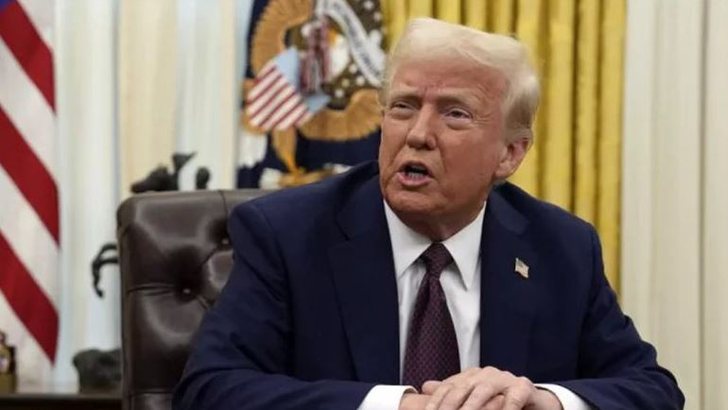
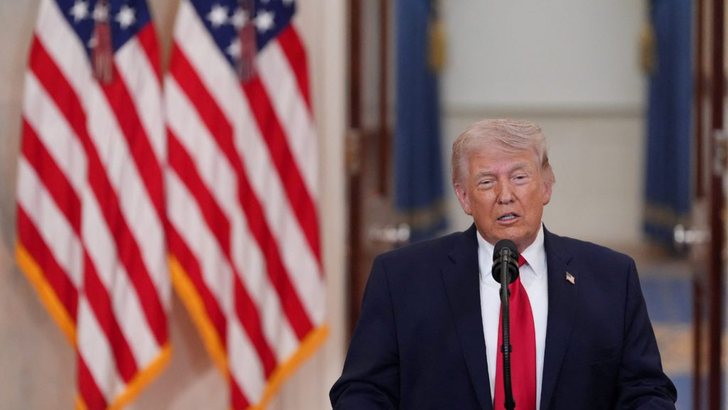
President Donald Trump has reportedly ignored expert advice, making threats and leaving open the possibility of withdrawal, which reinforces the image of a lack of a coherent plan.
Washington's blockades favor China's aspirations in East Asia.
The prospect of a ground operation is seen as an indication that a series of wrong choices could lead to a prolonged US involvement in the Middle East.
In the event of Iran's destabilization or the regime's persistence, Washington could find itself facing a long-term military presence in the region, while the possibility of Tehran pursuing nuclear weapons could lead to a new conflict.
Such an opportunity would distract the US from East Asia, where China seeks to shape the conditions of the 21st century.
At the same time, the conflict is causing concern in countries that depend on American security, as rising energy and raw material costs weigh on their economies.
In Beijing, it is estimated that some Asian states may seek to avoid tension with China, fearing the consequences of possible American instability.
China involved in the energy crisis.
The Chinese leadership believes the conflict confirms Xi Jinping's choice to strengthen the country's self-sufficiency in critical sectors, even at the expense of economic growth. China has invested in creating strategic oil reserves totaling 1.3 billion barrels, an amount capable of covering its needs for several months.
At the same time, it has diversified its energy mix, investing in nuclear power, solar and wind power, while maintaining the use of domestic coal. At the same time, it is facilitating trade in Iranian oil, adopting a pragmatic approach.
As part of this strategy, Beijing is also trying to build its own influence. After the Trump administration raised tariffs, China threatened to restrict exports of rare earth metals, which are critical for electronics and clean energy technologies.
While this influence may be fading as the United States seeks alternative sources, Beijing is exploring new pressure points, such as key pharmaceuticals, semiconductors, and critical supply chains, while seeking dominance in technologies such as quantum computing and robotics.
Economic opportunities and expectations from Trump's visit to Beijing
The war could also create economic opportunities. Gulf states and Iran will need reconstruction projects, while states concerned about potential disruptions in the Strait of Hormuz could turn to Chinese green energy technologies. Chinese industry has excess production capacity in sectors such as solar power, wind power and batteries.
At the same time, it is estimated that Washington could appear more conciliatory in negotiations with China, as it faces difficulties in the Middle East. At the summit between Trump and Xi in Beijing in May, the Chinese side is seeking to create conditions for an agreement that would limit the use of tariffs and export restrictions by the US and potentially allow Chinese investment in the American economy. In Beijing's ideal scenario, Washington would declare that it opposes Taiwan independence and supports peaceful reunification.
Gaps and concerns
However, this optimism is accompanied by concerns. Chinese experts are following with interest the use of artificial intelligence by the US armed forces to coordinate operations.
This technological development reinforces the assessment that a military operation against Taiwan would be particularly dangerous, as war remains unpredictable.
At the same time, a prolonged conflict could hit the Chinese economy and its exports.
Despite Beijing's realistic approach, a strategic gap is identified in its analysis. Chinese analysts seem reluctant to consider the possibility that the US could act as a destabilizing force, upending the international order it itself created.
Although China often criticizes Western values, it has benefited from a system of rules shaped by Washington.
An unstable international environment could negatively impact China's export-oriented economy. Political stability and economic prosperity are key pillars of the legitimacy of the Chinese political system.
The decline of the United States does not necessarily mean a loss of its ability to renew itself.
American economics and politics have demonstrated considerable adaptability to technological and geopolitical changes in the past.
In contrast, China faces challenges such as an aging population and the constraints imposed by the ruling party's ideology.