Is this police force professional and capable of handling violen...
/ 2026-10-16 18:54:07Focus


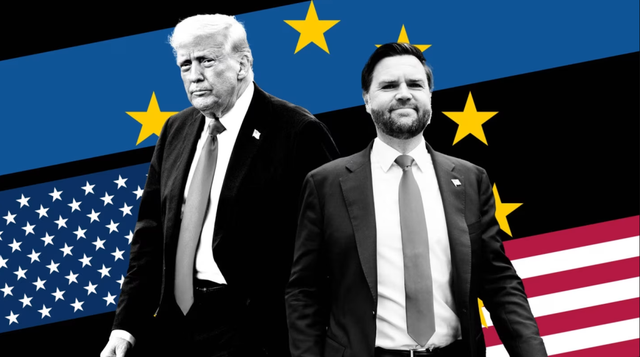
Late last month, the US State Department published an essay accusing Europe of waging an "aggressive campaign against Western civilization itself."
Some dismissed it as a simple joke. The author, Sam Samson, was a little-known adviser to Secretary of State Marco Rubio who only graduated from college in 2021. The fact that his post appeared on the department's official account made skeptics think again.
Samson's essay, which accused European governments of "rolling back" on democracy and "weaponizing political institutions against their citizens," highlighted the deepening ideological divide between President Donald Trump's administration and the EU.
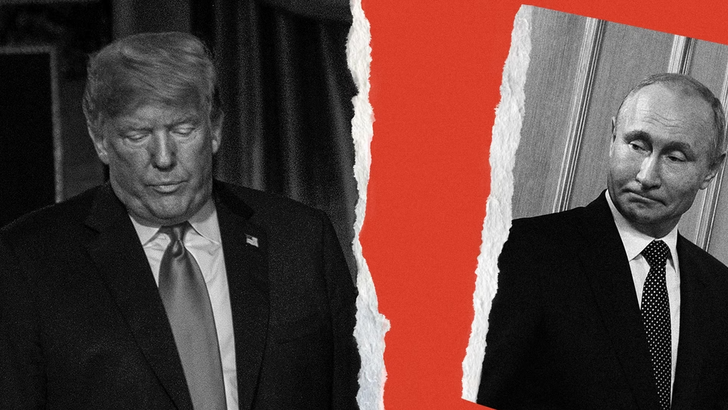
It's a departure with implications for the future of the Western alliance and could be on display when German Chancellor Friedrich Merz meets Trump in Washington on Thursday.
“Even if this is just a message to the grassroots… such language in the public space changes the transatlantic relationship,” said Constanze Stelzenmüller, who directs the Center for the United States and Europe at the Brookings Institution.
Merz hopes to discuss Germany's pledge to spend more on defense and ways to resolve the U.S.-EU trade dispute. Instead, he could face questions about the recent decision by German domestic intelligence to classify the far-right Alternative for Germany (AfD) as an extremist organization, a move that prompted protest statements from Vice President J.D. Vance and Rubio.
“This is not democracy, it is tyranny in disguise,” Rubio said at the X in early May. “What is truly extremist is not the populist AfD, which came in second in the last election, but the establishment’s deadly open-border immigration policies, which the AfD opposes.”
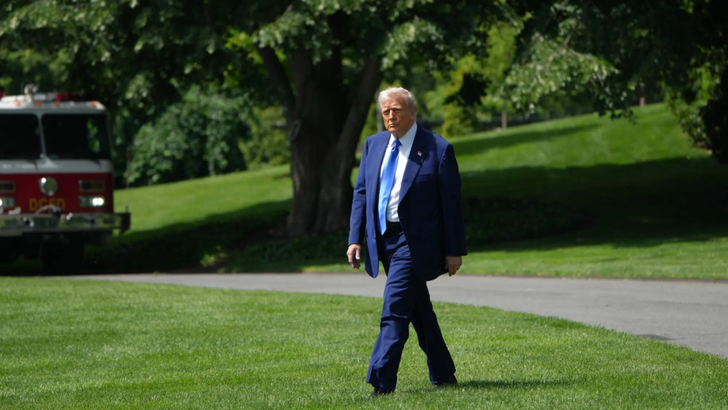
Trump has long harbored a deep distrust of the EU, which he says was created to “destroy” the U.S. His advisers have now turned this discontent into an ideology that is being publicly propagated with a belief that has sent a chill through European capitals.
The bloc is quickly becoming the latest front in a culture war that Trump has waged against bastions of liberalism. Most of his targets—elite universities, government agencies like USAID, public broadcasters—have been domestic.
But Samson's essay shows that Maga's ambitions go much further, and the movement is now poised to extend far beyond America's borders.
“People around Trump took his vague hatred of Europe and turned it into part of the overall war against liberal America,” said Jeremy Shapiro, research director at the European Council on Foreign Relations think tank.
The State Department did not immediately respond to a request for comment from the Financial Times.
This ideological conflict is intensifying at a particularly sensitive time. The EU is facing complex negotiations with the US on trade, defence and security, as it seeks to avoid a transatlantic trade war, while keeping Washington committed to defending Europe and engaged in Ukraine.
The cultural war against Europe risks becoming "background music" for these talks, Stelzenmüller said.
Calling into question Europe's democratic credentials is "the right bait" for the president's Maga base, said Stephan Bierling, a professor of international politics and transatlantic relations at the University of Regensburg. It also allows Trump to present himself as a "savior of democracy."
“Populists who seize power and then try to impose authoritarian systems of government often style themselves as the true defenders of democracy,” Bierling said. “They are using the culture war to legitimize their authoritarian seizure of power.”
Trump's list of complaints against the EU is well-crafted and consistent with his general disdain for supranational institutions.
He has accused the European bloc of not paying its fair share for defense, of running persistent trade deficits, and of imposing fines and pursuing antitrust investigations against American technology groups such as Facebook and Google.
Since returning to the White House, his skepticism of the Western alliance has been evident. He has hit the EU with 50% tariffs – from the suspension until July 9 – and has pressured NATO ally Denmark to give up control of Greenland.
But the new anti-European ideology being developed by those around him runs much deeper.
In their eyes, Europe is decadent and impotent, lecturing the US on human rights and climate change while exploiting America's defensive shield, at risk of becoming a "permanent security vassal of the United States," in Vance's words.
The vice president has become the chief spokesman for this new hostility, telling the Munich Security Conference in February that Europe was “drifting away from some of its most fundamental values.”
The biggest threat facing Europe was not Russia or China, but "the threat from within," restrictions on freedom of speech and interference in elections, he added.
It's not just the EU that has been targeted by Trump's team. Officials have also turned their attention to UK authorities for their prosecution of anti-abortion activists, a long-standing cause for the American religious right.
The White House also reacted angrily to a court ruling in March that banned French far-right leader Marine Le Pen from running for office for five years after she was convicted of embezzling EU funds.
"The exclusion of people from the political process is particularly troubling given the aggressive and corrupt law against President Trump here in the United States," said Tammy Bruce, a State Department spokeswoman.
The president's team has gone further in recent months, not only defending right-wing politicians and parties that they feel are being treated unfairly, but directly interfering in national elections by openly campaigning for candidates from the far right.
In late May, Kristi Noem, the secretary of homeland security, traveled to Poland to urge voters to elect Karol Nawrocki, the candidate of the nationalist opposition Law and Justice (PiS) party, ahead of the June 1 election. She called his rival, Warsaw Mayor Rafał Trzaskowski, a “failed leader.”
If Poles were to elect Nawrocki, “you will be that shining city on the hill that will make all of Europe turn around and recognize that freedom is why we exist, freedom is what it’s all about,” she told delegates at the Conservative Political Action Conference in Jasionka. Nawrocki won the election.
“For the Trump team, the purpose of supporting such far-right candidates and parties is twofold,” Shapiro said. “First, it could undermine the EU’s broader liberal agenda,” which Trump and his allies see as hostile to U.S. national interests, he said.
“But it could also create a new transatlantic relationship that is fundamentally illiberal,” he added. “And that is a much deeper threat.”