Is this police force professional and capable of handling violen...
/ 2026-10-16 18:54:07Focus


By Marenglen Kasmi*
Although slowly, the war in Ukraine is becoming a new precedent for modern warfare. After more than two years of frontal clashes and mutual missile strikes, the conflict has now moved inside Russian territory. Ukrainian drone attacks on deep Russian air bases are no longer an exception, but part of a sustained strategy that seeks to shake the long-standing Russian belief that the vast Russian territorial space is inviolable. Ukrainian sources speak of significant damage to Russian strategic aviation – up to a third of it has been put out of action.
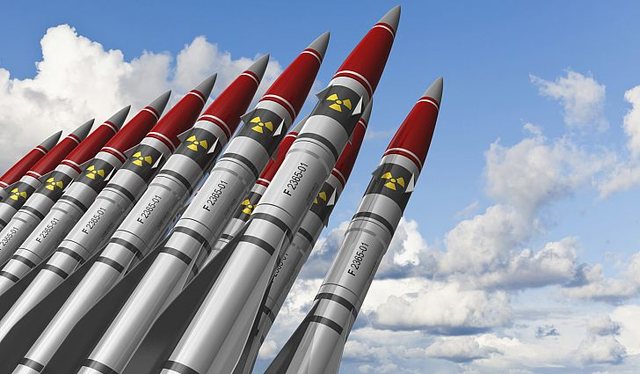
Such a figure, if accurate, has more than just technical value. It fundamentally undermines the notion of Russian military prestige. And with it, the inevitable fear grows: does Russia already feel threatened at its core? Will it use nuclear weapons as a way out?
Since 1945, no nuclear weapons have been used in war. Not because there have been no major conflicts, but because the entire world has built an unwritten code, a threshold that no one should cross. Russia, despite possessing the largest arsenal in the world, has respected this code, including it in its official doctrine.
According to Russia's nuclear doctrine (adopted in 2020), nuclear weapons can be used in four circumstances:
In the event of an attack on Russia with nuclear weapons;
In the event of a threat to the existence of the Russian state;
In the event of an attack on infrastructure that paralyzes nuclear capacity;
In response to the use of weapons of mass destruction.
As mentioned above, a nuclear weapon can only be used if the existence of the Russian state is threatened or if there is an aggression with similar weapons against its territory. None of these criteria have actually been met by the Ukrainian attacks, despite the damage to military bases. However, Russian propaganda is using this situation to build the narrative that “the existence of the state is at risk,” deliberately blurring the line between the perceived and the real threat.
But what happens when "existence" is interpreted as a matter of image, not survival? What happens when a leader who has built all his power on the idea of absolute power sees his strategic fleet burned by drones that cost less than an anti-aircraft missile?
History warns us. In the final months of World War II, as Nazi Germany was collapsing, Adolf Hitler was obsessively awaiting news of the invention of a “super-weapon” that would turn the tide of the war. Reich documents mention repeated instructions for the advancement of the German atomic project – although it was far behind the US Manhattan Project. In conversations with his inner circle, Hitler envisioned the nuclear weapon no longer as a means of victory, but as a means of revenge for the destruction of Berlin and the “humiliation” of Germany by the Allies. Science then prevented this madness; but the will of a leader in total despair, ready to drag the world with him in his downfall, is not a novelty of our times.
On the other hand, the actual use of a nuclear weapon – even in an uninhabited area – would ultimately isolate Russia. China, which is the Kremlin’s most silent supporter, has made it clear that it opposes any such move. India too. The West would not leave this act unanswered – perhaps not nuclear, but military and economic with irreversible consequences.
Putin knows this. He knows that such an act would not strengthen his position, but would put him in the role of an isolated leader who threw the first stone in the collapse of the post-war order. Therefore, the threat remains part of the political language, not the operational plan.
But time is working against him. Every Ukrainian success deep inside Russia pushes him closer to the terrifying edge of instability. We are not there yet – but we are closer to it than ever.
However, the answer to the question posed in the title is clear and should be given with caution, but also with conviction: no, we are not on the verge of using nuclear weapons. The real chances of such a step are negligible, as long as Russia does not feel a real existential threat to its survival as a state.
The fear is understandable. But the use of nuclear weapons remains, for the moment, more of a tool of pressure than a real option.
*Military historian