Details of the storm in the administration, here's who will resi...
/ 2026-10-22 22:25:00Focus


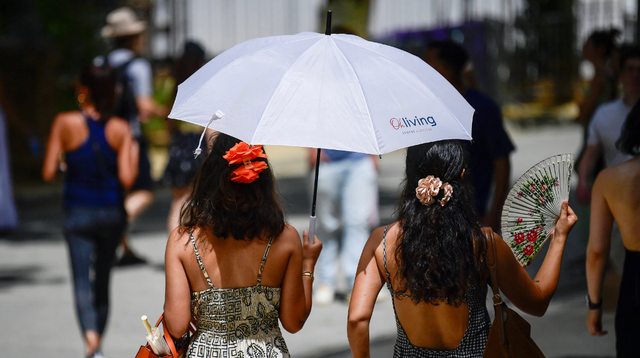
Urban areas across Europe are warming, unevenly and with major effects. From Tirana to Tashkent, Uzbekistan, urban areas are experiencing a significant increase in temperatures, an increase in heat waves and growing risks to public health, economic output and infrastructure. But what is worrying is that temperatures are also changing from space to space, within a city.
A World Bank report states that in Vlora, Tirana, and Shkodra, temperatures vary not only from city to city, but also from neighborhood to neighborhood.
More than 50,000 measurements of near-ground air temperature and humidity were taken in three separate areas.
“Thermal differences between neighborhoods were striking. In Albania, the difference between the hottest and coldest neighborhoods reached 6.5°C in Shkodër, 6.4°C in Vlorë, and 4.3°C in Tirana. In all three cities, temperatures were highest in areas with a greater density of asphalt, concrete, and other impermeable surfaces and lowest in areas with more green cover,” the report says.
The World Bank report titled "Uninhabitable: How Cities in Europe and Central Asia Can Survive and Thrive in a Hotter Future" also brings to attention a campaign undertaken in 2023 by a team of 10 volunteers from New York University in Tirana that yielded interesting data.
“The role of land cover and urban form in determining thermal conditions is highlighted by a measurement campaign conducted in Tirana, Albania, during the summer of 2023. A team of 10 volunteers recruited from New York University in Tirana placed temperature sensors on car windows and followed planned routes through the city.
Tens of thousands of near-ground temperature measurements were taken during three separate vehicle movements (conducted at 6:00–7:00 AM, 3:00–4:00 PM, and 7:00–8:00 PM).
By linking heat measurements to land cover characteristics through a machine learning model, a high-resolution temperature map was created for the entire city. It showed strong spatial variations in heat exposure in Tirana during the campaign, with a difference of 6.4°C between the hottest and coolest neighborhoods.
Areas with a higher percentage of solid, impervious surfaces, such as roads, parking lots, and buildings, showed higher temperatures, while areas with more trees and grass were consistently cooler.
The hottest areas coincided, at least in part, with lower-income communities: neighborhoods composed of single-story houses were significantly cooler, while areas with medium-sized buildings and few trees were hotter," the WB report said, referring to this study.
The report also says that the hottest areas partly correspond to income differences: residential areas with more expensive homes were generally colder, while areas with dense apartment blocks and no vegetation were hotter.
“Dense downtown locations where commerce, retail, office jobs and tourism are concentrated were also the hottest,” the report said.
The report focuses on the Orbital Forest project, which aimed to plant 2 million trees in a circle around the capital, but the latest data reported in the document is for up to 300 thousand trees planted by 2019.
The same underlines that rising temperatures must be taken seriously as the impacts have become increasingly greater in various sectors, including the energy sector.
Specifically, the report says that countries need to strengthen the resilience of energy systems to extreme heat.
“As summer temperatures rise across Europe and Central Asia, power systems are facing an increasing strain. Heat waves increase the demand for electricity for air conditioning, refrigeration and water pumping while simultaneously reducing the performance of energy infrastructure.
In countries like Turkey and throughout the Western Balkans, the peak demand for electricity that used to occur in winter is now shifting to summer.
This shift was dramatically illustrated in June 2024, when an early heat wave caused widespread power outages in Montenegro, Croatia, Bosnia, and Albania, driven by rising demand and declining performance of energy assets.
"Extreme heat damages energy infrastructure in several ways. High air temperatures reduce the efficiency and capacity of transmission lines, which can become dangerously sagged or transport less energy," the document highlights.
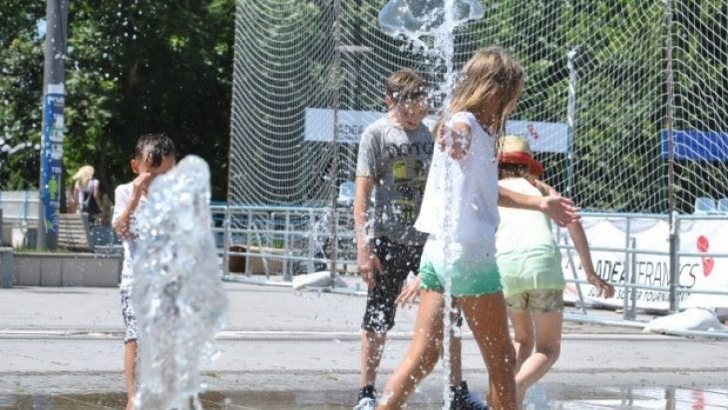
Recommendations included changing the heat-blocking ground materials in a playground near dense housing developments where heat stress made it impossible for children to play.
It is also recommended to add greenery to pedestrian streets and improve the design of bus stops and shopping areas, including street vending.
Heat adaptation policies envisage 4 plans:
-Heat health plan
-Early warning system
-Capital plan
-National adaptation plan
Of these, Albania is the only one in Europe that only has a national adaptation plan.
According to the World Bank, economic losses from extreme heat could reach 2.5 percent of GDP by mid-century in some parts of the region.
Heat damages both current productivity and long-term human capital.
“When it’s hot, workers slow down or stop working altogether. Heat reduces physical and cognitive performance. Productivity losses alone can reduce GDP by up to 1.3 percent in countries like Albania, North Macedonia, and Tajikistan.
Extreme heat is one of the deadliest, least visible and most underestimated hazards we face. Unlike storms or floods, it leaves no debris behind. But the consequences it has on people, infrastructure and the economy are enormous. Tens of thousands of heat-related deaths have occurred in Europe alone in the last two decades.
"Extreme heat events not only kill but also worsen chronic diseases, overwhelming hospitals, especially for the elderly and low-income communities," the report states.