Is this police force professional and capable of handling violen...
/ 2026-10-16 18:54:07Focus


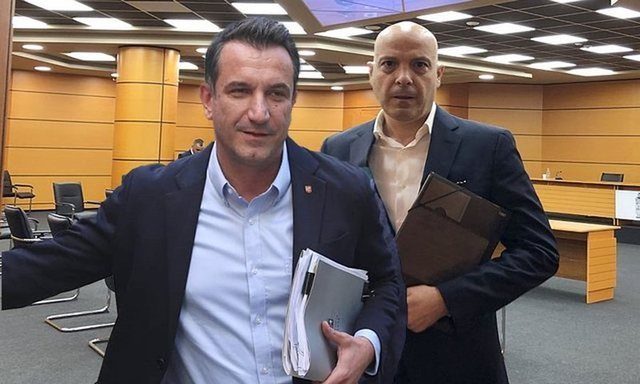
The Mayor of Tirana, Erion Veliaj, has submitted an official request to the Administrative Court for the live broadcast of the court hearings in the trial against prosecutor Ols Dado.
In the request, Veliaj argues that the principle of transparency of the trial should be guaranteed in a real and effective manner, by allowing the live broadcast of the hearings to the public. According to him, the current restriction on the physical attendance of the hearings does not meet the standard of transparency required by law.
"Regarding this process, through this request, I address the Court to request that a fundamental principle of this process, the publicity of the session, be fully and effectively implemented, in accordance with Article 20 of Law No. 49/2012 "On Administrative Courts and the Adjudication of Administrative Disputes", as amended, which establishes that the judicial review is open to the public. The request I submit is not related to the change of this status, but to the concrete way in which this principle should be implemented in practice. More specifically, I request the Court to allow the presence of a media camera for the live broadcast of each session, or, alternatively, that the Court itself enable the live broadcast of each session through an institutional signal controlled by it, so that the public has direct access to the development of the process," the request states.
One of the main arguments is related to the practice of the Constitutional Court of Albania, which already broadcasts public hearings live, as a standard for guaranteeing transparency and citizens' access to justice. According to Veliaj, this practice should serve as a model for all courts, as it shows that live broadcasting is fully compatible with the solemnity and normal development of the judicial process.
He emphasizes that, due to his public function, the high interest that the case carries, and the numerous interested persons, the application of a more limited standard by other courts would violate the public's right to follow the development of cases, public trust, and would compromise the purposes of these processes.