Protests, violence, curfews: From France to Albania, why Europe'...
/ 2026-10-20 23:47:20Focus


When a court decision frees a lifer, while others serve full sentences for lesser crimes, the message conveyed is clear: justice functions differently depending on the name and connections of the convict.
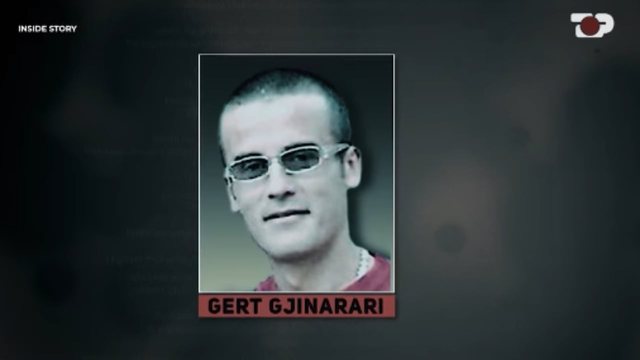
One of the freed characters is Gerd Gjinerari, sentenced to life imprisonment for the murder of Tirana's "strongman", Naim Zyberi, an event that took place in Italy.
The court based its decision on an in-depth report from the Probation Service and an assessment of his behavior during the period of serving his sentence. The prison report mentions Gjinerari's engagement in rehabilitation activities, including education and active participation in supervision group processes.
Another important component that influenced the court's decision was the fact that Gjinerari has managed to stabilize relations with the victim's family and has expressed remorse for his actions.
However, the decision to release was widely considered questionable and abusive. For this reason, the High Inspector of Justice launched a disciplinary investigation against Judge Markeljan Kuqo, who had approved the release.
The ILD was set in motion because, according to the law, Gerd Gjinerari did not meet any of the conditions to benefit from conditional release. He was a convicted criminal and a repeat offender, a criterion that made him ineligible for a possible reduction in sentence. In addition, the decision to release him was contrary to the evidence that had been administered during the trial and the circumstances that had come to light.
"It is important to emphasize that the efficiency is measured by standards, not numbers. But also by the standards for initiating disciplinary investigations. There is perhaps a debate about the issue of initiating disciplinary investigations on the initiative of the ILD, due to media publications, it has happened in some cases that the ILD has initiated investigations for these reasons. It has also happened that due to these investigations, disciplinary proceedings have ended in the relevant councils and measures have been taken", said Artur Metani.
According to the verifications carried out, the judge had also ignored his previous practice in handling similar requests, rendering an erroneous decision that created a dangerous precedent for the justice system.
After six months, the decision to release Gerd Gjinerari was overturned by the Korça Court of Appeal, but he never returned to prison, having disappeared from all traces, not even appearing at the Probation Service. He remains at large today.
According to the ILD, this case raised a number of concerns, not only about the way the case was handled in the Korça Court, but also about the quality of decisions in the future. The case could be taken as a reference by other magistrates to make similar decisions without respecting the law and rules.
"A few years ago, at least 2 years ago, we had an order from the Minister of Justice in force that the assessments of behavior that prison staff forget must be approved by the Minister of Justice, so he was a second filter, in addition to the assessment that the staff makes, they must also pass through a team, a commission in the Ministry. This was a kind of filter precisely to avoid staff misusing their duties, undeserved assessments and subjective assessments", said the deputy director of prisons, Fehmi Sufaj.
"Giving more executive rights to the prison authority is a conceptually acceptable version of executive-penal legal regulation. I agree that more prisons should be given more powers. What does not change is the role of the court," said lawyer Ardian Visha.
The High Inspector of Justice has identified a number of serious violations by Judge Kuqo. They include an incorrect application of substantive and procedural law, contradictory references that did not match the evidence and facts administered during the trial, as well as a failure to respect the criteria prohibiting conditional release. Clear criteria for those convicted of serious crimes, especially for repeat offenders.
At the conclusion of the investigation, the ILD requested that the High Judicial Council take appropriate measures and initiate disciplinary proceedings against Judge Markeljan Kuqo for the violations he had committed. Judge Kuqo has been accused of very serious disciplinary violations, which discredit his position and image as a magistrate and make him unfit to continue his duties. In the end, he was dismissed from office.
On June 11, 2020, in a mafia assassination attempt, Hekuran Billa, released from prison 1 year before the execution, was executed in the Paris Commune area. This event is strong evidence of one of the consequences of the dubious parole process.
When decisions are made without merit and without accountability, they are not an opportunity for rehabilitation. They are a game of chance, where loss is often inevitable. Billa was one of those who benefited from this system, but for him, this was not a gift, it was a punishment disguised as freedom.
If he had not been released from prison, Hekuran Billa might still be alive today. Maybe behind bars, but still alive. His fate would not have been sealed by bullets, but by the justice that once gave him a life sentence. A court decision and a prosecutor who chose to remain silent gave him the opportunity to go free. A step that led him towards death.
"While we have never seen in prisons such professional people who can truly demonstrate the behaviors and positive reactions that they should have in society the day after tomorrow, certain individuals who are in those institutions could be, for example, anthropological experts who study human behavior and give us an accurate database of these people," said lawyer Bledar Meminaj.
In the decision made in February 2019 by Kruja judge Enkeleda Hoxha, it was argued that the victim had good behavior in prison, had served part of his sentence and had no disciplinary measures. He was considered ready for reintegration into society.
But, a year later, Hekuran Billa was executed in the middle of Tirana, in a well-organized assassination. Fate had followed him until that moment, but could no longer protect him.
The investigations that followed this event revealed that Billa's release was not an ordinary decision, but a scandal of justice. The High Inspector of Justice launched a disciplinary investigation against the judge and the prosecutor.
"In no case can the ILD take over the competence of the Assembly in terms of exercising legislative power, nor the power or function of the courts or prosecutors. I think that the ILD has done the best with this inspection topic, as the recommendations made, including those for the High Court, and the identification of violations by magistrates have made judges and prosecutors more careful in implementing this institute," said Artur Metani.
Documents obtained by Inside Story show that the process of releasing Hekuran Billa from prison was accompanied by a series of legal violations. Referring to the disciplinary investigation, a key role was played by prosecutor Bujar Memia, who had not filed any appeal against the court's decision to release Billa on bail.
The disciplinary investigation conducted by the High Inspector of Justice proved that: Prosecutor Bujar Memia did not oppose Billa's release, even though the latter had been sentenced to life imprisonment for a murder in Great Britain./ Inside Story