Is this police force professional and capable of handling violen...
/ 2026-10-16 18:54:07Focus


At the World Cup, where extreme temperatures in the US, Canada and Mexico have forced organizers to impose mandatory hydration breaks in the 22nd minute of each half, football is facing a change that seems small on paper but big on the pitch: a three-minute stoppage that interrupts the rhythm, the excitement and often the flow of the match.
On the surface, the measure is simple: protecting the health of players in extremely hot and humid conditions. But in practice, it has become a hot topic of debate among coaches, players and analysts: is this a health measure or a game-changing “commercial break”?
Rest as a strategic tool
In some of the early matches of the tournament, an interesting pattern was observed. After the hydration break, teams that were struggling often came back stronger. The clearest example came in Brazil's match against Morocco, where the Brazilian team, initially slow and at a disadvantage, equalized very quickly after the restart.
Brazil coach Carlo Ancelotti admitted that the break gave him the opportunity to change his tactical approach and communicate more clearly with his players. This turns the break into a strategic tool: not just a physical break, but also a “mini-technical consultation.” But not everyone sees it that way.
"The moment's pause", who loses the rhythm
Emma Hayes has called this phenomenon "the pause of the moment", noting that teams in control of the game often lose momentum precisely when the stoppage interrupts their pressure.
In football, pace is a weapon. When a team is dominating, any interruption can be a “psychological break” for the opponent. And in several matches this tournament, this has been clearly seen: the defending teams have used the break to reorganize and change the dynamics of the game immediately after the restart.
One such example was seen with the Netherlands, who lost their advantage to Japan after the break, leaving room for their opponent to get back into the game.
Tactics: a new weapon for coaches
On the other hand, coaches see this as a hidden "timeout" within football. Mauricio Pochettino has been critical, saying that breaks are unnecessary when conditions are not extreme. While Luis de la Fuente defends the idea, considering it a necessary measure for the health and refreshment of players in high temperatures.
In reality, these three minutes give coaches an opportunity that previously did not exist in traditional football: immediate correction of the tactical system, reorganization of the pressing, or simply calming the team.
Invisible winners: teams that know how to adapt
Some teams have shown a special ability to take advantage of these interruptions. Brazil, for example, has shown that it can quickly return to the game after the break, exploiting individual qualities.
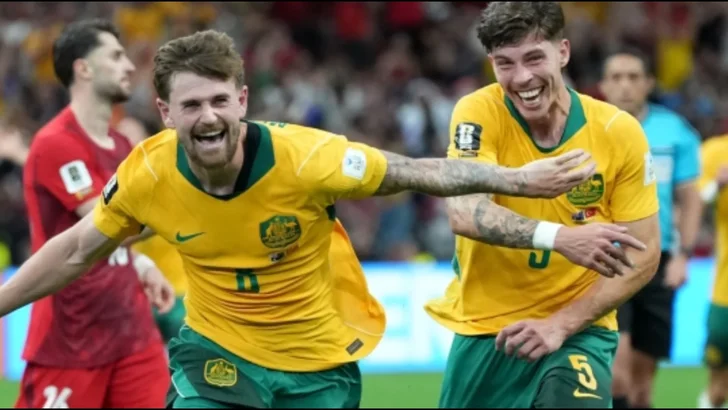
Canada equalized right after a break in the second half, showing that a break can serve as a “restart.” Australia also scored right after the break in a convincing victory, showing that some teams use this break better than others.
The Losers: the moment, the emotions and the fans
However, the biggest loser is not always the team on the field. It is often the game itself. Teams that build pressure gradually, that create chances at a high pace, lose the psychological advantage when the game suddenly stops.
In some extreme cases, such as the match between Germany and Curaçao, the break became a turning point where the opponent completely lost their rhythm and the match turned into complete dominance by one side.
The biggest debate: health care or advertising?
Critics such as Ian Wright are skeptical of the system, suggesting that it could be a way to squeeze more advertising into the broadcast. On the other hand, some strongly defend the idea, stressing that in extreme temperatures, rest is necessary for the health of players. But even in stadiums with climate control and closed roofs, these breaks continue to be applied, which further fuels the debate. /BBC