


Is this police force professional and capable of handling violen...
/ 2026-10-16 18:54:07Focus


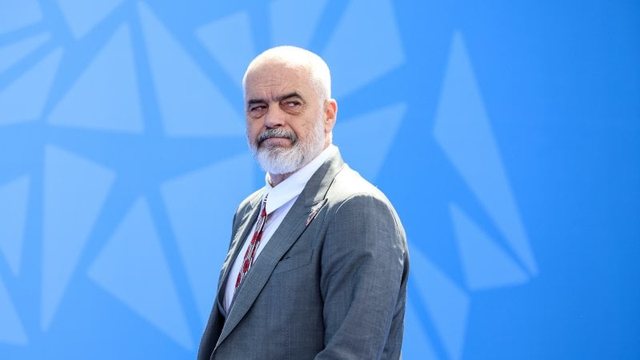
Prime Minister Edi Rama has given an interview to "The Guardian", where he stated, among other things, that the United Kingdom's plan to send rejected asylum seekers to " return centers" in third countries shows that Britain after Brexit is "in a very dark place."
Starmer’s visit to Albania in May, the first ever by a British prime minister, was aimed at taking bilateral relations to a higher level. While in Tirana, the British prime minister said talks were underway “with a number of countries” to set up the centres. But, in what appeared to be a mild rebuke to his guest, Rama told a joint press conference that Albania would not take part in the scheme, The Guardian reports.
To explain the rejection made to Starmer, Rama said in the interview that the British prime minister is a "very good and pleasant person ", and that he was not the first English leader to raise this topic.
"I've been clear about this since Boris Johnson asked me and Rishi asked me... I've always said no ," Rama said.
But why was such an agreement on migrants made with Italy and not with Great Britain?
"Practically we are a country made up of two independent countries... Italy has been there for us in every dark moment and difficult situation since the day we emerged from the hell of being the North Korea of Europe. We have a soft spot for Italy, so when Italy asks us for something, we say yes, period," Rama said, highlighting the close political and social relationship that our country has with Italy.
During the interview, Rama also revealed the moment when he may leave politics.
But this moment is related to Albania's membership in the European Union.
Rama said that " if Albania were to succeed in its bid for membership, it would be the right and most wonderful moment to pass the torch. It would be a personal achievement, but it would also help Europe be less boring and sunnier."
So, if Albania joins the EU, Rama will pass the 'torch', if not, Rama has not resolved this dilemma.
Regarding EU integration, Rama emphasized that the Russian aggression against Ukraine changed everything and now Europe is more interested in unification.
"The whole approach to the process has changed dramatically. Now they (the EU) are very eager to move forward... With the Russian aggression everything changed, so in a way Vladimir Putin did this too, he made Europe much more interested in unification," Rama said.


