How Belinda Balluku is fabricating the rumor about Top Channel's...
/ 2026-10-19 16:19:00Focus


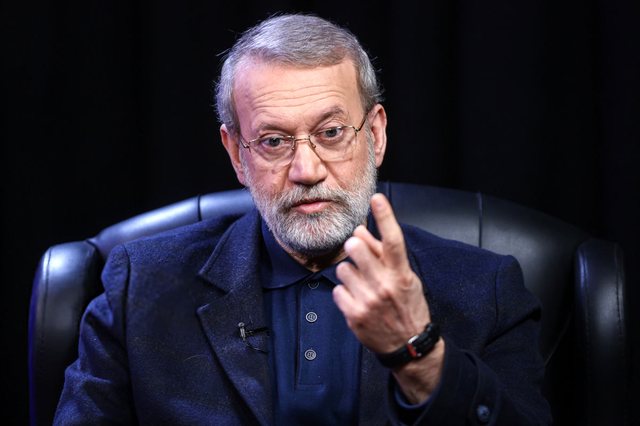
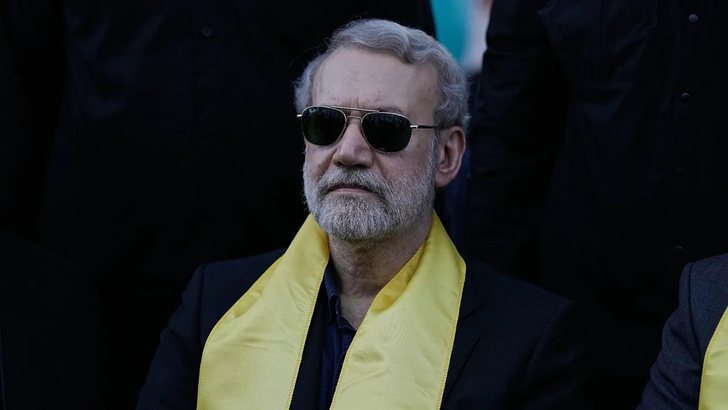
Ali Larijani is a complex and contradictory figure. He orchestrated the massacre of protesters in Iran, but he is also a philosopher, author of several books on Kant, and a lecturer at the University of Tehran.
Gid'on Lev - Haaretz
In June 2009, when riots broke out at Tehran University over the rigged results of the presidential election, Larijani, then speaker of the Iranian parliament, immediately condemned the violence of security forces against students and visited some of the places where they had been attacked, demanding accountability from the interior minister.
Seventeen years later, when the January unrest threatened the regime more than any other event, Ayatollah Ali Khamenei turned to Larijani, now chairman of the Supreme National Security Council, without question. Larijani is considered the architect of the brutal suppression of the protests that year, carried out with ruthless efficiency. By some estimates, between 7,000 and 36,500 civilians were killed, and the United States imposed personal sanctions on him. Larijani blamed the protesters, saying they acted like terrorists under the direction of Israel.
After Khamenei was assassinated during Israeli-American strikes early in the war, Larijani is seen as the most powerful man in Iran, with complete authority over national security and foreign policy. He was not chosen to succeed the supreme leader, not only because he is not his son, but also because he is not a cleric, a prerequisite for the role. However, he is expected to guide the new leader every step of the way, in an extremely complex period.
Larijani has an incredible career. He has held key positions in all the centers of power in the Islamic Republic for four decades, from senior officer in the Revolutionary Guard, minister of culture, head of propaganda, speaker of parliament, presidential candidate, to secretary of the National Security Council. He is the embodiment of the Iranian regime.
But Larijani is not just a brutal mechanism of power. He has always been devoted to philosophy, his greatest passion. He is an expert on Kant, has written six philosophical books and many academic articles, trying to defend his extreme religious principles with the rules of Western philosophy.
In his works, he combines pragmatism and aspiration for a modern society with a strong Islamic conviction. He argues that the real struggle is not over material wealth, but over the spirit. Larijani analyzes the shortcomings of the Western world and presents them as a mirror for Iranian society.
Larijani was born into a family that could be considered the Iranian equivalent of the Kennedy family: his father was a senior Shiite cleric, and his brothers hold key positions in law, politics, and science. He graduated in mathematics and computer science from Sharif University, then pursued master's and doctorate degrees in philosophy, focusing on Kant's philosophy of mathematics. He has also written books on political philosophy and governance.
Larijani served as Minister of Culture (1992-1994), tightening censorship and controlling propaganda in state media. He was also head of the National Radio and Television for 11 years, expanding the network and limiting foreign programming, and using the media as a tool for education and ideological control.
As a philosopher-politician, Larijani seeks to harmonize religious institutions with universities and to preserve higher education from the centralization of clerics. He promotes freedom of thought in a controlled manner: everything that advances society spiritually should be free, while that which leads to social degradation should be controlled. Also, democracy, according to him, makes sense only within a framework that aims at the well-being of the nation.
In conflicts and crises, Larijani acts as a philosopher-prince: combining rational thought with extreme pragmatism to preserve his and the regime's power. He has helped broker nuclear negotiations, led military responses to Israeli-American attacks, and maintained strategic ties with countries like China, Russia, and Syria.