Is this police force professional and capable of handling violen...
/ 2026-10-16 18:54:07Focus


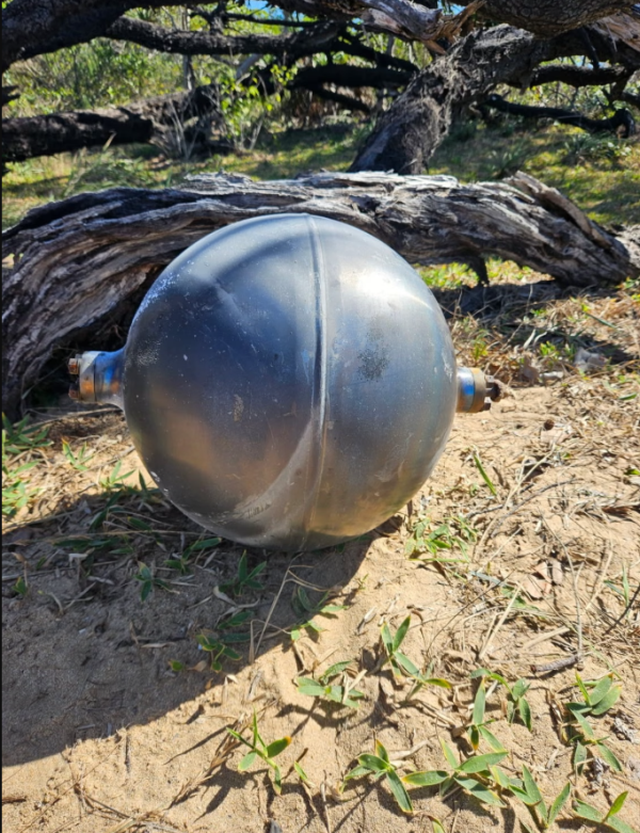
Six mysterious objects that have washed up on beaches in north Queensland could be so-called "space balls", rocket parts that are often left behind after launch and could contain toxic rocket fuel, experts warn.
The Australian Space Agency has confirmed that it is working to determine the origin of the objects, The Guardian reports.
Suspicious objects found
The Australian Space Agency has confirmed that, in collaboration with police and the National Emergency Management Agency, it is working to determine the nature and origin of the mysterious objects. Police have previously stated that they are suspected of containing hazardous chemicals. The objects, described as large spheres, were found on beaches in the Forrest Beach area near Townsville.
The Queensland Fire Service reported that a total of six objects had been found. They also warned that “more debris could appear in the area in the coming days.” While they stressed that there was currently no risk to the local community, they urged locals to follow information from the Australian Space Agency.
Space archaeologist analysis
Associate Professor Alice Gorman, a space archaeologist at Flinders University and an expert on space debris, reviewed the footage and noted that the objects showed no signs of burning or scorching.
"This suggests that they may have come from a rocket stage – perhaps the first or second – that returned to Earth while the rest of the stage continued to deliver the payload into space," she said.
"They look like parts of the fuel system. They are pressurized fuel tanks made of titanium alloy with a very high melting point. They are actually known as space balls and can be found years after launch. It's possible that no one even saw them fall," Gorman explained.
She added that if they were indeed space balls, they could contain traces of hydrazine – a highly toxic rocket fuel. He speculates that they could have come from the Russian Fregat rocket, which uses similar pressurized tanks. However, Gorman mentioned that it is possible that the objects are not of space origin at all, but of marine origin.
The growing problem of space debris
"Space balls are the most common piece of space debris and are found all over the world," Gorman said.
It's estimated that there are more than 30,000 pieces of debris orbiting our planet – from functional satellites to faulty rocket parts.
"Space debris most often falls into the sea, but Australia is a very large land mass, so a significant amount of space debris ends up here," she said.
Gorman concluded that space debris is a growing problem due to the rapid increase in the number of space launches.
“In the last five years, we’ve had more launches into space than in all of history. That means more re-entries are happening.”