Is this police force professional and capable of handling violen...
/ 2026-10-16 18:54:07Focus


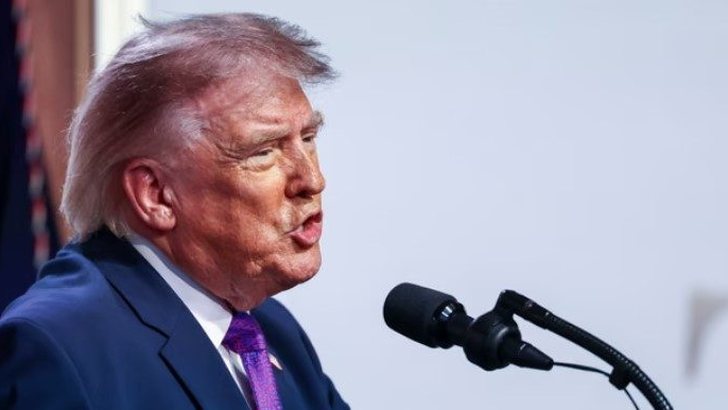
The White House has announced through a statement that United States President Donald Trump has decided to extend the national emergency regarding the Western Balkans until at least June 26, 2027.
This emergency was first declared by executive order in 2001, but according to a White House announcement, published in the Federal Register on June 24, it will be extended beyond June 26 of this year due to the situation in the Western Balkans.
The announcement states that "the actions of individuals who threaten peace and international stabilization efforts in the Western Balkans" and the current situation in this region "pose an unusual and extraordinary threat to the national security and foreign policy of the United States."
"For this reason... the national emergency declared by executive order regarding the Western Balkans should continue beyond June 2026," the announcement states.
The executive order on the situation in the Western Balkans was first approved on June 26, 2001, by former President George W. Bush, following the wars in this region.
Then, in 2021, the US expanded the scope of this national emergency, after it was said that the countries of the former Yugoslavia and Albania have faced, over the last two decades, corruption and actions that hinder agreements reached after the war.
This decision may be a signal that Washington continues to see the Western Balkans as a concern for security and stability, especially in Kosovo and Bosnia and Herzegovina, which are seen as still vulnerable countries.
In a report in May, the US Department of State (DASH) presented the Western Balkans as a region of direct importance to US security and economic interests.
The State Department report identified Russia and China as malign actors seeking to take advantage of instability, corruption, and weaknesses in governance in the region, but also underscored the U.S. commitment to countering their influence.
The security situation in Kosovo has been calm in recent years, but the country has faced an institutional crisis, holding consecutive elections in almost the last two years due to a lack of political consensus within the political parties.
On the other hand, NATO announced on June 12 that, over the next year, it will make a gradual adjustment of its presence in Kosovo, reflecting its assessment of a stable security situation in the country.
Meanwhile, Bosnia and Herzegovina is still awaiting the appointment of a new international representative, after Christian Schmidt announced his resignation earlier this month.
The outgoing high representative, Christian Schmidt. It is not yet known who his successor will be.
This issue has caused clashes in Bosnia over the international office overseeing peace implementation.
Bosnia and Herzegovina's entity, Republika Srpska, adopted a declaration in May to close the office of the high representative, which was opposed by political parties from the other entity, the Federation of Bosnia and Herzegovina, which said it should remain in Bosnia with full powers.