Is this police force professional and capable of handling violen...
/ 2026-10-16 18:54:07Focus


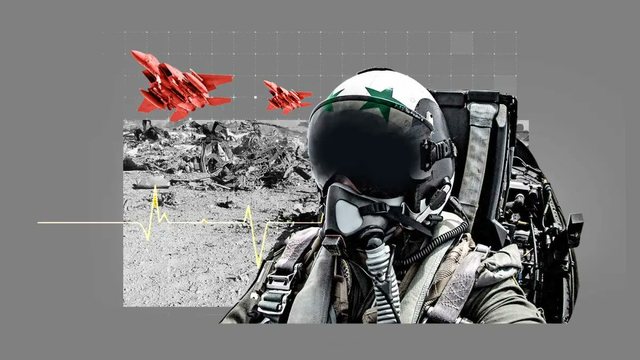
The British newspaper The Times has published an investigative article with dramatic tones about an alleged US Intelligence operation in Iran, involving the downing of a fighter jet and a rescue mission carried out with advanced secret technology.
According to the story, an F-15E Strike Eagle crashed inside Iranian territory after being hit by a surface-to-air missile. One of the crew members was reportedly stranded in a mountainous area and managed to survive for two days while evading search forces.
The article claims that his location was made possible through a classified system called “Ghost Murmur,” which, according to the sources cited, would have been able to identify an individual’s heartbeat at extremely great distances. The operation is then said to have been carried out by the elite SEAL Team Six unit.
Claims of advanced technology and hybrid operations
In the report published by The Times, "Ghost Murmur" is described as an experimental technology linked to advanced US Intelligence research, including developments by structures such as Lockheed Martin and its renowned Skunk Works laboratories.
According to the article, the system would use principles of magnetic sensing and signal processing to filter out “environmental noise” and identify minimal biological signs, including heartbeats.
The narrative goes further by claiming that in parallel with the rescue operation, a disinformation campaign was conducted to deceive Islamic Revolutionary Guard Corps troops, using cyber tools and signals intelligence to divert field searches.
Unclear official reactions and quotes
The article also cites general statements by US intelligence officials, including John Ratcliffe, who speak of the use of "extraordinary technologies" in sensitive operations, without explicitly confirming the existence of the "Ghost Murmur" system.
Also mentioned are well-known digital intelligence tools such as Pegasus, which in the narrative are presented as part of disinformation operations and manipulation of adversaries' communications.
The Times' publication has drawn attention for the way it combines real-world elements of military technology with a narrative overloaded with spectacular detail. While the newspaper is one of Britain's most prestigious media outlets, the story in question relies largely on anonymous sources and operational scenarios that cannot be independently verified.
Experts cited in similar debates in the fields of physics and technology have pointed out that the idea of detecting heartbeats at distances of tens of kilometers remains outside the limits of currently known scientific capabilities, even in the context of quantum technologies.