


How Belinda Balluku is fabricating the rumor about Top Channel's...
/ 2026-10-19 16:19:00Focus


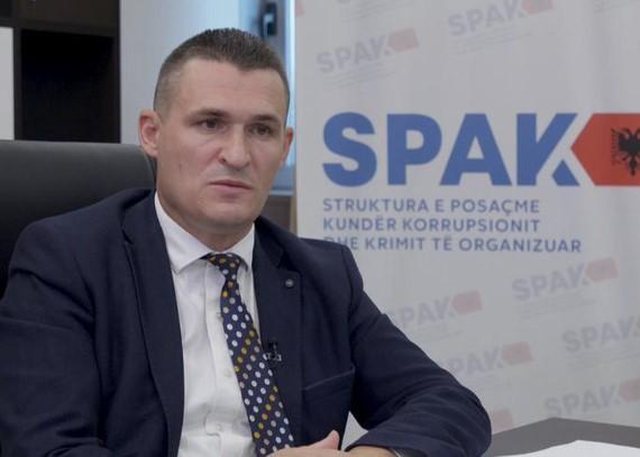
The head of SPAK, Altin Dumani, gave an interview to the Italian daily La Repubblica. Duman has stated that the criminal activities carried out by Albanians in the main Italian cities are drug trafficking, money laundering, human trafficking, illegal immigration and computer fraud.
Duman showed how the Albanians collaborated with the Italian mafia to gain money illegally. The head of SPAK emphasized that Albanian groups have influenced the drug market in several EU countries. According to him, this is also due to the strong ties they have established with drug cartels in Latin American countries.
Dumani said that Albanian groups do not have criminal structures similar to Italian mafia organizations, but are characterized by close family and social ties, without a clear hierarchy. The head of SPAK emphasized that Albanians stand out for acting independently, but cooperation with other organizations is not excluded.
Therefore, according to Duman, there is currently no Albanian "superboss" who is recognized as the sole leader of Albanian criminal groups. The head of the Special Prosecutor's Office also spoke about the impact of corruption and how SPAK is fighting it. According to Duman, the main danger of Albanian organized crime is the impact on the country's economy. He emphasized that in the function of an efficient fight against organized crime and corruption, "SPAK is taking necessary measures to strengthen institutional capacities".
Full interview
Question: Altin Dumani, in Albania you are the head of the Special Prosecutor's Office against Organized Crime and Corruption (SPAK) and you are one of the most exposed magistrates in your country for the fight against Albanian criminal groups that have spread in Europe and in particular in Italy . Here they became collaborators with various criminal organizations. What unites them and who is their job?
Altin Dumani: Like any criminal organization, the objective of these groups that are led by Albanian citizens is to get rich illegally through criminal activities. In this context, their aims and objectives, including cooperation with the Italian clans, do not change, but aim at making money in violation of the law.
Question: In which Italian cities are the strongest Albanian criminal groups present?
Altin Dumani: Joint investigations with the Italian law enforcement authorities have revealed that in your country there are Albanian citizens involved in criminal offenses that are mainly related to drug trafficking, money laundering, human trafficking, illegal immigration and computer fraud. These criminal activities are suspected to have been carried out in several cities such as Rome, Milan, Florence, Venice, Ancona, Turin, Bari, Brescia, Bergamo, Pordenone, Pisa and Lecce.
Question : With which criminal groups or Italian mobsters do they have the most connections and interests?
Altin Dumani: The investigations so far have revealed the cooperation of Albanian groups with the Apulian clans, mainly in drug trafficking. Furthermore, a parallel investigation conducted by the Catania Prosecutor's Office revealed that an Albanian criminal group collaborated with Cosa Nostra to launder large amounts of money. We have clues and data, which we share with the judicial authorities of your country, from which it emerges how Albanian groups cooperate with Italian clans or mafias.
Question: Is there an expansion of Albanian groups in European countries?
Altin Dumani: It is difficult to say if there is an expansion, but what is observed is that these groups have managed to influence the cocaine and cannabis market in EU countries, being mainly active in Greece, Italy, Spain, Belgium , Luxembourg, the Netherlands, Germany, Denmark and Great Britain. Large quantities of cocaine destined for the European market have been seized in Albania.
Q: Have they expanded to South America?
Altin Dumani: In the last decade, there has been an increase in shipments from South America controlled by Albanian groups, destined mainly for EU countries. This development comes as a result of the strong ties they have established with drug cartels from Ecuador, Colombia, Peru, Brazil and Mexico.
Question: Can we talk about the existence of an "Albanian mafia"?
Altin Dumani: The term "Albanian mafia" is rather a term used by the media and academic circles, as it is not a legal term in Albanian criminal legislation. To return to the issue, it cannot be said that today we have criminal structures that resemble Italian mafia organizations such as Cosa Nostra, 'Ndragheta, Camorra or Sacra Corona Unita. Albanian criminal groups are characterized by close family and social ties, but without a clear hierarchy. They operate mainly in small groups and together with local organizations or other organized Albanian groups.
Question: Do the Albanian groups in Italy have a "capo", or are they independent groups?
Altin Dumani: As far as we know today, we cannot say that we have a single leader of the Albanian groups or a "super boss". Albanians stand out for their style of operating autonomously, where of course cases of cooperation with other groups composed of Albanian citizens but also of other nationalities are not excluded.
Question: Can corruption in Albania be considered a weapon in favor of criminal groups, with which they have "institutional" benefits?
Altin Dumani: Albanian criminal groups, like any other group, try to weaken the force of the law and for this purpose they constantly try to establish connections with institutions through bribery or blackmail. In Albania we are faced with this disturbing phenomenon and it is one of the priorities of SPAK's work. During the investigations we conducted, several cases were found where members of organized crime recruited or bribed police officers of various ranks.
Question: At what level has corruption reached?
Altin Dumani: Corruption is a worrying phenomenon for countries in transition and Albania cannot avoid this problem. SPAK considers the fight against corruption and high state officials one of its work priorities. Since its establishment, SPAK has arrested several judges, prosecutors, police officers, mayors or former mayors, a deputy minister, a former Prosecutor General, a former Minister of the Interior for corruption and abuse of office. Currently SPAK has arrested a former minister and a deputy of the Albanian Parliament.
Question: Are there politicians or magistrates who collaborate with organized crime in Albania?
Altin Dumani: The links between crime and politics, including justice, are an Albanian phenomenon, and it is no coincidence that in our country a broad reform of the judicial system has been undertaken.
Question: Where are the proceeds from drug trafficking, exploitation of prostitution and human trafficking invested?
Altin Dumani:There are other institutions that do detailed analysis to assess the risk of money laundering. But in general, based on SPAK's investigations, we can say that the sectors most affected by money laundering are construction, real estate, light industry, gambling and hotel tourism. Recently, the use of cryptocurrencies has also been noticed. An interesting case that SPAK has investigated is actually that of the builder Francesco Zummo (one of the protagonists of the mafia in Palermo who was also investigated by Giovanni Falcone) who tried to launder about 18 million Euros through various Albanian banking institutions. SPAK has seized this amount and the judges are reviewing the proceedings with the aim of the final seizure of the entire amount of 18 million and 400 thousand Euros.
Question: What is the greatest danger today from what we define as the Albanian mafia?
Altin Dumani: The main danger of Albanian organized crime is the impact on the country's economy. Money laundering through investments distorts the market economy and fair competition. The strengthening of criminal groups also leads to the increase of violent conflicts between them, with the consequence of harming the security of citizens.
Q: What is the strategy to fight these clans?
Altin Dumani:In view of an efficient fight against organized crime and corruption, SPAK is taking necessary measures to strengthen institutional capacities. In the Special Prosecutor's Office, there is currently a unit dedicated to the exercise of criminal action for crimes related to organized crime. As part of this unit, special prosecutors and investigators specialized in the fight against organized crime exercise their functions. Regarding corruption, SPAK has created a special unit in the fight against this crime, consisting of special prosecutors and specialized investigators. The use of special investigative tools and methods, such as undercover agents, law enforcement and wiretapping, are effective in investigating organized crime and corruption. Given that organized crime is transnational, SPAK has paid a lot of attention to strengthening cooperation with foreign law enforcement authorities (such as EU countries and beyond). Cooperation with foreign law enforcement authorities includes the establishment of joint investigative teams, parallel proceedings and mutual assistance. The Special Prosecutor's Office currently has several joint investigative teams with the Italian, British, French, German and Spanish authorities. Parallel investigations have also been carried out with countries such as Denmark and Norway. Even the seizure and confiscation of assets resulting from crime are part of this strategy. For this purpose, the Department of Financial Investigations has begun to operate, consisting of investigators selected after a very rigorous process. In these 3 years, SPAK has managed to seize and confiscate movable and immovable property,





